Household or non-household packaging for EPR?
Primary and shipment packaging are household by default; secondary and tertiary packaging are non-household. To report primary or shipment packaging as non-household, you need evidence supporting a permitted exception, not simply a business customer. Cambridge China Bridge can help collect factory packaging details.
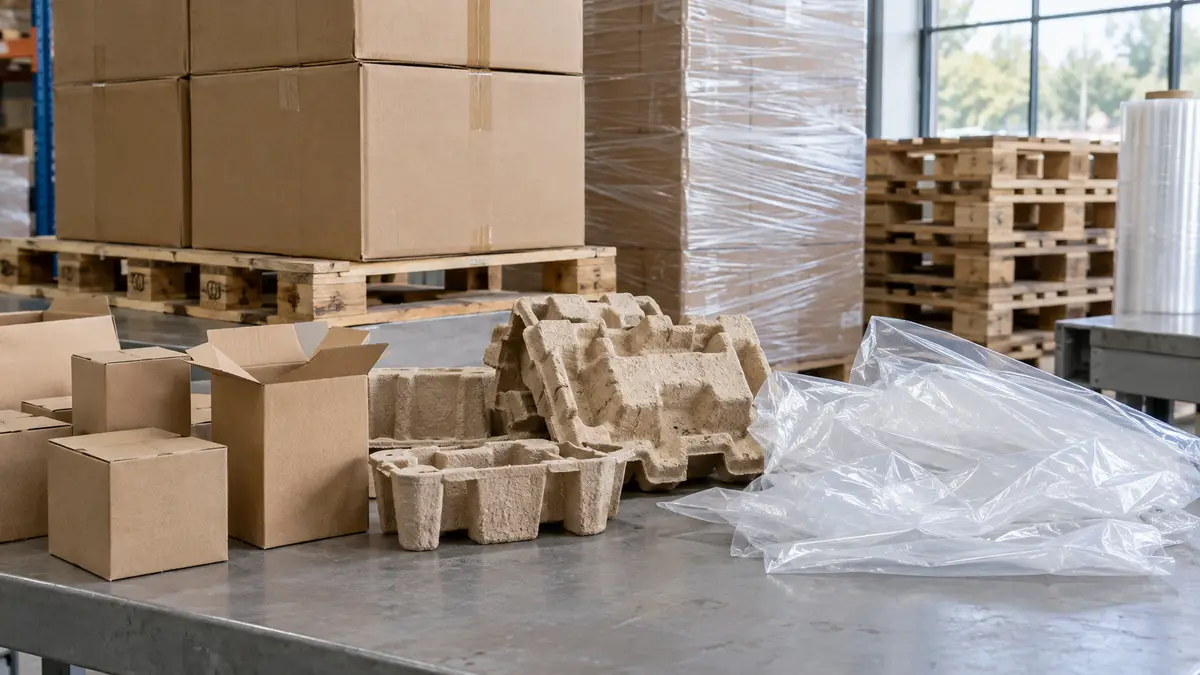
Start with the packaging function
This guide addresses the household assessment used in large-producer reporting. For whether you are in scope, read our UK packaging EPR guide. Classify each component by what it does, rather than calling every outer carton transport packaging.
Ask the factory for photographs showing the packed product, grouped cartons and transport load. Match each component to its material and weight. Our packaging sourcing guide covers the supplier specification; the table below adds the reporting distinction.
| Packaging class | Function | Household assessment |
|---|---|---|
| Primary | Contains a sales unit sold to the final user | Household unless an evidenced exception applies |
| Shipment | Facilitates handling and transport of sales units to a consumer | Household unless an evidenced exception applies |
| Secondary | Groups sales units on a shop shelf or for supply to the final user | Non-household |
| Tertiary | Facilitates handling and transport of sales units to a business | Non-household |
A business customer is not enough
Primary or shipment packaging supplied directly to a business or public institution can be non-household where that customer is the packaging's end user and sufficient evidence shows it will not pass the packaging onwards. The guidance also allows supply where the customer removes all packaging before supplying the goods onwards.
For supply through a wholesaler or another intermediary, the alternative test requires both a product designed only for business or public-institution use and packaging unlikely to enter a household or public bin. A trade invoice alone does not establish both conditions. Private waste collection does not replace a qualifying exception.
Separate packaging you discard after import
An importer may classify imported primary or shipment packaging as non-household where it discards that packaging without supplying it to anyone in the UK. Sufficient evidence is still needed. Do not extend this treatment to product packaging that leaves your warehouse with the goods.
Keep an unpacking record linked to the imported product and delivery. Record which components were removed, their materials and weights, and how they were discarded; retain supporting photographs and waste paperwork. Keep this assessment separate from the transport-packaging exemption explained in our Plastic Packaging Tax guide.
Build evidence around the actual sales route
For direct business supply, assemble evidence showing who receives the packaging and whether it goes onwards. Consider customer terms prohibiting onward supply, sales records showing unpacked supply, or signed declarations supported by checks. For indirect supply, assemble product specifications showing exclusive business use alongside packaging dimensions, weights and distribution records supporting the disposal assessment.
These are working-file suggestions, not an automatic approval checklist. Regulators judge whether evidence is sufficient for the circumstances. If you cannot substantiate the exception, classify primary or shipment packaging as household. Keep the supporting evidence for at least 7 years.
Working out your own order? Send us the product on WhatsApp and we reply the same working day: WhatsApp us
Turn the assessment into reportable data
In Defra's reporting file, household status is the packaging type; primary, shipment, secondary or tertiary is the packaging class. Keep those decisions separate in your working sheet. Report individual packaging materials separately, with a new row for each packaging activity and type you need to report.
Link each proposed non-household entry to its supporting documents and the product variant and sales route concerned. Recheck the assessment when packaging or customer arrangements change. Cambridge China Bridge's staff in China can help collect component photographs, specifications and weights; ask your UK customers for evidence about onward supply and disposal.
Frequently asked questions
Is all packaging sold to businesses non-household?
No. Primary and shipment packaging remain household unless an evidenced exception applies. Selling to a business does not itself prove that the business is the final packaging user.
Is an ecommerce delivery box tertiary packaging?
Packaging used to transport sales units to a consumer is shipment packaging. Tertiary packaging facilitates transport to a business. Classify by function and destination.
Can packaging removed at my UK warehouse be non-household?
Imported primary or shipment packaging you discard without supplying it to anyone in the UK can qualify, with sufficient evidence. Packaging sent onwards with the goods needs its own assessment.
How long must I keep non-household packaging evidence?
At least 7 years. Keep the evidence linked to the packaging and sales route it supports, so the basis for each non-household assessment can be retrieved.