Sourcing wooden tea chests from China
Wooden tea chests used as packing cases carry 0% UK duty from China, with no duty variation within the relevant line. Solid-wood packaging imported into Great Britain must meet ISPM 15, including empty packaging supplied to businesses. Specify the liner and check timber legality. Cambridge China Bridge sources wooden tea chests.
Buying from China for a business? How our UK China sourcing agent service works · China sourcing agent for small orders and first imports
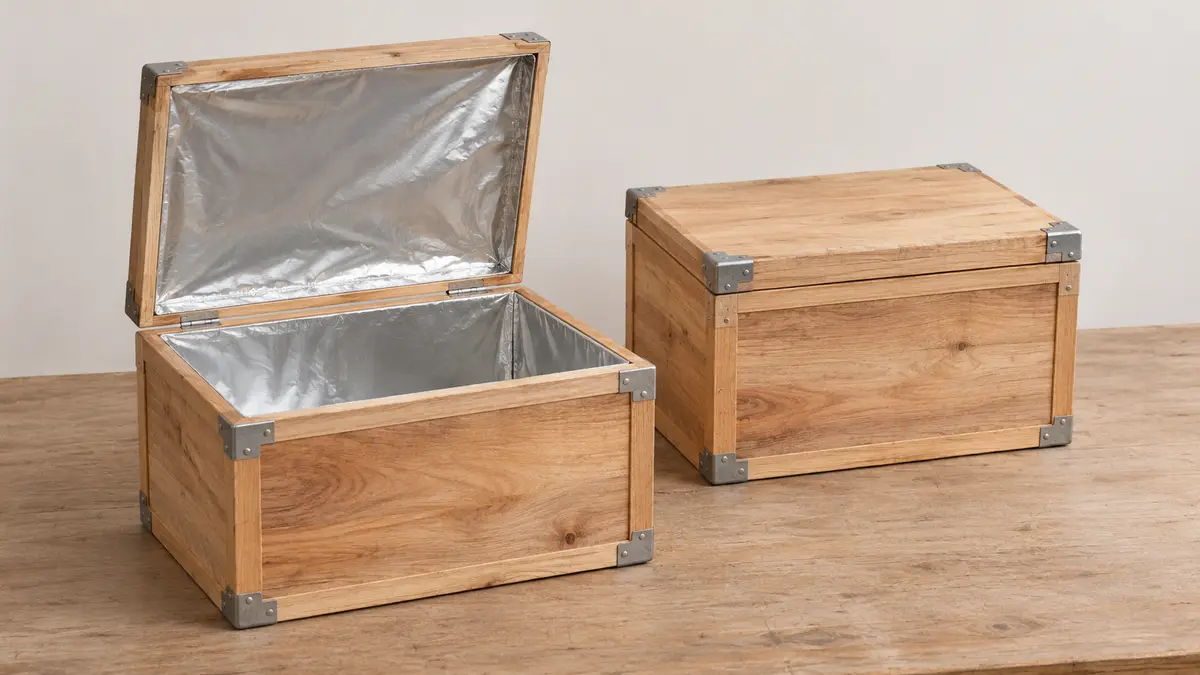
Duty on wooden tea packing chests
Read from the UK Trade Tariff on 30 September 2026, heading 4415 covers wooden packing cases and related packaging. Tea packing chests fall within 4415 10 10 00, carrying 0% duty for goods from China. The supplied tariff record lists no anti-dumping or countervailing duty and no suspension. The table shows construction variants sharing this commodity line.
The tariff attaches CITES import and export controls to this line. Check the timber species and whether the finished chest needs CITES documentation; obtain the required permits for controlled specimens moving from China into Great Britain. The record also lists a DCMS export licence measure. For later exports, ask your customs broker to confirm its application and any exemption.
Confirm the commodity code against the chest's construction and packing function, especially for decorative tea storage boxes. See the wooden wine boxes guide for related wooden packing under the wider heading.
| Goods | Commodity code | Duty | Anti-dumping or countervailing duty on China |
|---|---|---|---|
| Solid-wood tea packing chests | 4415 10 10 00 | 0% | None |
Specify the chest, liner and timber
Specify usable internal dimensions, panel material and thickness, timber species, lid fastening, corner reinforcement and filled weight. Decide whether the chest carries loose tea or sealed inner packs. Define the liner material, closure and resistance to moisture, and approve a sample with the intended contents. Keep printing and adhesive away from exposed tea.
Confirm with OPSS or your customs broker whether wooden packing sold as a product falls within the UK Timber Regulations and what obligations apply: gather species and harvest-country information, assess timber legality and retain supporting records. Solid-wood packaging entering Great Britain must meet ISPM 15, whether carrying goods or supplied empty to businesses. Processed, non-solid packaging such as plywood is exempt from these packaging rules; identify any solid-wood framing separately.
If you pack tea yourself, the packaging must be suitable for food use. Ask for evidence covering the actual liner, adhesive and intended contact conditions, rather than accepting a general supplier assurance. Check for odour transfer with the intended tea. Arrange testing and certification support where the material evidence needs checking.
Worked duty example
Illustrative example, not a quote: 2,000 empty wooden tea chests, illustrative only under 4415 10 10 00, invoiced at £18,000 free on board, with £3,500 of freight and insurance to the UK. The customs value is £21,500. Duty at 0% is £0. Import VAT at 20% is charged on the customs value plus duty, £21,500, so it is £4,300. With no duty, the only import tax is the VAT, which a VAT-registered importer can usually reclaim. The import duty and VAT guide explains each step.
Inspection checklist
Dimensions and panels: measure usable space and panel thickness against the drawing; inspect plywood edges for voids, splitting and delamination.
Liner and cleanliness: check seams, closures and contact surfaces for holes, debris, mould and persistent wood, glue or coating odours.
Lid and corners: check lid fit, fasteners and reinforcement; reject protruding nails or staples that could puncture the liner.
Arrival condition: compare samples with the approved chest, check moisture and warping, and match timber documents and applicable treatment marks to the shipment. Use an agreed quality inspection brief.
Working out your own order? Send us the product on WhatsApp and we reply the same working day: WhatsApp us
What goes wrong
A chest can look correct outside but lose usable capacity through thicker framing or a poorly fitted liner. Rough panel edges and protruding staples puncture the barrier; loose lids admit moisture. Damp timber develops mould, while glue and coating odours can affect the tea.
Approve the assembled chest with its liner and contents, then inspect production samples before shipment and again on arrival. A treatment mark does not establish food-use suitability or timber legality. Keep the material evidence, timber records and inspection findings together.
Cambridge China Bridge sources these products for UK businesses, checking the factory and the documents before shipment. See factory verification. For repeat volumes, see container programmes.
Frequently asked questions
What is the UK import duty on wooden tea chests from China?
Tea chests classified as wooden packing cases under 4415 10 10 00 carry 0% duty.
Do empty wooden tea chests need ISPM 15 treatment?
Solid-wood packaging imported into Great Britain must meet ISPM 15 even when supplied empty to businesses. Processed, non-solid packaging such as plywood is exempt; check any solid-wood framing.
Can loose tea touch the wooden chest?
Do not assume bare wood is suitable. If you pack tea yourself, you must use packaging suitable for food use. Specify the contact materials and obtain evidence for the intended use.
What should I check when tea chests arrive?
Check internal dimensions, lid fit, panel damage, liner seams, odours, mould and protruding fasteners. Compare with the approved sample and reconcile timber records and applicable treatment marks.