Sourcing women's tailored trousers from China
Women's woven tailored trousers from China carry a flat 12% UK duty across the selected wool, cotton, synthetic and artificial-fibre lines, with no listed trade remedies. Fibre content must appear on the label. Agree fit, fabric and waistband construction before production. Cambridge China Bridge sources women's woven tailored trousers.
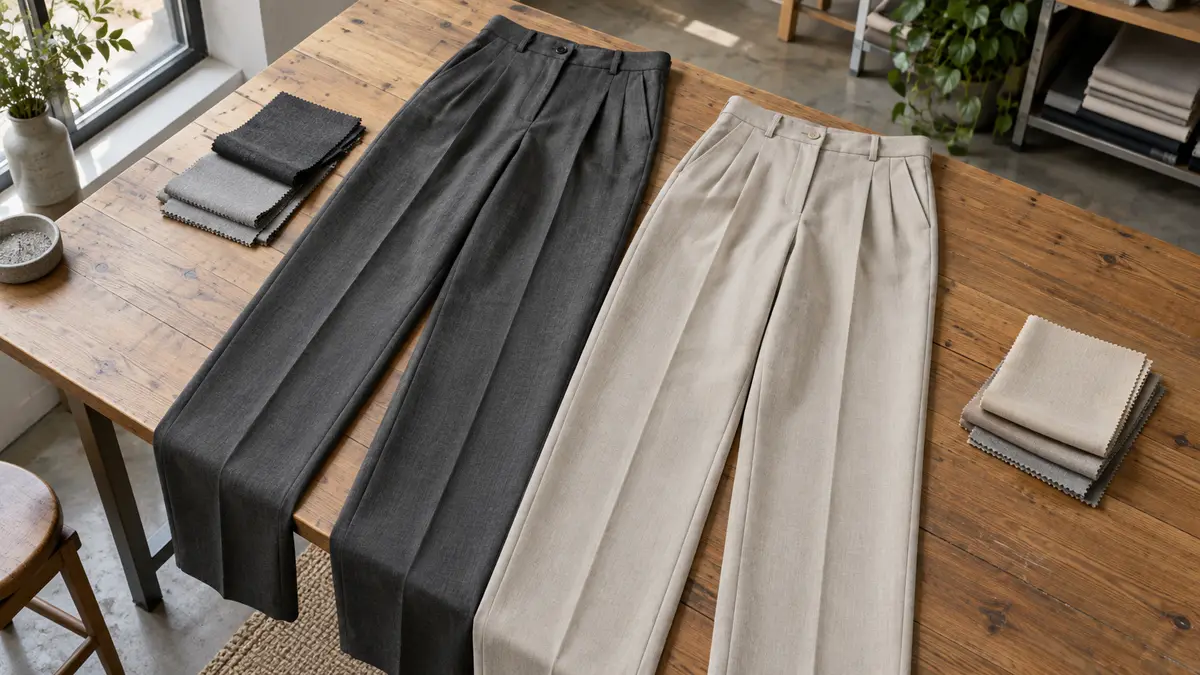
Duty and classification for tailored trousers
Read from the UK Trade Tariff on 29 September 2026, the selected women's woven trouser lines under heading 6204 carried 12% duty for goods from China. No anti-dumping or countervailing measures or suspensions are listed for these lines. The heading also covers suits, jackets, dresses, skirts and other garments; this guide concerns tailored trousers.
The tariff attaches cat and dog fur and seal-product import controls to these lines, and CITES controls to the wool or fine animal hair line. Imports containing cat or dog fur are banned. Seal products imported into Great Britain for trade must have a seal catch certificate. Confirm any animal-derived material and the applicable clearance requirements with your customs broker before ordering from China.
Confirm the commodity code using the finished garment, woven construction and fibre composition rather than the supplier's description of it as a trouser suit. For wider heading coverage, see the women's woven culottes guide.
| Goods | Commodity code | Duty | Anti-dumping or countervailing duty on China |
|---|---|---|---|
| Women's woven trousers of wool or fine animal hair | 6204 61 10 00 | 12% | None |
| Women's woven cotton trousers, other | 6204 62 39 90 | 12% | None |
| Women's woven synthetic-fibre trousers, other | 6204 63 18 90 | 12% | None |
| Women's woven artificial-fibre trousers, other | 6204 69 18 90 | 12% | None |
Specify the fit, waistband and fabric
Agree the fabric composition, weight, stretch and recovery, colour, lining and pocketing. Define waist, hip, rise, thigh, inside leg and hem measurements, with tolerances and measuring points. Specify waistband interfacing, belt loops, fly fastening, pleats and pocket position. Approve a fitting sample and a size set before cutting bulk fabric.
The fibre content must appear on the label, including fur and other animal parts. Match the label artwork to the agreed materials. Specify care instructions against the washing or cleaning trials, and inspect how the waistband, crease and lining behave afterwards. Treat a change of fabric or interfacing as a reason to check the fit again.
Worked duty example
Illustrative example, not a quote: Illustrative order: 500 pairs of women's woven synthetic-fibre tailored trousers under 6204 63 18 90, invoiced at £6,000 free on board, with £800 of freight and insurance to the UK. The customs value is £6,800. Duty at 12% is £816. Import VAT at 20% is charged on the customs value plus duty, £7,616, so it is £1,523.20. Import taxes total £2,339.20; a VAT-registered importer can usually reclaim the VAT, so the lasting cost is the £816 of duty. The import duty and VAT guide explains each step.
Inspection checklist
Fit: measure garments across the ordered sizes against the approved chart; check rise, seat balance, leg length and waistband comfort.
Construction: check fly alignment, zip operation, hook and button security, belt-loop attachment, pocket symmetry and seam opening at the seat and crotch.
Fabric: compare shade across panels and garments; check seam slippage, shrinkage, colour transfer and stretch recovery on production material.
Labels and packing: match fibre labels, size labels and carton contents to the order; check for pressing shine, stains and damp packaging on arrival. Use an agreed inspection brief.
Working out your own order? Send us the product on WhatsApp and we reply the same working day: WhatsApp us
What goes wrong
A fitting sample can hide poor grading: the waist changes between sizes while the rise or thigh barely changes. Weak interfacing lets the waistband roll, tight pocket openings pull across the hip, and loose-weave fabric opens at the seat seam. Washing can shrink the shell differently from the lining.
Keep an approved garment and fabric sample for comparison. Record faults by size and colour, photograph the measuring points, and agree corrections before the balance payment. Check replacement fabric and altered patterns through fitting and washing trials rather than accepting a revised size label.
Cambridge China Bridge sources these products for UK businesses, checking the factory and the documents before shipment. See factory verification. For own-brand ranges, see sourcing for brands.
Frequently asked questions
What is the UK import duty on women's tailored trousers from China?
The selected woven wool, cotton, synthetic and artificial-fibre trouser lines carry 12% duty, with no listed anti-dumping or countervailing measures or suspensions.
What labels do women's tailored trousers need?
The label must show fibre content, including fur and other animal parts. Match the artwork to the actual materials; agree size identification and care instructions with the factory.
How do I stop trouser sizes varying between batches?
Agree measuring points, tolerances and a size set. Compare production garments with the approved chart and sample, and repeat fit checks when fabric or interfacing changes.
Do animal-material trims affect imports from China?
Cat and dog fur imports are banned. Seal products for trade need a seal catch certificate. The tariff also attaches CITES controls to the wool line; confirm requirements with your broker.