Sourcing woven pinafore dresses from China
Women's woven pinafore dresses from China carry a flat 12% duty across the supplied dress lines, with no recorded trade remedies or suspensions. Fibre-content labelling is required; agree strap adjustment, layered fit and wash performance before production. Cambridge China Bridge sources women's woven pinafore dresses.
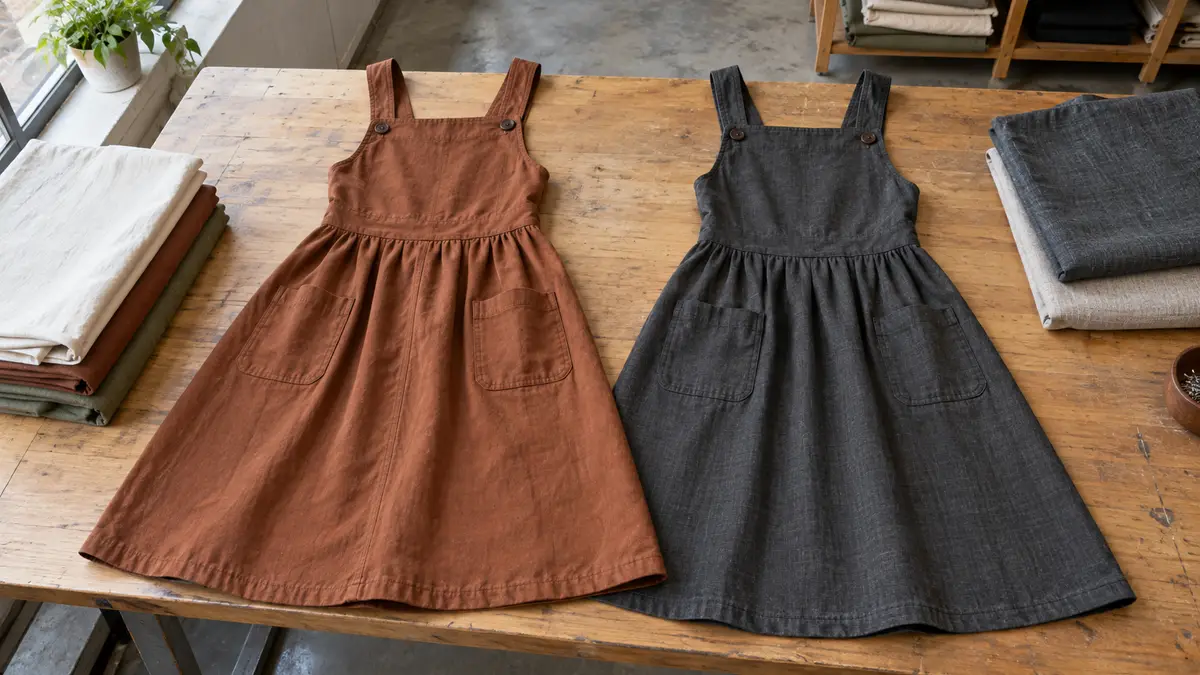
Duty on woven pinafore dresses
Read from the UK Trade Tariff on 29 September 2026, the supplied dress lines within heading 6204 carry 12% duty for goods from China, with no recorded anti-dumping or countervailing duty and no suspensions. The heading covers women's or girls' suits, ensembles, jackets, dresses, skirts and trousers, among other garments. The table uses only supplied dress lines; its cotton and other-textile entries specifically describe hand-printed batik goods. For another woven dress category, see our woven prom dress sourcing guide. For cocktail styles, see our woven cocktail dress sourcing guide.
The tariff attaches cat and dog fur and seal-product import controls, plus CITES on the other-textile dress line shown. Cat and dog fur products are banned from import. Under the traditional-hunt exemption, seal products require a recognised attestation. For any such trim sourced through China, confirm the applicable exemption, eligibility and documents with your customs broker before ordering. CITES-listed materials require permit checks with the UK and Chinese authorities.
Confirm the commodity code using the finished garment, fabric construction, fibre composition and any printing method. Do not use a batik line for ordinary printed cotton. For the wider heading, see women's woven culottes.
| Goods | Commodity code | Duty | Anti-dumping or countervailing duty on China |
|---|---|---|---|
| Women's woven pinafore dresses of synthetic fibres | 6204 43 00 00 | 12% | None |
| Women's woven pinafore dresses of artificial fibres, other | 6204 44 00 90 | 12% | None |
| Cotton woven pinafore dresses, hand-printed by the batik method | 6204 42 00 10 | 12% | None |
| Other textile woven pinafore dresses, hand-printed by the batik method | 6204 49 90 10 | 12% | None |
Specify the bib, straps and layered fit
Define the bib shape, neckline, armhole depth, skirt shape, hem length and pocket position. Supply a measurement chart with tolerances for each size, including strap adjustment range. Fit the sample over the type of blouse or jumper your customers will wear underneath, and check sitting, bending and reaching.
Specify fabric construction, fibre composition, weight, finish, lining and shrinkage acceptance. Agree buckle material, slider grip, button attachment and reinforcement where straps meet the bib and back. Textile labels must show fibre content, including animal parts; components with different fibre contents need their contents shown. Approve label artwork and practical care instructions against the production sample.
Worked duty example
Illustrative example, not a quote: Illustrative order: 500 women's woven polyester pinafore dresses under 6204 43 00 00, invoiced at £5,000 free on board, with £800 of freight and insurance to the UK. The customs value is £5,800. Duty at 12% is £696. Import VAT at 20% is charged on the customs value plus duty, £6,496, so it is £1,299.20. Import taxes total £1,995.20; a VAT-registered importer can usually reclaim the VAT, so the lasting cost is the £696 of duty. The import duty and VAT guide explains each step.
Inspection checklist
Fit: measure bib width, armholes, waist, hem and strap adjustment against the approved chart; check that the skirt hangs evenly over a base layer.
Straps and fittings: check sliders hold their position, buckles operate smoothly, straps sit flat and attachment seams withstand the agreed pull check.
Fabric: wash production samples using the proposed care instructions; compare dimensions, colour transfer, puckering and skirt twist before and after washing.
Labels and packing: compare fibre labels with material records, verify size labels and carton assortments, and inspect for dampness or staining on arrival. Use the quality inspection guide to plan checks.
Working out your own order? Send us the product on WhatsApp and we reply the same working day: WhatsApp us
What goes wrong
A sample can fit well while production straps are shorter or sliders slip under load. Deep armholes may expose the base layer awkwardly, and a heavy bib can pull the skirt forwards. Agree fitting photographs and measurement points before cutting, then inspect across the ordered sizes.
Dark fabric can transfer colour onto pale blouses; washing can shorten straps, twist the skirt or pucker pocket seams. Replacing the approved fabric can also leave the fibre label inaccurate. Keep a sealed sample and material records, and investigate failed wash or fitting checks before releasing the shipment.
Cambridge China Bridge sources these products for UK businesses, checking the factory and the documents before shipment. See factory verification. For own-brand ranges, see sourcing for brands.
Frequently asked questions
What is the UK import duty on women's woven pinafore dresses from China?
The supplied dress lines carry 12% duty for goods from China, with no recorded anti-dumping or countervailing duty or suspensions.
Can I use the cotton batik code for a plain cotton pinafore?
The supplied cotton dress line specifically covers hand-printed batik goods. Have your broker identify the correct line for plain cotton rather than using that entry.
What labels do woven pinafore dresses need?
Textile labels must show fibre content, including animal parts. Where components have different fibre contents, their contents must be shown. Agree care instructions and size labels with the factory.
How do I check pinafore straps before shipment?
Check adjustment range over the intended base layer, slider grip, buckle operation and attachment seams. Repeat the checks after washing a production sample.