Sourcing vibratory finishing machines from China
Vibratory finishing machines and the relevant parts lines below carry 0% UK duty from China, so the recorded duty range is 0%. Confirm classification and machinery safety requirements before supply in Great Britain. Test with your workpieces and media. Cambridge China Bridge sources vibratory finishing machines.
Buying from China for a business? How our UK China sourcing agent service works · China sourcing agent for small orders and first imports
UK duty on vibratory finishing machines
Heading 8479 covers machines with individual functions not specified elsewhere in its chapter. Investigate 8479 81 00 00 for vibratory machines treating metal. The residual machine line is an alternative to investigate for other configurations, while the parts lines concern separately supplied components. These are classification candidates, not interchangeable codes. For wider heading coverage, see the grinding machinery guide.
Read from the UK Trade Tariff on 17 December 2026, the selected lines carry 0% ordinary duty for goods from China, with no recorded anti-dumping duty, countervailing duty or suspension. The residual machine line attaches waste import and export controls and fluorinated greenhouse gas import controls. The other-parts line attaches the gas import control. Neither the metal-treatment line nor the cast-parts line has an attached import control in the supplied record.
For China shipments into England that are waste under notification controls, the exporter must seek consent from China's competent authority; confirm with the relevant authority or your customs broker which consents are needed before shipment. Imported equipment containing regulated fluorinated gas must be labelled accordingly. Ask your customs broker which waste or gas requirements apply to your shipment. Confirm the commodity code using the workpiece material, finishing action, complete configuration and separately shipped parts.
| Goods | Commodity code | Duty | Anti-dumping or countervailing duty on China |
|---|---|---|---|
| Metal-treatment machines: candidate line for vibratory finishing machines | 8479 81 00 00 | 0% | None |
| Other vibratory finishing machines, where the residual machine line applies | 8479 89 97 90 | 0% | None |
| Separately supplied cast iron or cast steel machinery parts, where applicable | 8479 90 20 90 | 0% | None |
| Other separately supplied finishing-machine parts, subject to classification | 8479 90 70 99 | 0% | None |
Specify the workpiece, media and loaded finishing result
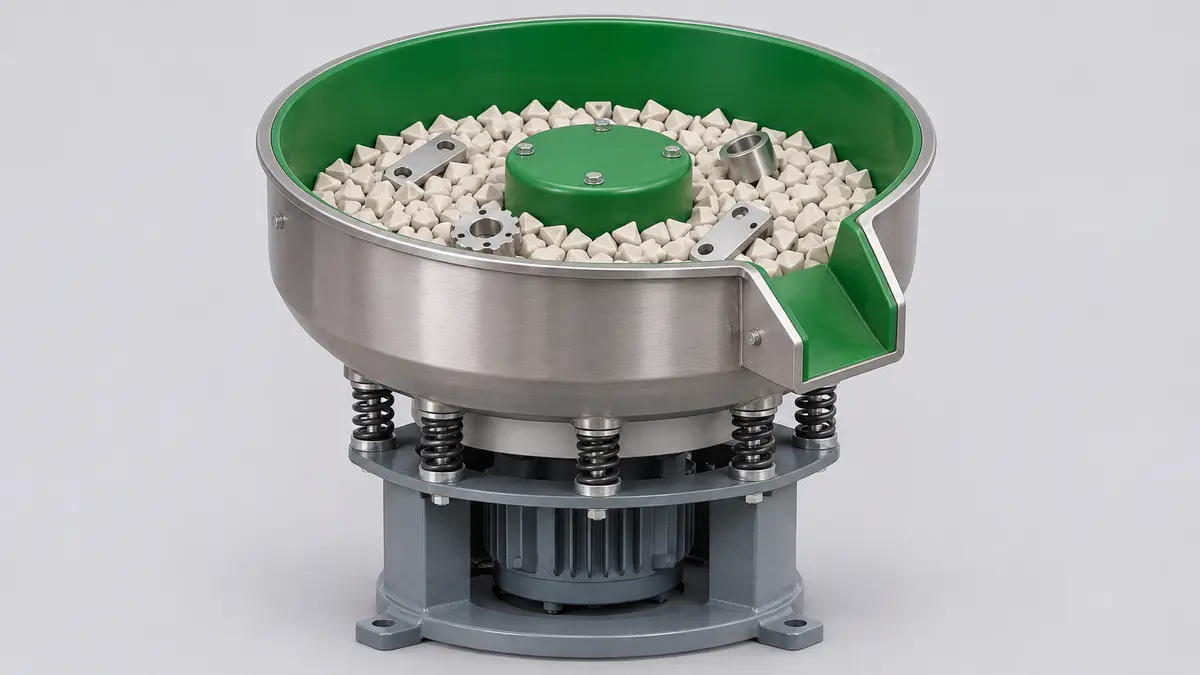
Choose a bowl or trough around the workpiece shape and handling method. Specify usable working space, batch load, lining material, drain arrangement and whether the process is wet or dry. Agree media shape and composition, compound compatibility and how parts will be separated from the media. Check whether media can lodge in holes or recesses.
Send representative unfinished parts and agree an approved finished sample. Define acceptable burr removal, edge rounding, surface appearance and dimensional change. Run a loaded trial with the proposed media and compound, recording cycle conditions and checking for part collisions, distortion and trapped media. Specify the electrical supply, vibration adjustment, noise information and replacement lining, springs and drain components.
For supply in Great Britain, machinery must be safe. Verify the applicable conformity assessment, technical file arrangements, declaration of conformity, CE or UKCA marking and English instructions against the delivered configuration. Agree the guarding, emergency-stop behaviour and access needed for loading, cleaning and maintenance before ordering.
Worked duty example
Illustrative example, not a quote: Illustrative workshop order of bowl vibratory finishing machines for metal parts under 8479 81 00 00, invoiced at £8,000 free on board, with £1,200 of freight and insurance to the UK. The customs value is £9,200. Duty at 0% is £0. Import VAT at 20% is charged on the customs value plus duty, £9,200, so it is £1,840. With no duty, the only import tax is the VAT, which a VAT-registered importer can usually reclaim. The import duty and VAT guide explains each step.
Inspection checklist
Finishing result: run the agreed loaded trial and compare burr removal, edge rounding, surface appearance and critical dimensions with the approved sample.
Bowl and lining: inspect lining adhesion, exposed metal, drain seals and separation screens; check for leaks and media trapped in the workpieces.
Drive and structure: inspect springs, motor fixings and welds; check loaded media circulation, abnormal movement, noise, heating and agreed stop functions.
Arrival and documents: inspect transit damage and loose fasteners, count accessories and match the nameplate, declaration and English instructions. Record the delivered configuration through your quality inspection.
Working out your own order? Send us the product on WhatsApp and we reply the same working day: WhatsApp us
What goes wrong
A machine can vibrate convincingly while producing uneven finishing under load. Unsuitable media may lodge in holes, damage delicate edges or leave recesses untreated. Excessive part contact can cause dents, while an unsuitable compound can stain the workpiece. Accept the finishing result on representative parts rather than an empty-machine demonstration.
Nominal bowl capacity can conceal restricted usable space or difficult unloading. Poor lining adhesion, leaking drains and loose motor fixings can interrupt production. Check service access and replacement-part fit before ordering, and resolve any change of motor, controls or lining against the agreed specification and documents.
Cambridge China Bridge sources these products for UK businesses, checking the factory and the documents before shipment. See factory verification. For machinery and equipment, see machinery imports.
Frequently asked questions
What is the UK import duty on vibratory finishing machines from China?
The selected heading 8479 machine and parts lines carry 0% ordinary duty from China, with no recorded anti-dumping or countervailing duty. Confirm the code for the complete machine and separately imported parts.
Do vibratory finishing machines need CE or UKCA marking?
Confirm the applicable requirements for supply in Great Britain. Check the appropriate CE or UKCA marking, declaration of conformity, technical file arrangements and English instructions against the delivered configuration.
How do I test a vibratory finishing machine before shipping?
Use representative parts, the agreed media and compound, and a recorded loaded cycle. Compare burr removal, edge rounding, appearance and dimensions with the approved sample; check trapped media and collision damage.
Should I choose a bowl or trough finishing machine?
Choose around part shape, usable working space, batch handling and separation method. Ask the factory to demonstrate loading, media circulation and unloading with representative parts.