Sourcing tyre changing machines from China
The selected tyre changing machine and parts lines carry 0% UK duty from China, with no listed trade remedies or suspensions. For sale in Great Britain, machinery needs conformity documentation, English instructions and UKCA or CE marking. Confirm the exact machine's classification before ordering. Cambridge China Bridge sources tyre changing machines.
UK duty on tyre changing machines
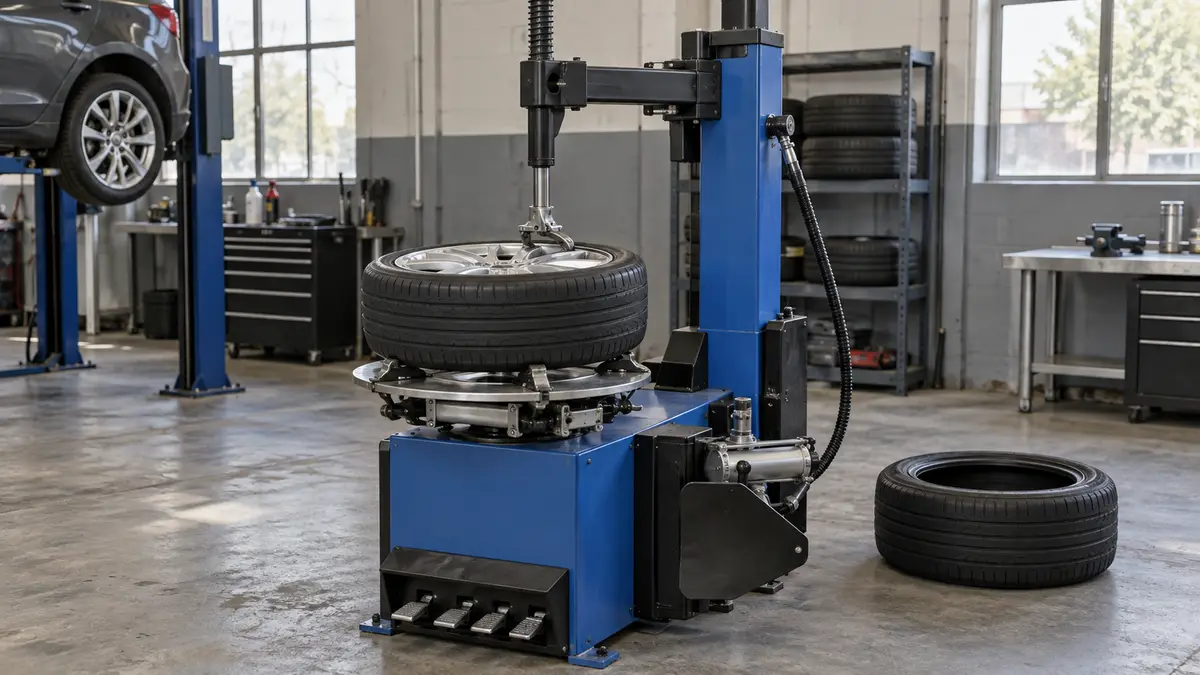
Heading 8479 covers machines with individual functions not specified elsewhere in the chapter. For tyre changing machines, 8479 89 97 90 is a candidate residual line, subject to confirmation from the complete specification. The table shows alternative machine designs sharing that code and potentially relevant dedicated parts lines. See the wider machinery guide.
Read from the UK Trade Tariff on 8 October 2026, the selected lines carry 0% ordinary duty for goods from China, with no listed anti-dumping or countervailing duty or suspensions. The residual machine line attaches waste import and export controls and a fluorinated greenhouse gas import control; the residual parts line also attaches the gas control. For the reverse route, see exporting used machinery to China.
For a shipment from China classified as waste and subject to notification, consent is needed from the destination, dispatch and transit authorities before shipment. Imported equipment containing regulated fluorinated gas must be labelled. Ask your customs broker to confirm the attached controls and declaration requirements for your actual goods. Confirm the commodity code from the machine's functions and the parts' material and use.
| Goods | Commodity code | Duty | Anti-dumping or countervailing duty on China |
|---|---|---|---|
| Swing-arm tyre changing machines, subject to classification | 8479 89 97 90 | 0% | None |
| Dedicated tyre changer parts of cast iron or cast steel | 8479 90 20 90 | 0% | None |
| Other dedicated tyre changer parts, subject to classification | 8479 90 70 99 | 0% | None |
Specify the wheels, clamping and workshop supply
State the wheel and tyre sizes you intend to handle, including rim width, wheel weight and low-profile or run-flat tyres. Choose swing-arm or tilt-back construction, external or internal rim clamping, and the required assist arm. Specify bead-breaking travel, mounting-head clearance and protective inserts for alloy wheels.
Match voltage, phase, frequency and compressed-air requirements to the workshop. List included adaptors, mounting heads, jaw protectors, seals and replacement pedals. Agree a demonstration using representative wheels, with mounting and removal completed without rim damage or bead tearing.
Before sale in Great Britain, confirm the applicable machinery safety requirements, technical-file arrangements, declaration of conformity, UKCA or CE marking and English instruction requirements with the relevant authority. Ask for documents matching the actual model and configuration, alongside its electrical schematic.
Worked duty example
Illustrative example, not a quote: One tyre changing machine; illustrative order under 8479 89 97 90, invoiced at £8,000 free on board, with £1,200 of freight and insurance to the UK. The customs value is £9,200. Duty at 0% is £0. Import VAT at 20% is charged on the customs value plus duty, £9,200, so it is £1,840. With no duty, the only import tax is the VAT, which a VAT-registered importer can usually reclaim. The import duty and VAT guide explains each step.
Inspection checklist
Clamping: check jaw movement, grip and protective inserts on representative rims; look for slip and uneven contact.
Tyre handling: test the bead breaker, assist arm and mounting head; inspect the rim and tyre bead after removal and refitting.
Controls: check pedal return, turntable direction, fitted emergency stops and isolation arrangements; inspect hoses and joints for leaks.
Arrival: compare the serial plate, declaration, English instructions and accessories with the order; inspect the column, base and mounting head for transit damage.
Working out your own order? Send us the product on WhatsApp and we reply the same working day: WhatsApp us
What goes wrong
A changer can accommodate a wheel's diameter yet struggle with its width, stiff sidewall or clamping geometry. Weak grip, worn protective inserts and poorly adjusted mounting heads can damage rims or tyre beads. Make the acceptance test reflect your workshop's actual wheel mix.
Other disputes concern omitted assist arms, incompatible air connections, substituted motors and paperwork describing a different model. Record the agreed configuration and test the machine that will ship. Use a pre-shipment inspection to check it before dispatch.
Cambridge China Bridge sources these products for UK businesses, checking the factory and the documents before shipment. See factory verification. For machinery and equipment, see machinery imports.
Frequently asked questions
What is the UK import duty on tyre changing machines from China?
The selected machine and dedicated parts lines carry 0% ordinary duty from China, with no listed trade remedies or suspensions. Confirm classification and attached controls before shipment.
Is a CE certificate enough to sell a tyre changer in Great Britain?
Do not rely on a generic certificate alone. Ask for the model-specific declaration of conformity, English instructions, matching UKCA or CE marking and confirmation that the technical file has been compiled. Confirm the applicable requirements with the relevant authority.
Can a tyre changer handle run-flat tyres?
Ask the factory to demonstrate your representative wheel and tyre combination. Confirm assist-arm functions, clamping method and mounting-head clearance rather than relying on a diameter claim.
What should I check when a tyre changer arrives?
Inspect transit damage, accessories and model documents, then test clamping, bead breaking, mounting and pedal operation with representative wheels. Check for air leaks and rim damage.