Sourcing laboratory orbital shakers from China
Laboratory orbital shakers from China have 0% ordinary UK duty on the candidate lines shown, subject to classification. New machinery sold in Great Britain needs conformity marking, a declaration of conformity and English instructions. Verify performance with the intended vessels and load. Cambridge China Bridge sources laboratory orbital shakers.
UK duty and classification for orbital shakers
Read from the UK Trade Tariff on 30 September 2026, the selected lines under heading 8479 carried 0% ordinary duty for goods from China, with no recorded anti-dumping or countervailing duty and no listed suspensions. The heading covers machines with individual functions not specified elsewhere in the chapter. The table shows candidate machine and parts lines, rather than separate codes for each shaker format.
The mixing and stirring line has no attached controls in the supplied facts. The residual machine line carries fluorinated greenhouse gas and waste import controls, plus a waste export control; the other-parts line carries a fluorinated greenhouse gas import control. Waste shipment controls apply only to waste. For refrigerated models or used equipment from China, ask your customs broker to confirm the attached requirements before shipment. Imported fluorinated-gas equipment must be correctly labelled. For the reverse trade route, see exporting mixing machinery to China.
Confirm the commodity code using the complete specification, including orbital movement, heating or refrigeration and separately shipped accessories. Do not assume every platform or clamp qualifies as a machine part. For the wider heading, see laboratory overhead stirrers.
| Goods | Commodity code | Duty | Anti-dumping or countervailing duty on China |
|---|---|---|---|
| Mixing or stirring machines, subject to shaker classification | 8479 82 00 00 | 0% | None |
| Other individual-function machines, subject to shaker classification | 8479 89 97 90 | 0% | None |
| Cast iron or cast steel machine parts, where classified here | 8479 90 20 90 | 0% | None |
| Other machine parts, where classified here | 8479 90 70 99 | 0% | None |
Specify the orbit, vessels and loaded performance
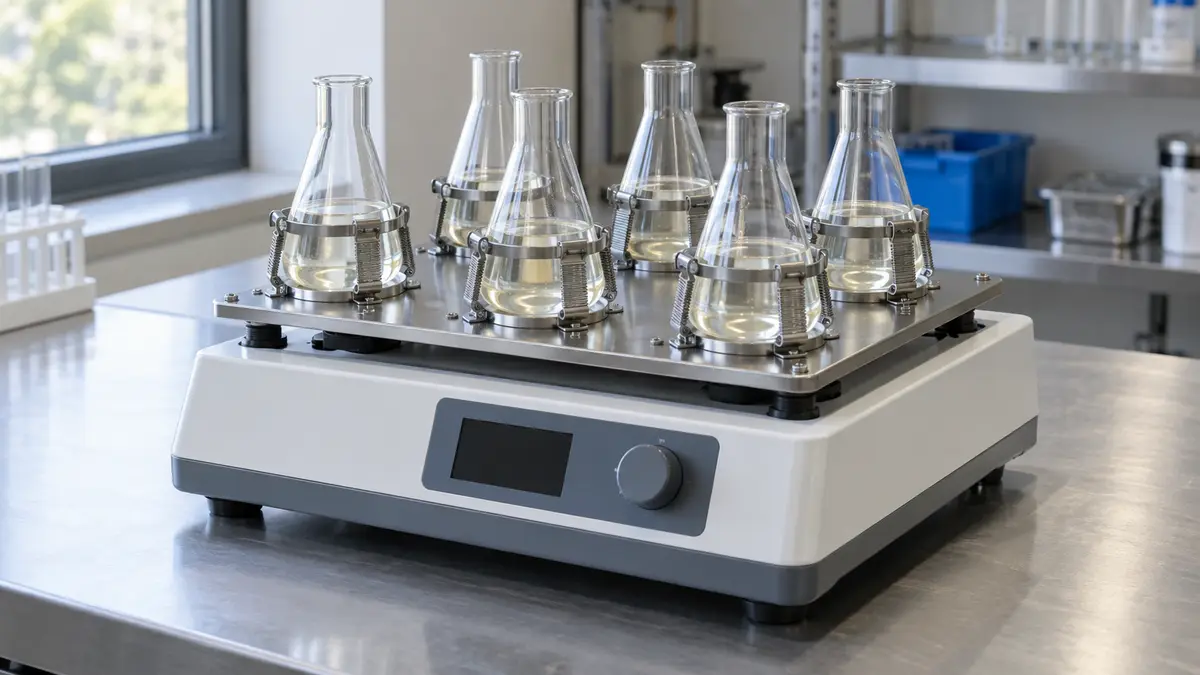
Specify orbital rather than rocking or reciprocating movement, orbit diameter, speed range, speed accuracy under load, timer behaviour and continuous operation. Identify the vessels, their filled mass, platform dimensions and clamp layout. Agree a test using the intended vessels and representative liquid loads, including uneven loading within the supplier's stated limits.
For incubator-compatible models, confirm the permitted ambient conditions and whether the controls remain accessible. For enclosed heated or refrigerated models, specify temperature uniformity with the platform moving. Agree cleaning compatibility, spill handling, replacement clamps and drive spares.
For supply in Great Britain, confirm with the relevant authority the applicable machinery safety requirements and whether a technical file, declaration of conformity, conformity marking and English instructions are required. Match these documents to the actual model and configuration. Use testing and certification support to define the evidence needed before ordering.
Worked duty example
Illustrative example, not a quote: Illustrative small batch of benchtop laboratory orbital shakers, subject to classification under 8479 82 00 00, invoiced at £3,840 free on board, with £150 of freight and insurance to the UK. The customs value is £3,990. Duty at 0% is £0. Import VAT at 20% is charged on the customs value plus duty, £3,990, so it is £798. With no duty, the only import tax is the VAT, which a VAT-registered importer can usually reclaim. The import duty and VAT guide explains each step.
Inspection checklist
Motion: check orbital movement, measured speed and stable operation with the agreed loaded vessels; listen for bearing noise and rubbing.
Retention: check every supplied clamp and platform fixing, vessel clearance and whether vessels creep or loosen during the agreed run.
Controls: check timer expiry, stopping behaviour and the stated response to power interruption; inspect the cable, plug and accessible moving mechanisms.
Documents and packing: match the nameplate and declaration to the delivered model, check English instructions and inspect platform supports for transit damage. Record results in the inspection report.
Working out your own order? Send us the product on WhatsApp and we reply the same working day: WhatsApp us
What goes wrong
A shaker can run smoothly empty but vibrate, lose speed or move across the bench when loaded. Clamps that fit the vessel diameter can still grip poorly around its actual shape. A display reading is not a measured speed result, and a platform photograph does not establish usable vessel capacity.
Agree acceptance criteria before production and repeat the loaded test on arrival. Hold units with loose platforms, damaged vessel restraints or unexplained stopping behaviour for investigation. Resolve missing model-specific documents before supply rather than relying on a generic certificate.
Cambridge China Bridge sources these products for UK businesses, checking the factory and the documents before shipment. See factory verification. For machinery and equipment, see machinery imports.
Frequently asked questions
What is the UK import duty on orbital shakers from China?
The candidate machine and parts lines shown carry 0% ordinary duty, with no recorded trade remedies or suspensions. Confirm the exact classification and attached controls before importing.
Is a CE certificate enough for a laboratory shaker?
Check the actual conformity marking, model-specific declaration of conformity, English instructions and supporting technical evidence. A generic supplier certificate does not establish that the delivered configuration meets the requirements.
How do I check an orbital shaker before shipment?
Run it with the intended vessels and representative filled loads. Measure speed, inspect orbital movement and check vibration, vessel retention, timer expiry and stopping behaviour against the agreed specification.
Can I use the same specification for a refrigerated shaker?
Add temperature uniformity under moving load, condensation management and refrigerant details. Ask your customs broker to check classification and any fluorinated greenhouse gas control for the complete machine.