Sourcing vehicle reversing alarms from China
Vehicle reversing alarms from China may fall within heading 8531, whose supplied lines carry 0% to 2% UK duty. Confirm classification before ordering: this heading excludes apparatus of heading 8512. For workplace use, HSE advises choosing alarms through a risk assessment alongside other measures. Cambridge China Bridge sources vehicle reversing alarms.
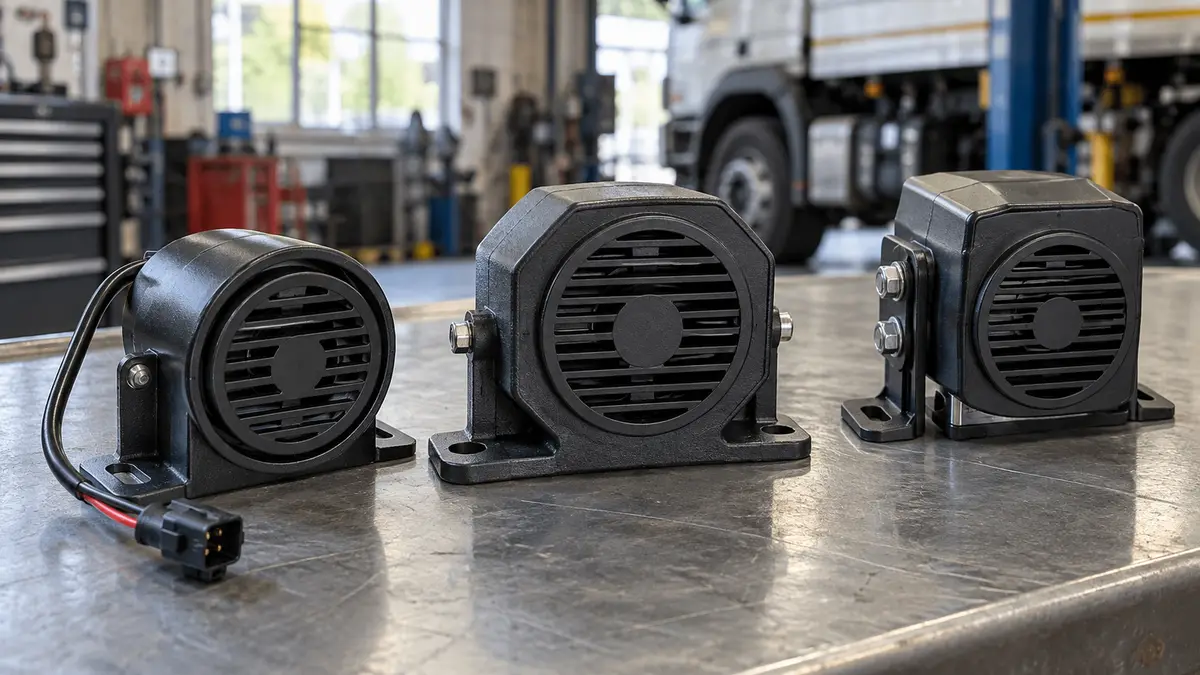
Duty depends on the sounder and its classification
Heading 8531 covers electrical sound or visual signalling apparatus and parts, excluding apparatus of headings 8512 and 8530. Do not treat every vehicle reversing alarm as an automatic fit. The table shows possible sounder, parts and separate indicator-panel lines for comparison; it does not classify a complete reversing system.
Read from the UK Trade Tariff on 29 September 2026, the supplied lines carried 0% or 2% duty for goods from China. Buzzers and similar apparatus under 8531 80 40 90 carried 2%; other apparatus under 8531 80 70 00, parts and the listed indicator panels carried 0%. The supplied file records no anti-dumping or countervailing duty, suspensions or attached import controls.
Give your customs broker the datasheet, photographs, intended vehicle or machine, wiring diagram and details of any sensors or display. Confirm the commodity code before ordering. For the wider heading, see industrial audible warning sirens.
| Goods | Commodity code | Duty | Anti-dumping or countervailing duty on China |
|---|---|---|---|
| Buzzers and similar sounders, subject to classification | 8531 80 40 90 | 2% | None |
| Other audible signalling apparatus, subject to classification | 8531 80 70 00 | 0% | None |
| Parts of signalling apparatus | 8531 90 00 00 | 0% | None |
| Separate indicator panels with light-emitting diodes | 8531 20 20 90 | 0% | None |
Specify the sound, supply and installation
Specify a tonal or broadband alarm, fixed or adaptive output, supply-voltage range, current draw, polarity protection and reverse-signal input. Agree the sound measurement distance and background conditions rather than comparing catalogue loudness claims alone. Include mounting-hole positions, connector layout, cable exit, enclosure sealing and exposure to washing, vibration and road spray.
For Great Britain, establish which electromagnetic compatibility rules apply to the exact product and installation. The general regulations cover equipment liable to generate electromagnetic disturbance, with exceptions including equipment covered by other specific instruments. Where they apply, importers must check conformity assessment and provide their identification and postal address. Ask for model-matched evidence through testing and certification.
HSE says reversing alarms may be appropriate based on a risk assessment and may work best with other measures, such as warning lights. Agree an installed demonstration on the intended vehicle. Keep road-use suitability as a separate question for the installer before selecting the product.
Worked duty example
Illustrative example, not a quote: Illustrative batch of vehicle reversing sounders, assuming classification is confirmed under 8531 80 70 00, invoiced at £12,000 free on board, with £600 of freight and insurance to the UK. The customs value is £12,600. Duty at 0% is £0. Import VAT at 20% is charged on the customs value plus duty, £12,600, so it is £2,520. With no duty, the only import tax is the VAT, which a VAT-registered importer can usually reclaim. The import duty and VAT guide explains each step.
Inspection checklist
Identity: match the model, sound type, supply rating, connector and mounting dimensions to the approved sample and order.
Operation: trigger the alarm through the intended reverse input, test across the agreed supply range and check adaptive behaviour under changing background noise.
Sound and enclosure: compare output using the agreed measurement setup; inspect seals, cable glands, brackets and drainage, then carry out the agreed washing and vibration checks.
Documents: match reports to the supplied model and construction. Where the electromagnetic compatibility regulations apply, check importer identification and English instructions.
Working out your own order? Send us the product on WhatsApp and we reply the same working day: WhatsApp us
What goes wrong
An alarm can sound convincing on a quiet bench yet become hard to hear beside an operating engine. Mounting behind bodywork can change its output. HSE warns that background noise can drown alarms out and that pedestrians may stop noticing them on busy sites. Compare the installed sample in the actual working environment.
Check for water entering through the cable exit, brackets loosening under vibration, incorrect connector pin assignments and changes to the speaker or control board between sample and bulk production. Record the approved construction and require the supplier to disclose substitutions before shipment.
Cambridge China Bridge sources these products for UK businesses, checking the factory and the documents before shipment. See factory verification. For components and parts, see sourcing for manufacturers.
Frequently asked questions
What is the UK import duty on reversing alarms from China?
The supplied heading 8531 lines carry 0% or 2%. Buzzers and similar apparatus carry 2%; other apparatus and parts carry 0%. Confirm the exact classification, including the heading 8512 exclusion.
Should I choose a tonal or broadband reversing alarm?
Compare both on the intended vehicle under representative background noise. Specify the sound type and measurement setup, then choose through the site's risk assessment.
Does a reversing alarm make workplace reversing safe?
HSE advises assessing its use alongside other measures, such as warning lights. Noise can drown alarms out, and pedestrians may stop noticing them on busy sites.
What should I ask the Chinese factory to provide?
Ask for a wiring diagram, operating specifications, an approved sample and model-matched conformity evidence. Agree checks for sound output, supply range, sealing and vibration before bulk production.