Sourcing oil deodoriser distillate from China
Vegetable oil deodoriser distillate needs composition-based classification. UK percentage duties are 0% to 2%; olive-oil-character residues pay weight-based duty. Confirm waste status and veterinary-control applicability before shipping. Cambridge China Bridge sources vegetable oil deodoriser distillate.
Buying from China for a business? How our UK China sourcing agent service works · China sourcing agent for small orders and first imports
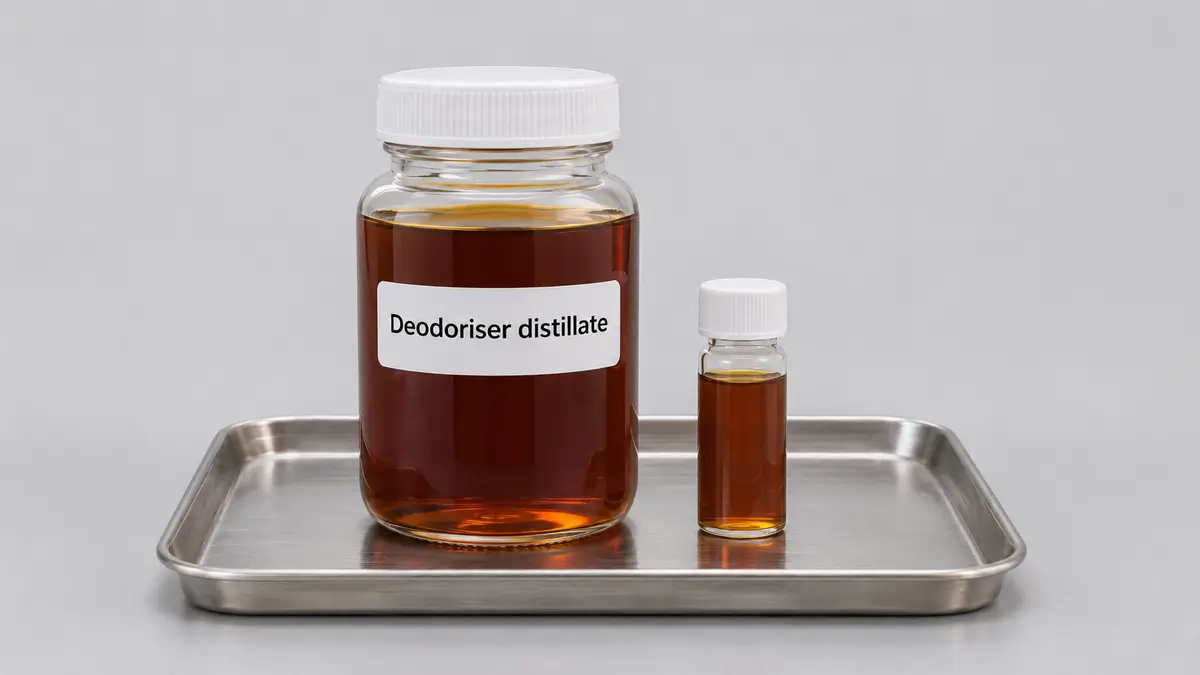
Duty depends on the residue's identity
Read from the UK Trade Tariff on 29 September 2026, heading 1522 covers degras and residues from treating fatty substances or animal or vegetable waxes. The supplied tariff lines do not name vegetable oil deodoriser distillate separately. Treat 1522 00 99 00 as a classification candidate for raw non-olive distillate, subject to confirmation from its composition and refinery process. The table includes neighbouring residues for comparison. See the wider degras and oil residues guide.
For Chinese-origin goods, 1522 00 99 00 carries 0% duty and non-olive oil foots, dregs and soapstocks under 1522 00 91 00 carry 2%. Residues containing oil with olive-oil characteristics carry £25 per 100 kg for soapstocks or £40 per 100 kg for other residues. The supplied data records no anti-dumping or countervailing duty and no suspensions.
The UK Trade Tariff attaches veterinary control, waste import control and waste export control to these lines. For a wholly vegetable consignment from China, ask your customs broker to confirm veterinary-control applicability and the required declaration evidence. Confirm waste status, import requirements and any onward waste-export requirements before shipment. Use the refinery process description and batch analysis to confirm the commodity code.
| Goods | Commodity code | Duty | Anti-dumping or countervailing duty on China |
|---|---|---|---|
| Other non-olive oil residues: candidate line for raw deodoriser distillate | 1522 00 99 00 | 0% | None |
| Non-olive oil foots, dregs and soapstocks: neighbouring products | 1522 00 91 00 | 2% | None |
| Other residues containing oil with olive-oil characteristics | 1522 00 39 00 | £40.00 per 100 kg | None |
| Soapstocks containing oil with olive-oil characteristics: comparison | 1522 00 31 00 | £25.00 per 100 kg | None |
Specify the refinery stream and recoverable components
Specify the source vegetable oil, producing refinery, physical or chemical refining route, and the exact stream collected during deodorisation. State whether the material is raw distillate, treated material or a blended residue. Describe the intended industrial process, such as recovery of tocopherols or plant sterols, and request a representative sample for a processing trial.
Agree batch acceptance criteria for free fatty acids, moisture, insoluble impurities, unsaponifiable matter and the components you intend to recover. Specify test methods, sampling arrangements, storage conditions and the heating needed for unloading. Ask for previous-cargo and cleaning records for bulk transport, or container compatibility information for drums.
For feed use, most businesses using, manufacturing or marketing feed must be approved or registered with their competent authority. Seek product-specific advice on the refining route and contaminant testing before buying for feed. For industrial supply, check your UK REACH position: some businesses have registration responsibilities and others do not. Do not assume the supplier's grade description establishes suitability for your intended use.
Worked duty example
Illustrative example, not a quote: Illustrative order: 20 tonnes of vegetable oil deodoriser distillate for industrial processing, subject to classification confirmation under 1522 00 99 00, invoiced at £30,000 free on board, with £2,500 of freight and insurance to the UK. The customs value is £32,500. Duty at 0% is £0. Import VAT at 20% is charged on the customs value plus duty, £32,500, so it is £6,500. With no duty, the only import tax is the VAT, which a VAT-registered importer can usually reclaim. The import duty and VAT guide explains each step. This assumes the goods are standard-rated for VAT. Most food for human consumption is zero-rated, and animal feed can be too, in which case no import VAT is due, so check the rate for your product in HMRC's VAT Notice 701/14.
Inspection checklist
Identity: match the refinery, source oil, process description and batch references to the purchase specification and analysis certificate.
Composition: independently sample the shipment and compare free fatty acids, moisture, impurities, tocopherols and sterols with the agreed acceptance criteria.
Condition: check for water separation, unexpected sediment, oxidation odour, leaking closures and signs of contamination from previous cargoes.
Unloading and records: check pumpability against the agreed handling conditions, seal references, net weight and the waste or non-waste documentation.
Working out your own order? Send us the product on WhatsApp and we reply the same working day: WhatsApp us
What goes wrong
A sample may contain more recoverable tocopherols or sterols than the delivered batch. Blending with other refinery residues can change acidity, moisture and recovery yield. A description such as vegetable oil residue leaves too much unresolved: require the refinery stream and batch analysis before agreeing classification or accepting delivery.
Waste paperwork can also stop the shipment. Where notification controls apply to an import into England, shipment can start only after the Environment Agency and other competent authorities involved have consented. Resolve that route before loading, or retain evidence supporting non-waste status. Arrange quality inspection around representative sampling and the intended processing trial.
Cambridge China Bridge sources these products for UK businesses, checking the factory and the documents before shipment. See factory verification. For repeat volumes, see container programmes.
Frequently asked questions
What is the UK import duty on vegetable oil deodoriser distillate from China?
The candidate other-residue line 1522 00 99 00 carries 0%. Neighbouring non-olive oil foots and soapstocks carry 2%; olive-oil-character residues carry £25 or £40 per 100 kg. Confirm classification.
Is vegetable oil deodoriser distillate automatically waste?
Establish waste status from the actual material and its documentation. The tariff attaches waste controls; ask your customs broker to confirm the route rather than relying on the supplier's product name.
Can I buy deodoriser distillate for animal feed?
Seek product-specific advice on the refining route and contaminant testing first. Most businesses using, manufacturing or marketing feed must be approved or registered with their competent authority.
What should I test before accepting a batch?
Check free fatty acids, moisture, insoluble impurities and unsaponifiable matter, plus tocopherols or sterols where recovery is intended. Compare a representative shipment sample with the agreed specification.