Sourcing upholstery hand-tool sets from China
Upholstery hand-tool sets qualifying for heading 8206 carry 2% UK duty from China, with no listed trade remedies. The retail set must combine tools from different headings within 8202 to 8205; its upholstery use alone does not decide classification. Cambridge China Bridge sources upholstery hand-tool sets.
Buying from China for a business? How our UK China sourcing agent service works · China sourcing agent for small orders and first imports
UK duty on upholstery hand-tool sets
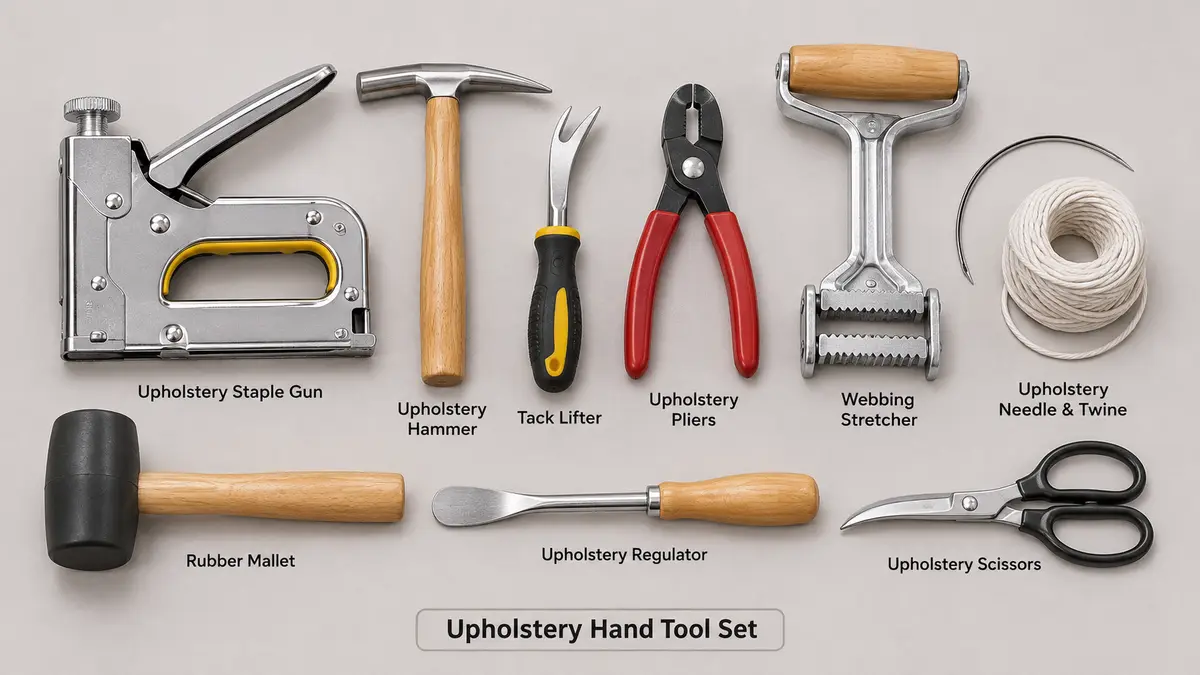
Heading 8206 covers tools of two or more of headings 8202 to 8205, put up in sets for retail sale. For upholstery buyers, this can include fabric shears packaged with tack hammers, tack lifters or webbing stretchers. The table shows buying variants of the supplied tariff line, rather than separate commodity codes.
Read from the UK Trade Tariff on 4 October 2026, the supplied line carries 2% duty for goods from China. The record lists no anti-dumping or countervailing duties, suspensions or attached import controls. Import VAT is normally 20%; see UK import duty and VAT.
Confirm the commodity code against the complete contents and retail packaging. A collection of tools all within heading 8205 has a different classification, even if sold as an upholstery kit. Send the broker an itemised contents list and photographs. See the wider hand-tool sets guide.
| Goods | Commodity code | Duty | Anti-dumping or countervailing duty on China |
|---|---|---|---|
| Retail upholstery set with fabric shears and tack hammer | 8206 00 00 00 | 2% | None |
Specify the upholstery tasks and tool profiles
List every tool and its intended task: cutting fabric, lifting tacks, removing staples, tensioning webbing or driving upholstery tacks. Specify shear blade length and handedness, tack-lifter tip width and angle, pincer jaw profile, hammer face finish and stretcher grip design. State whether the tools will work on delicate cover fabric, heavy webbing or timber frames.
Agree steel grades, heat treatment, finish, handle material and handle retention. Approve samples using your fabric, webbing, tacks and frame timber. Check that shears cut without snagging, lifters reach beneath tack heads and stretchers grip without unacceptable webbing damage. Include protective covers and a packing layout that separates sharp edges.
For tools supplied for use at work, confirm the applicable safety and safe-use information requirements with HSE. Ask for instructions covering exposed points, blade handling and the intended gripping and levering tasks. If selling to consumers, you must not sell products you know, or should have known, are unsafe.
Worked duty example
Illustrative example, not a quote: Illustrative batch of retail upholstery sets with fabric shears and tack hammers under 8206 00 00 00, invoiced at £4,000 free on board, with £2,000 of freight and insurance to the UK. The customs value is £6,000. Duty at 2% is £120. Import VAT at 20% is charged on the customs value plus duty, £6,120, so it is £1,224. Import taxes total £1,344; a VAT-registered importer can usually reclaim the VAT, so the lasting cost is the £120 of duty. The import duty and VAT guide explains each step.
Inspection checklist
Contents and profiles: match every tool to the approved contents list; check shear handedness, lifter tips, pincer jaws, hammer faces and stretcher grips.
Working trial: cut the agreed fabric, lift tacks from sample timber and tension the specified webbing; check for snagging, slipping, bent tips and unwanted surface marks.
Handles and finish: check handle security, comfortable grip, burrs, corrosion, coating adhesion and exposed sharp edges outside the intended working surfaces.
Arrival and packing: count the tools, inspect blade covers and point protection, and check that the case retains each item during handling. Agree the shipment checks through quality inspection.
Working out your own order? Send us the product on WhatsApp and we reply the same working day: WhatsApp us
What goes wrong
A tack lifter with a thick tip cannot reach beneath a closely driven tack. Poorly aligned shears fold fabric instead of cutting it, pincers slip on staple legs, and rough hammer faces mark decorative tack heads. A stretcher can grip securely yet tear the buyer's webbing because its teeth or gripping surface do not suit that material.
Handle movement, bent lifter tips and rust can appear after an acceptable sample. Keep an approved tool sample and task trial for comparison with production. Specify edge protection and secure case pockets so loose tools cannot strike each other or puncture the packaging.
Cambridge China Bridge sources these products for UK businesses, checking the factory and the documents before shipment. See factory verification. For repeat volumes, see container programmes.
Frequently asked questions
What is the UK import duty on upholstery tool sets from China?
Sets qualifying for 8206 00 00 00 carry 2% duty from China. The supplied tariff record lists no anti-dumping or countervailing duties.
Does every upholstery toolkit use heading 8206?
No. Heading 8206 requires a retail set combining tools from different headings within 8202 to 8205. Check the actual contents; tools all within heading 8205 have a different classification.
How should I test an upholstery tool set?
Use your actual fabric, webbing, tacks and frame timber. Check clean cutting, access beneath tack heads, grip, handle security and whether the tools leave unwanted marks.
What should I specify for an upholstery webbing stretcher?
Specify the webbing material and width, stretcher grip design, handle shape and acceptable contact marks. Approve a trial that checks holding performance and damage to the webbing.