Sourcing leatherworking hand-tool sets from China
Leatherworking hand-tool sets qualifying for heading 8206 carry 2% UK duty from China, with no listed trade remedies. The set must combine tools from different headings within 8202 to 8205 and be put up for retail sale. Confirm applicable consumer product safety requirements with the relevant authority. Cambridge China Bridge sources leatherworking hand-tool sets.
Buying from China for a business? How our UK China sourcing agent service works · China sourcing agent for small orders and first imports
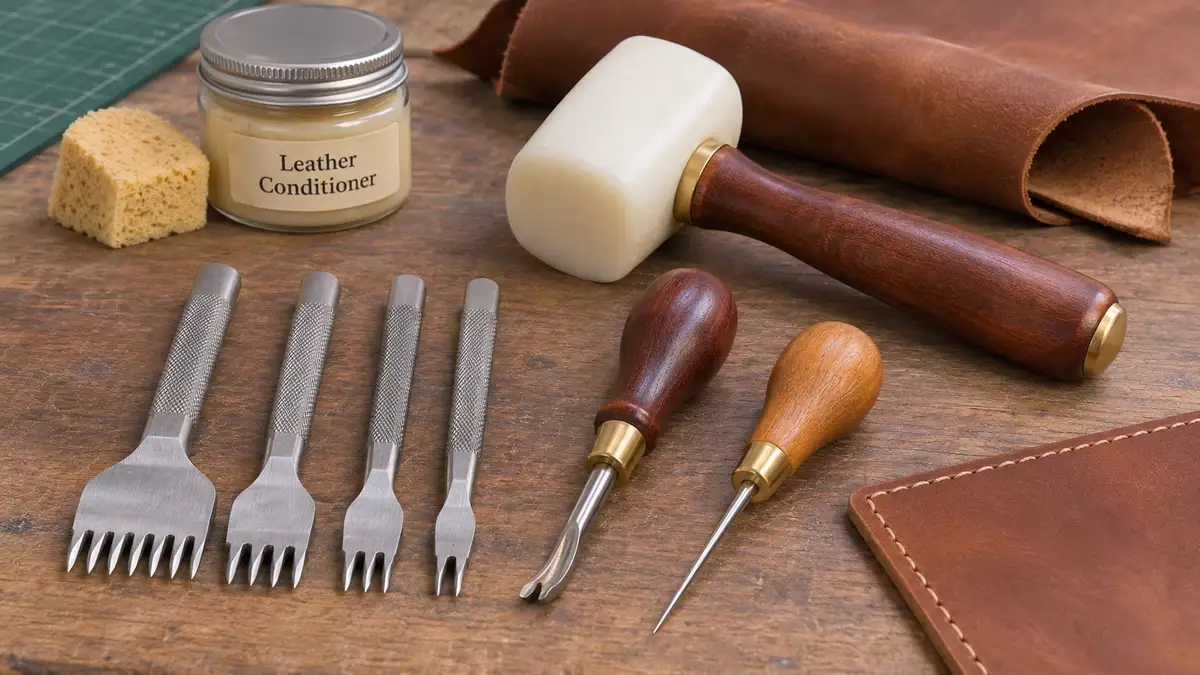
Duty and classification for leatherworking sets
Read from the UK Trade Tariff on 4 October 2026, heading 8206 covers tools of two or more of headings 8202 to 8205, put up in sets for retail sale. A leatherworking label or a large accessory count does not establish this classification. The table shows product variants sharing the supplied commodity line, subject to confirmation of their actual contents.
The supplied line, 8206 00 00 00, carries 2% duty for goods from China. The record lists no anti-dumping or countervailing measures, tariff suspensions or attached import controls. Do not assume that a collection of punches and awls qualifies simply because it is sold in a case.
Give your customs broker the itemised contents, tool functions and retail packaging details, using the commodity code guide. For another product family within the wider heading, see the jewellery-making hand-tool sets guide.
| Goods | Commodity code | Duty | Anti-dumping or countervailing duty on China |
|---|---|---|---|
| Retail leatherworking sets with cutting pliers, awls and punches | 8206 00 00 00 | 2% | None |
Specify cutting edges, hole geometry and set contents
List every tool and accessory separately. Specify punch opening dimensions, stitching-chisel tooth spacing and profile, awl shape, beveller cutting width and groover adjustment. State the leather type and thickness to be used for acceptance trials. Agree steel grade, heat treatment, hardness, sharpening condition and handle material rather than accepting a photograph as the specification.
Approve a sample that punches clean holes, releases without tearing the leather and produces an even edge or groove. Match rivet-setting tips to the intended hardware. Specify secure handles, protective caps, storage positions and an itemised packing list. Keep adhesives, dyes and powered tools outside this guide's scope.
Consumer tool sets are covered by the General Product Safety Regulations 2005, including products likely to be used by consumers. Confirm applicable safety and safe-use information requirements for tools supplied for use at work with HSE. Request instructions covering sharp points, cutting edges, striking tools and damaged handles.
Worked duty example
Illustrative example, not a quote: Illustrative batch of retail leatherworking sets with cutting pliers, awls and punches for a small craft-tool retailer under 8206 00 00 00, invoiced at £4,000 free on board, with £1,000 of freight and insurance to the UK. The customs value is £5,000. Duty at 2% is £100. Import VAT at 20% is charged on the customs value plus duty, £5,100, so it is £1,020. Import taxes total £1,120; a VAT-registered importer can usually reclaim the VAT, so the lasting cost is the £100 of duty. The import duty and VAT guide explains each step.
Inspection checklist
Contents: count tools against the approved packing list; check sizes, functions and accessory compatibility, including the fit of rivet-setting tips.
Geometry: measure punch openings and chisel spacing; check tooth alignment, awl straightness, cutting-edge finish and groover adjustment against the approved sample.
Performance: trial the tools on the agreed leather; inspect hole shape, tearing, tool release, groove consistency and edge finish, then check for bent or chipped working parts.
Arrival condition: inspect corrosion, loose handles, burrs, missing guards and damaged cases; check identification and instructions. Agree sampling and acceptance checks through the inspection guide.
Working out your own order? Send us the product on WhatsApp and we reply the same working day: WhatsApp us
What goes wrong
A kit can contain many accessories but omit the tools needed for the buyer's process. Inconsistent chisel spacing produces uneven stitching, rough punch interiors trap waste, and poorly sharpened bevellers tear the edge. Compare the production contents and trial results with the approved sample.
Soft teeth bend while brittle teeth chip under striking. Loose handles and exposed points create handling hazards; damp packing can leave steel tools rusty on arrival. Require secure tool retention and protected working ends, and assess damaged sets before putting them into use or sale.
Cambridge China Bridge sources these products for UK businesses, checking the factory and the documents before shipment. See factory verification. For repeat volumes, see container programmes.
Frequently asked questions
What is the UK import duty on leatherworking hand-tool sets from China?
Qualifying retail sets under 8206 00 00 00 carry 2% duty from China. The supplied tariff record lists no anti-dumping or countervailing measures.
Does every leatherworking kit fall under heading 8206?
No. Heading 8206 requires tools from two or more headings within 8202 to 8205, put up for retail sale. Confirm the actual contents rather than relying on the kit name.
What should I test on leatherworking tools before shipment?
Check punch openings, chisel spacing, edge sharpness and handle security. Trial the tools on the agreed leather and inspect tearing, tool release, groove consistency and tooth damage.
Can I include a skiving knife in a leatherworking kit?
Check its effect on classification and the sales arrangements before ordering. Confirm any applicable knife-sale age restrictions, online age-verification requirements and delivery restrictions with Trading Standards.