Sourcing jewellery tool sets from China
Jewellery-making hand tool sets qualifying under heading 8206 carry 2% UK duty from China. The tool mix must span different tariff headings; consumer sets sold in Great Britain fall under the General Product Safety Regulations 2005. Cambridge China Bridge sources jewellery-making hand tool sets.
Buying from China for a business? How our UK China sourcing agent service works · China sourcing agent for small orders and first imports
Duty and the contents of the set
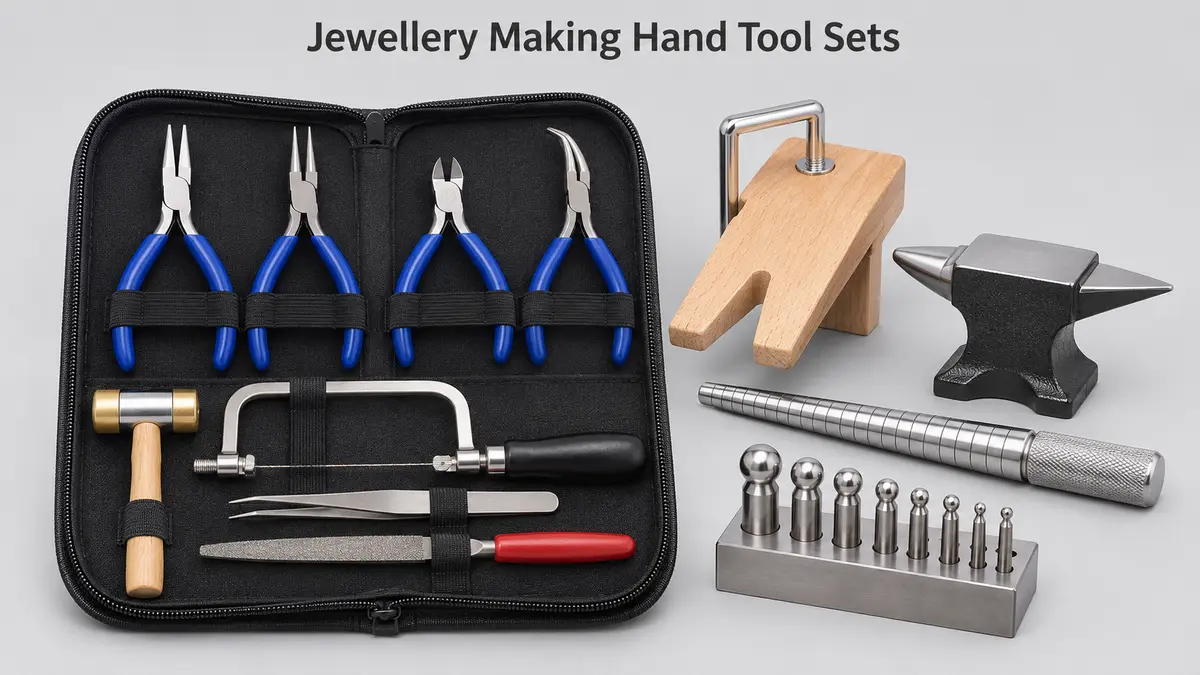
Read from the UK Trade Tariff on 4 October 2026, heading 8206 covers tools of two or more of headings 8202 to 8205, put up in sets for retail sale. For jewellery-making, assess the actual combination of saws, pliers, files and hammers. The table shows product variants sharing the supplied commodity line, rather than separate tariff subdivisions.
Code 8206 00 00 00 carries 2% duty for goods from China. The supplied tariff record lists no anti-dumping or countervailing measures, suspensions or attached import controls. These tariff findings do not establish product safety compliance.
Give your customs broker the complete contents list and retail packaging details, and use the commodity code guide. Do not assume that a plier-only collection qualifies because it is sold as a jewellery-making set. For the wider heading, see the hand tool sets guide.
| Goods | Commodity code | Duty | Anti-dumping or countervailing duty on China |
|---|---|---|---|
| Retail jewellery-making set with piercing saw and pliers | 8206 00 00 00 | 2% | None |
Specify jaws, cutting capacity and forming surfaces
List every tool and its intended operation. Specify round-nose jaw taper, chain-nose tip alignment, flat-nose jaw width and whether gripping surfaces are smooth or serrated. State the wire materials and diameters cutters must handle, including whether hard wire is excluded. Agree steel grade, heat treatment, surface finish, handle material and spring action.
For saws, agree blade compatibility, clamping and tension adjustment. For files, specify profile and cut; for hammers, specify face shape, polish and handle attachment. Approve trials using your intended wire, sheet and findings, checking that tools form clean loops without unwanted marks.
Consumer tool sets sold in Great Britain are covered by the General Product Safety Regulations 2005, and importers and sellers are responsible for consumer product safety. For tools supplied for use at work, confirm with HSE the applicable safety duties and safe-use information requirements. Request instructions covering sharp edges, flying cut ends and cutting limitations.
Worked duty example
Illustrative example, not a quote: Illustrative small-business stock order of retail jewellery-making sets containing piercing saws and pliers under 8206 00 00 00, invoiced at £4,000 free on board, with £1,580 of freight and insurance to the UK. The customs value is £5,580. Duty at 2% is £111.60. Import VAT at 20% is charged on the customs value plus duty, £5,691.60, so it is £1,138.32. Import taxes total £1,249.92; a VAT-registered importer can usually reclaim the VAT, so the lasting cost is the £111.60 of duty. The import duty and VAT guide explains each step.
Inspection checklist
Jaws: check tip alignment, symmetry, joint play and gripping-surface finish; form loops and grip representative findings to check for scratching or slipping.
Cutting and forming: cut the agreed wire materials and inspect cut ends, edge damage and handle movement; check saw clamps, file performance and hammer-face marks.
Materials and handles: compare material documents and sample hardness with the agreed specification; check for burrs, corrosion, loose grips, trapped fingers and displaced springs.
Contents and packing: count tools against the approved list, check identification and instructions, and confirm that packing protects tips and cutting edges. Agree batch checks through the inspection guide.
Working out your own order? Send us the product on WhatsApp and we reply the same working day: WhatsApp us
What goes wrong
Misaligned plier tips twist small loops, while rough or serrated jaws mark soft metal. Cutters can crush wire or chip when the claimed capacity exceeds their actual capability. A polished sample does not establish batch consistency, so compare production tools with the approved sample and repeat the same practical trials.
Loose pivots, stiff joints and slipping grips make delicate work difficult. Poor saw clamps release blades, rough hammer faces transfer marks, and tools moving inside a pouch can damage neighbouring tips. Replacing a saw or hammer with extra pliers also changes the contents used for classification; review substitutions before approving shipment.
Cambridge China Bridge sources these products for UK businesses, checking the factory and the documents before shipment. See factory verification. For repeat volumes, see container programmes.
Frequently asked questions
What is the UK import duty on jewellery-making hand tool sets from China?
Sets qualifying under 8206 00 00 00 carry 2% duty from China. The supplied tariff record lists no anti-dumping or countervailing measures.
Does a jewellery plier set belong under heading 8206?
Do not assume so. Heading 8206 requires tools from different headings within 8202 to 8205. Ask your broker to classify the actual contents and retail presentation.
How do I stop jewellery pliers marking wire?
Specify the gripping-surface finish and tip alignment, then trial the approved sample on your actual wire and findings. Inspect production jaws for roughness and burrs.
What should I check before accepting a tool set?
Check contents, jaw alignment, pivot play, cutter performance, handle security and corrosion. Trial saws, files and hammers where included, and check instructions and protective packing.