Sourcing tomato flakes from China
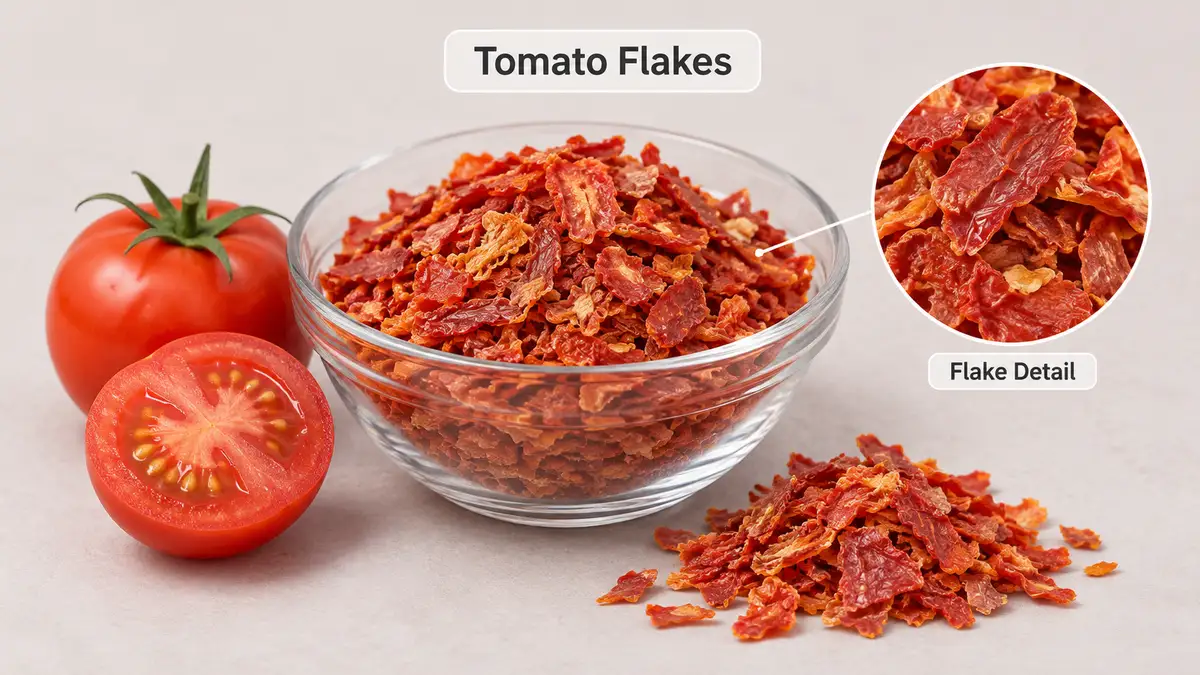
Tomato flakes confirmed within heading 2002 pay 14% UK duty from China across the listed lines. The tomato-paste suspension does not cover flakes. Importers must ensure the food is safe and legal before import, and confirm classification from the actual process and recipe. Cambridge China Bridge sources tomato flakes.
Buying from China for a business? How our UK China sourcing agent service works · China sourcing agent for small orders and first imports
14% duty for flakes confirmed under 2002
Read from the UK Trade Tariff on 5 October 2026, heading 2002 covers tomatoes prepared or preserved otherwise than by vinegar or acetic acid. This guide concerns prepared tomato flakes confirmed within that heading. The table compares possible prepared-piece and other prepared-product lines; it does not assign a code from the name ‘tomato flakes’. Give your broker the processing description, ingredients, dry matter result and immediate pack size.
The supplied tariff lines all carry 14% duty for goods from China, with no anti-dumping or countervailing measures recorded. The heading's suspension applies only to specified tomato paste, not flakes. The UK Trade Tariff attaches an organic-products import control. For organic flakes, confirm the certificate and clearance requirements with your customs broker. The inspection certificate is issued by the exporter's control body in the country of export.
Before ordering, ask your broker to check whether the process supports this heading, particularly when the product is simply dried tomato pieces. Confirm the commodity code using the actual specification. For the wider heading and the distinction from powdered products, see the tomato powder guide.
| Goods | Commodity code | Duty | Anti-dumping or countervailing duty on China |
|---|---|---|---|
| Prepared peeled tomato pieces, immediate packs over 1 kg | 2002 10 11 00 | 14% | None |
| Prepared peeled tomato pieces, immediate packs up to 1 kg | 2002 10 19 00 | 14% | None |
| Other prepared tomatoes in pieces | 2002 10 90 00 | 14% | None |
| Other prepared tomato products, over 34% dry matter, excluding powder | 2002 90 80 90 | 14% | None |
Specify flake size, moisture and intended use
Describe whether the flakes are cut tomato pieces or flakes made from processed tomato material. Agree the size distribution, acceptable fines, peel and seed content, colour, flavour, moisture and water activity. State every ingredient, including salt, sugar, starch and processing additions. Approve a retained sample and test rehydration in your actual soup, sauce or seasoning application.
Agree batch microbiological testing and pesticide-residue checks, with reports identifying the supplied lot. Importers must ensure the food is safe and legal before it enters Great Britain. Ask for growing-area and processing-site traceability, drying records, storage instructions and packaging that protects the flakes from moisture. Arrange testing and certification support around the agreed specification.
Worked duty example
Illustrative example, not a quote: Illustrative order: 1,250 kg of prepared tomato flakes in lined bags, classification confirmed under 2002 90 80 90, invoiced at £3,500 free on board, with £2,500 of freight and insurance to the UK. The customs value is £6,000. Duty at 14% is £840. Import VAT at 20% is charged on the customs value plus duty, £6,840, so it is £1,368. Import taxes total £2,208; a VAT-registered importer can usually reclaim the VAT, so the lasting cost is the £840 of duty. The import duty and VAT guide explains each step. This assumes the goods are standard-rated for VAT. Most food for human consumption is zero-rated, and animal feed can be too, in which case no import VAT is due, so check the rate for your product in HMRC's VAT Notice 701/14.
Inspection checklist
Flake grade: compare representative samples with the approved size distribution, colour, peel content and fines allowance; check for scorched fragments and foreign material.
Moisture and performance: compare laboratory moisture and water activity results with the contract; assess clumping, odour and rehydration in the intended recipe.
Packaging: inspect liners, seals and cartons for tears, dampness and contamination; check that the received lot matches the packing list and analysis report.
Labels and records: check product description, ingredients, batch identification and agreed storage wording. The net quantity must be close enough to the food name to read both together. Use the inspection guide to agree sampling and reporting.
Working out your own order? Send us the product on WhatsApp and we reply the same working day: WhatsApp us
What goes wrong
Excess fines turn a flake ingredient into dust, while uneven drying leaves tough pieces or damp clumps. Overheating darkens the flakes and changes flavour. Damaged liners allow moisture ingress during transport. A sample that looks acceptable dry may soften poorly or release an unwanted flavour in the buyer's recipe.
Another failure is ordering against a trade name without fixing the process, ingredients and classification. Keep the approved sample, specification and batch reports together. Hold damp, mouldy or suspect stock apart while investigating it, and resolve any organic-document uncertainty before dispatch.
Cambridge China Bridge sources these products for UK businesses, checking the factory and the documents before shipment. See factory verification. For repeat volumes, see container programmes.
Frequently asked questions
What is the UK import duty on tomato flakes from China?
For flakes confirmed within heading 2002, all supplied lines carry 14% duty from China. No trade remedies are recorded, and the specified tomato-paste suspension does not cover flakes.
Which commodity code should I use for tomato flakes?
Ask your broker to assess the process, ingredients, dry matter and immediate packaging. Do not choose a prepared-product code solely because the supplier calls the goods tomato flakes.
What should I test before buying tomato flakes?
Agree flake size, fines, moisture, water activity, colour, flavour and rehydration. Match microbiological and pesticide-residue reports to the supplied batch.
What paperwork should I check for organic tomato flakes?
The tariff attaches an organic import control. Confirm certificate and clearance requirements with your broker; the inspection certificate is issued by the exporter's control body in the country of export.