Sourcing textile cycling shoes from China
Textile-upper cycling shoes with rubber or plastic outer soles carry 16% UK duty from China, with no variation across the listed lines. Footwear composition labels must identify the upper, lining and sock, and outer sole materials. Confirm the sole construction and pedal interface before ordering. Cambridge China Bridge sources textile-upper cycling shoes.
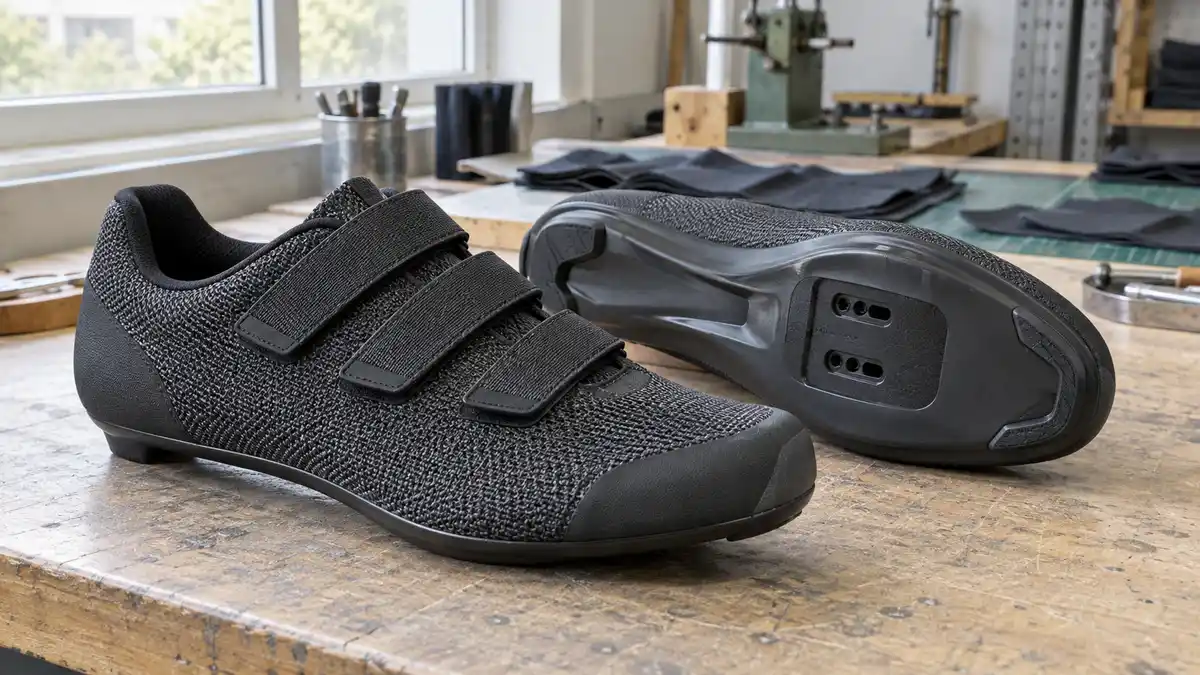
Duty and controls for textile-upper cycling shoes
Heading 6404 covers textile-upper footwear with rubber, plastic, leather or composition-leather outer soles. Read from the UK Trade Tariff on 30 September 2026, the supplied lines carry 16% duty for Chinese goods, with no anti-dumping or countervailing duty and no suspension recorded. The table shows buying variants sharing the sports-footwear line, rather than separate tariff subdivisions.
The sports-footwear line attaches fluorinated greenhouse gas and seal-product import controls. Government guidance prohibits fluorinated gases in footwear and placing products containing banned gases on the Great Britain market. Seal products may enter for sale only under the Inuit and other indigenous communities’ exemption, with a seal catch certificate. Ask the factory to confirm the absence of these materials and have your broker confirm the applicable declaration.
HMRC lists cycling shoes within sports footwear, but check the actual upper, outer sole and sporting features before using 6404 11 00 00. Confirm the commodity code against the production sample. See the textile wrestling boots guide for another product within the wider heading. For badminton styles, see our textile-upper badminton shoe sourcing guide. For fencing footwear, see our textile fencing shoe sourcing guide.
| Goods | Commodity code | Duty | Anti-dumping or countervailing duty on China |
|---|---|---|---|
| Textile-upper road cycling shoes, rubber or plastic outer soles | 6404 11 00 00 | 16% | None |
Specify the pedal interface and textile upper
State whether the shoe is for road, mountain or indoor cycling. Name the intended pedal and cleat system, provide the mounting drawing, and agree whether cleats and fixing hardware are included. Specify mounting position, adjustment travel, thread engagement and clearance around the cleat. Test the sample with the intended pedal rather than accepting a generic compatibility claim.
Agree textile construction, reinforcement panels, lining, closure, heel retention, sole stiffness and tread. Record foot length, width and internal fit for each ordered size. Confirm with the relevant authority how footwear labels should identify the materials of the upper, lining and sock, and outer sole. Consumer-product importers are responsible for making sure their products are safe.
Worked duty example
Illustrative example, not a quote: Illustrative mixed-size order of textile-upper cycling shoes under 6404 11 00 00, invoiced at £10,000 free on board, with £1,000 of freight and insurance to the UK. The customs value is £11,000. Duty at 16% is £1,760. Import VAT at 20% is charged on the customs value plus duty, £12,760, so it is £2,552. Import taxes total £4,312; a VAT-registered importer can usually reclaim the VAT, so the lasting cost is the £1,760 of duty. The import duty and VAT guide explains each step.
Inspection checklist
Pedal interface: fit the agreed cleat, check screw engagement and plate security, and test engagement and release on the intended pedal.
Sole and upper: check bonding, flex the forefoot, inspect reinforcement stitching and look for loose threads, sharp edges and glue contamination.
Fit and closures: compare production pairs with the approved fitting sample, check heel retention, and operate laces, straps or dial closures repeatedly.
Labels and packing: match composition labels to the approved materials, check paired sizes and carton quantities, and inspect arrival cartons for dampness or mould. Use the inspection guide to agree the sampling brief.
Working out your own order? Send us the product on WhatsApp and we reply the same working day: WhatsApp us
What goes wrong
A mounting pattern can look correct while the fixing plate moves, the screws bottom out or the tread obstructs pedal release. A stiff sample can also become a flexible production shoe after a sole-material substitution. Keep the approved construction sample and mounting drawing with the inspection brief.
Narrow lasts, rough internal seams and closures that loosen under load can make a shoe unsuitable even when its appearance passes inspection. Check production fit and pedal operation before dispatch, then repeat those checks on arrival before releasing stock.
Cambridge China Bridge sources these products for UK businesses, checking the factory and the documents before shipment. See factory verification. For own-brand ranges, see sourcing for brands.
Frequently asked questions
What is the UK import duty on textile cycling shoes from China?
The supplied tariff data shows 16% for 6404 11 00 00, with no anti-dumping or countervailing duty and no suspension recorded.
What labels do cycling shoes need?
Confirm with the relevant authority how footwear composition labels should identify the upper, lining and sock, and outer sole materials, including whether to use pictograms or words. Match the label to the actual production materials.
How do I check cycling shoe cleat compatibility?
Give the factory the intended pedal and cleat details. Check mounting position, fixing plate security, screw engagement and engagement and release using the actual pedal.
What should I inspect when cycling shoes arrive?
Check paired sizes, fit, closures, sole bonding, cleat mounts and material labels. Look for damp cartons, mould, sharp internal seams and differences from the approved sample.