Sourcing door draught excluders from China
Textile door draught excluders under the relevant heading 6307 lines carry 6% to 12% UK duty from China, depending on construction. Consumer products must be safe to use; check fibre labels, filling retention and fit on the intended door before approving bulk production. Cambridge China Bridge sources textile door draught excluders.
UK duty and material controls
Heading 6307 covers other made-up textile articles. The rows show possible routes for textile door draught excluders, rather than confirmed classifications for every filled design. Supply photographs, shell construction, filling composition and intended use when confirming the commodity code. For related furnishing products, see the throws, bedspreads and cushion covers guide.
Read from the UK Trade Tariff on 29 September 2026, the selected lines carried 6% to 12% duty for goods from China, with no recorded anti-dumping or countervailing duty. Knitted or crocheted articles carried 12%; the other selected constructions carried 6%. The suspension recorded on the other hand-made and other textile lines applies only to specified textile face masks, not door draught excluders.
The selected lines carry CITES import and export controls; the other hand-made and other textile lines also carry torture-goods import prohibitions and export restrictions. CITES-listed materials require permit checks, including corresponding Chinese export documentation. The torture-goods prohibition concerns listed equipment. Ask your customs broker to confirm the declarations and requirements against the actual materials and design before shipment.
| Goods | Commodity code | Duty | Anti-dumping or countervailing duty on China |
|---|---|---|---|
| Knitted or crocheted textile draught excluders, subject to classification | 6307 90 10 00 | 12% | None |
| Felt textile draught excluders, subject to classification | 6307 90 91 00 | 6% | None |
| Other hand-made textile draught excluders, subject to classification | 6307 90 98 91 | 6% | None |
| Other textile draught excluders, subject to classification | 6307 90 98 99 | 6% | None |
Specify the door fit and filling
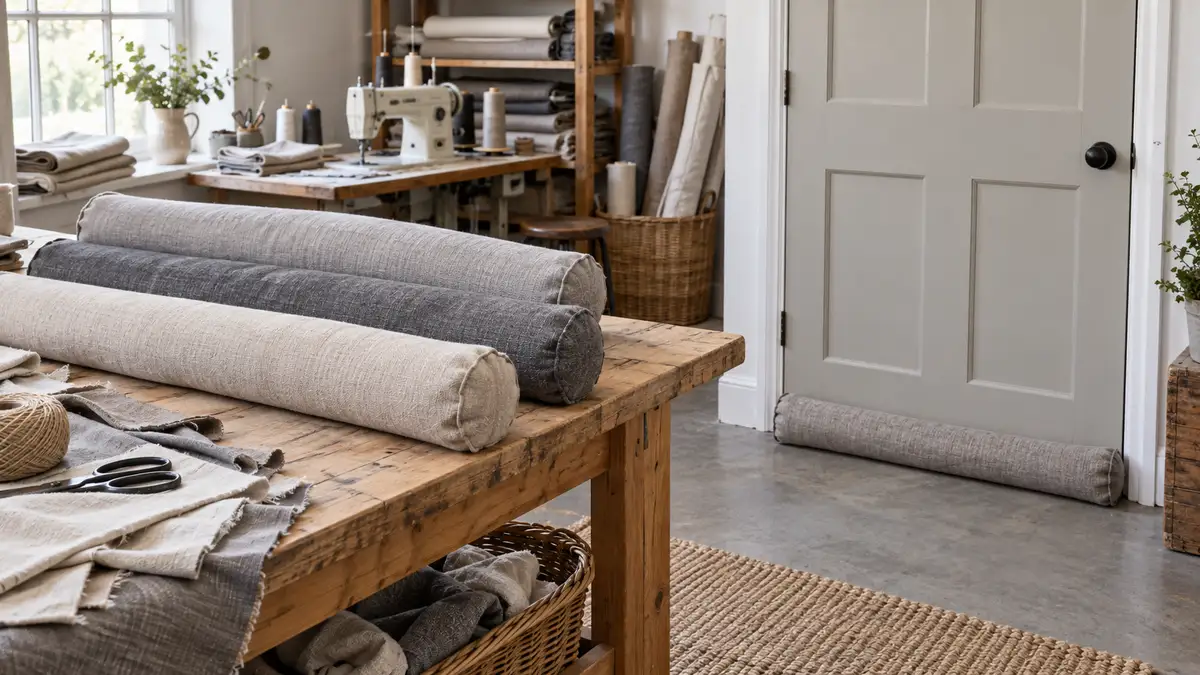
Choose a loose floor bolster or a sleeve that moves with the door. Specify finished length, cross-section, door thickness and floor clearance. Trial samples on the intended floor surface, checking whether the door opens freely and whether the excluder stays against the gap.
Record shell fibre composition, fabric construction, filling material and finished weight. Specify internal containment for granular filling, seam construction, removable-cover details and the intended cleaning method. Textile labels must show fibre content. Consumer products must be safe to use, so assess escaping filling, detachable trims and obstruction around the door.
Worked duty example
Illustrative example, not a quote: 800 textile door draught excluders, illustrative order under 6307 90 98 99, invoiced at £6,000 free on board, with £800 of freight and insurance to the UK. The customs value is £6,800. Duty at 6% is £408. Import VAT at 20% is charged on the customs value plus duty, £7,208, so it is £1,441.60. Import taxes total £1,849.60; a VAT-registered importer can usually reclaim the VAT, so the lasting cost is the £408 of duty. The import duty and VAT guide explains each step.
Inspection checklist
Fit: measure finished dimensions against the approved sample and test door movement on representative flooring.
Filling: compare finished weight and distribution; flex the body and examine end seams for leakage or open stitching.
Fabric: check shade, rubbing transfer, shedding and dimensions after the agreed cleaning trial.
Labels and packing: verify fibre information against the material specification, check removable-cover instructions and inspect cartons for dampness.
Working out your own order? Send us the product on WhatsApp and we reply the same working day: WhatsApp us
What goes wrong
A bolster can look full but contain uneven filling that leaves gaps along the threshold. Weak end seams release granules, while a sleeve sized only from a photograph can drag on carpet or prevent smooth door movement. Check these points on production samples, not just the presentation sample.
A washable cover may shrink and stop fitting its insert, and dark fabric can transfer colour onto pale flooring. Agree the cleaning trial and acceptance criteria before ordering. Retain a reference sample and record differences across cartons during quality inspection.
Cambridge China Bridge sources these products for UK businesses, checking the factory and the documents before shipment. See factory verification. For own-brand ranges, see sourcing for brands.
Frequently asked questions
What is the UK import duty on textile draught excluders from China?
The selected heading 6307 lines carry 6% to 12%: knitted or crocheted articles are 12%, while felt and the other selected constructions are 6%. Confirm the classification of the finished product.
What should a textile draught excluder label show?
Textile labelling guidance requires fibre content. Match the label to the agreed materials and provide cleaning instructions suited to the shell and filling.
Does the tariff's CITES flag mean every draught excluder needs a permit?
Check whether any material comes from a CITES-listed species. For covered materials, arrange the relevant permits and corresponding Chinese export documentation; have your broker confirm the tariff declaration.
Can I order from a photograph without testing a sample?
A photograph cannot confirm door clearance, filling retention or washing performance. Test a sample on the intended door and flooring, then use the approved specification for bulk inspection.