Sourcing tapioca sticks from China
Tapioca sticks classified under heading 1903 attract UK duty of 0% from China, with no duty variation within the heading. Importers must ensure the food is safe and legal before import; organic consignments also need attention to certification. Cambridge China Bridge sources tapioca sticks.
Buying from China for a business? How our UK China sourcing agent service works · China sourcing agent for small orders and first imports
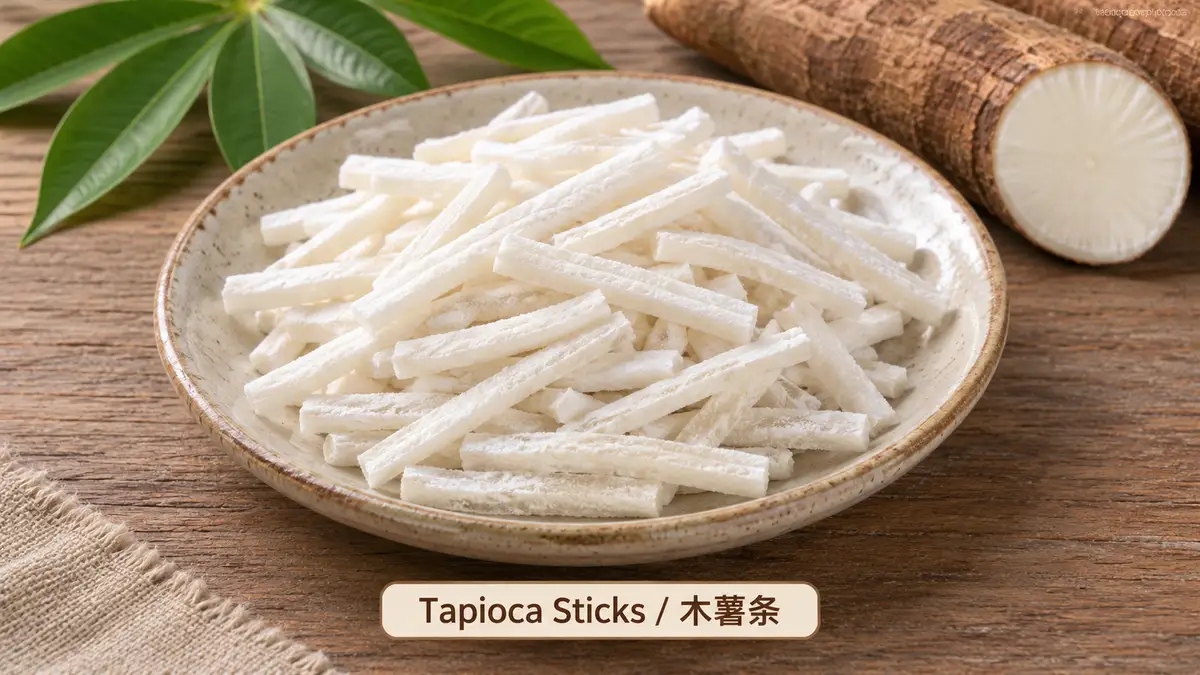
Duty on prepared tapioca sticks
Read from the UK Trade Tariff on 29 September 2026, heading 1903 covers tapioca and starch substitutes prepared as flakes, grains, pearls, siftings or similar forms. This guide concerns prepared tapioca sticks. The table shows buying formats under the same commodity code, rather than separate tariff subdivisions.
The supplied tariff record gives Chinese-origin goods under 1903 00 00 00 a duty of 0%, with no anti-dumping or countervailing measure and no suspension listed. It attaches an organic-product import control. For organic sticks, arrange the consignment certificate of inspection with the exporter's control body, and ask your customs broker to confirm the applicable clearance requirements for Great Britain.
Send the recipe, manufacturing process, photographs and intended use for a commodity code check, especially if the supplier describes the product as noodles. The trade name alone is not a reliable purchasing specification. See the wider tapioca and starch pearls guide for other forms.
| Goods | Commodity code | Duty | Anti-dumping or countervailing duty on China |
|---|---|---|---|
| Plain dried tapioca sticks | 1903 00 00 00 | 0% | None |
Specify starch, stick size and cooking texture
Agree the starch source and complete recipe, including other starches, colours and preservatives. Specify stick length, thickness, colour, acceptable broken pieces and packing format. Retain an approved sample and record whether the sticks are intended for desserts, soups or another preparation.
Test samples using your intended cooking and holding method. Record hydration, firmness, stickiness and whether the centre cooks evenly. Agree moisture, shelf life, storage conditions and suitable laboratory checks with the supplier. Importers must ensure their goods are safe and legal before they enter Great Britain.
Confirm food business registration requirements with your local authority. Ask its food labelling team to confirm the English information needed on retail labels, including the food name, ingredients with allergens emphasised, net quantity, dates, storage conditions and an appropriate business address. Approve the artwork against the complete recipe before printing.
Worked duty example
Illustrative example, not a quote: Illustrative order: 2 tonnes of plain dried tapioca sticks under 1903 00 00 00, invoiced at £3,000 free on board, with £960 of freight and insurance to the UK. The customs value is £3,960. Duty at 0% is £0. Import VAT at 20% is charged on the customs value plus duty, £3,960, so it is £792. With no duty, the only import tax is the VAT, which a VAT-registered importer can usually reclaim. The import duty and VAT guide explains each step. This assumes the goods are standard-rated for VAT. Most food for human consumption is zero-rated, and animal feed can be too, in which case no import VAT is due, so check the rate for your product in HMRC's VAT Notice 701/14.
Inspection checklist
Dimensions and breakage: compare production sticks with the approved sample, measure length and thickness, and inspect fragments at the bottom of bags and cartons.
Cooking performance: cook samples from the shipment using the agreed method; compare the centre, surface, firmness and texture after holding.
Dryness and condition: check agreed moisture results, clumping, visible mould, unusual odour, insects and foreign matter. Investigate suspect stock before sale.
Packs and documents: check seals, net weight, English labels and batch identification against the recipe and shipment records. For organic orders, check the certificate of inspection with your broker.
Working out your own order? Send us the product on WhatsApp and we reply the same working day: WhatsApp us
What goes wrong
A changed starch blend or uneven thickness can produce sticks that soften outside while remaining hard in the centre. Transit breakage creates fragments that cook differently from intact sticks. Moisture entering through weak seals can cause clumping and spoilage.
Compare shipment samples with the approved sample before accepting a repeat order. Investigate recipe changes, packaging damage and inconsistent cooking results separately. Use the quality inspection guide to agree what the inspector should record.
Cambridge China Bridge sources these products for UK businesses, checking the factory and the documents before shipment. See factory verification. For repeat volumes, see container programmes.
Frequently asked questions
What is the UK import duty on tapioca sticks from China?
The supplied tariff record gives 0% for goods classified under 1903 00 00 00, with no anti-dumping or countervailing measure and no suspension listed.
Are tapioca sticks classified as noodles?
Do not decide from the trade name. Provide the recipe, manufacturing process and product photographs for a commodity code check before declaring the goods.
What should I check in tapioca stick samples?
Compare thickness, broken pieces, cooking consistency and texture after holding. Agree the recipe, moisture specification, packing and shelf life before ordering.
What paperwork should I check for organic tapioca sticks?
Arrange the consignment certificate of inspection with the exporter's control body. Ask your customs broker to confirm the organic clearance requirements for the shipment into Great Britain.