Sourcing stainless steel T sections from China
Stainless steel T sections from China carry UK duty of 0% to 50% in the supplied tariff snapshot. The manufacturing route and extent of working determine the section line, so confirm them before ordering. Specify grade, flange and web dimensions, straightness and finish. Cambridge China Bridge sources stainless steel T sections.
Buying from China for a business? How our UK China sourcing agent service works · China sourcing agent for small orders and first imports
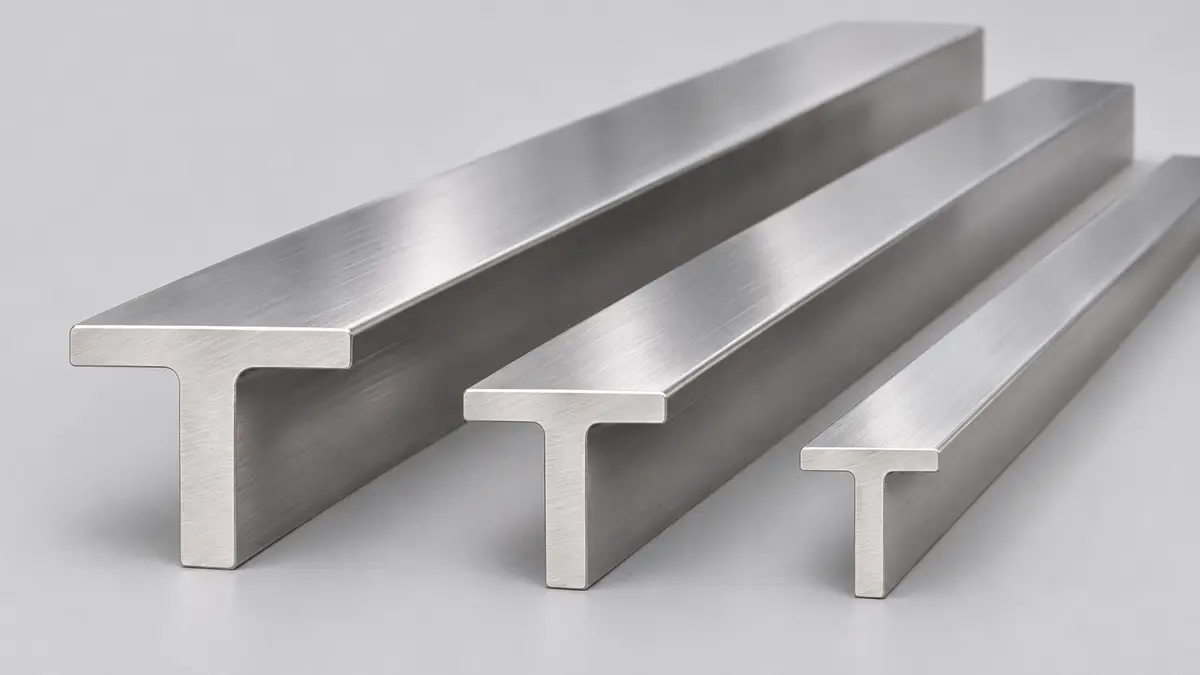
Duty depends on how the T section is made
Read from the UK Trade Tariff on 2 October 2026, heading 7222 covers stainless steel bars, rods, angles, shapes and sections. The supplied section lines show 0% for sections only hot-rolled, hot-drawn or extruded; 50% for sections only cold-formed or cold-finished; and 0% for the listed clad and other sections. They record no separate anti-dumping or countervailing duty, suspension or attached import control.
Ask your customs broker or HMRC to confirm whether these section lines fall within the UK carbon border adjustment mechanism and which commencement, registration and record-keeping rules apply to your imports. Ask the mill for emissions information and read the UK carbon border adjustment guide.
Give your customs broker the cross-section drawing, manufacturing route and details of subsequent working. For welded tees or tees cut from another section, ask the broker to confirm whether these lines apply. Confirm the commodity code before ordering and recheck the live duty before shipment. For the wider heading, see the stainless steel channel sections guide.
| Goods | Commodity code | Duty | Anti-dumping or countervailing duty on China |
|---|---|---|---|
| Stainless T sections, only hot-rolled, hot-drawn or extruded | 7222 40 10 00 | 0% | None |
| Stainless T sections, only cold-formed or cold-finished | 7222 40 50 00 | 50% | None |
| Hot-rolled, hot-drawn or extruded stainless T sections, only further clad | 7222 40 90 10 | 0% | None |
| Other stainless T sections, subject to classification confirmation | 7222 40 90 90 | 0% | None |
Specify the flange, web and manufacturing route
Specify the stainless grade, intended use, flange width and thickness, web depth and thickness, overall height, cut length and permitted deviations. State whether the tee is rolled, extruded, welded or cut from another section. Include web centring, flange squareness, straightness, twist, root shape and finish on the drawing.
For welded tees, agree the weld profile, inspection method and treatment of weld discolouration. Request mill inspection certificates showing heat numbers, chemistry and mechanical properties, with traceability to each bundle. For construction use, confirm the applicable product standard and performance documents before ordering. Legitimately CE-marked construction products can continue to be supplied in Great Britain. Use testing and certification support to review the intended application.
Worked duty example
Illustrative example, not a quote: Illustrative order: 20 tonnes of hot-rolled stainless steel T sections under 7222 40 10 00, invoiced at £56,000 free on board, with £3,000 of freight and insurance to the UK. The customs value is £59,000. Duty at 0% is £0. Import VAT at 20% is charged on the customs value plus duty, £59,000, so it is £11,800. With no duty, the only import tax is the VAT, which a VAT-registered importer can usually reclaim. The import duty and VAT guide explains each step.
Inspection checklist
Material: match bundle markings and heat numbers to mill certificates, and arrange sampled grade verification rather than relying on appearance.
Geometry: measure flange width, web depth and both thicknesses along the section; check web centring, squareness, straightness, twist and cut length against the drawing.
Surface and welds: check scratches, laps, burrs, weld consistency and discolouration against the agreed finish and weld inspection plan.
Packing: check separators protect finished faces, bundles support the projecting flange, and identification survives unloading. Record arrival checks using the quality inspection guide.
Working out your own order? Send us the product on WhatsApp and we reply the same working day: WhatsApp us
What goes wrong
A quote may describe only overall width and height, leaving flange thickness, web thickness and root shape undefined. The delivered tee then fails to fit the mating part. Welded sections can also arrive bowed or twisted, with an off-centre web or a weld bead that obstructs assembly.
Mixed heats, certificates that cannot be matched to bundles and scratched finished faces make acceptance harder. Treat a change in manufacturing route as a reason to review both the drawing and customs classification. A cold-finished section should not be costed using the hot-rolled line's 0% rate.
Cambridge China Bridge sources these products for UK businesses, checking the factory and the documents before shipment. See factory verification. For repeat volumes, see container programmes.
Frequently asked questions
What is the UK import duty on stainless steel T sections from China?
The supplied snapshot shows 0% for only hot-rolled, hot-drawn or extruded sections, 50% for only cold-formed or cold-finished sections, and 0% for the listed clad and other section lines.
Do welded stainless steel tees use the same commodity code?
Ask your customs broker to confirm from the drawing, fabrication method and subsequent working. Do not choose a code solely because the finished cross-section looks like a T.
What dimensions should I put on a stainless steel T-section drawing?
Include flange width and thickness, web depth and thickness, overall height, root shape, cut length, web centring, squareness, straightness, twist and permitted deviations.
Can CE-marked stainless steel T sections be supplied in Great Britain?
For construction use, confirm the applicable product standard and supporting performance documents for the actual section.