Sourcing stainless rebar tie wire from China
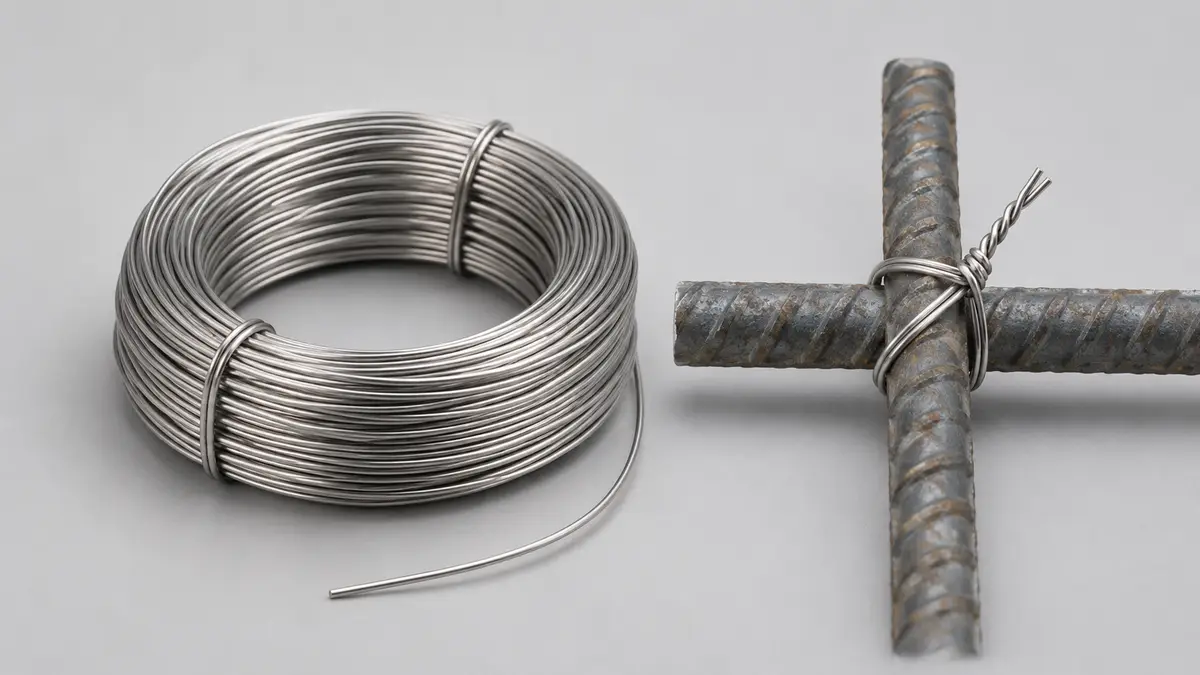
Stainless-steel rebar tie wire from China carries 0% UK duty across heading 7223, with no trade remedy recorded in the supplied tariff snapshot. Match the code to the alloy composition and confirm the attached waste control with your broker. Specify annealed wire and test tying performance. Cambridge China Bridge sources stainless-steel rebar tie wire.
Buying from China for a business? How our UK China sourcing agent service works · China sourcing agent for small orders and first imports
Duty and classification for stainless tie wire
Read from the UK Trade Tariff on 1 October 2026, heading 7223 covers wire of stainless steel. For rebar tie wire, start with the specified alloy: 304 and 316 fall within the other wire branch containing at least 2.5% nickel. The table also shows the specialised alloy branches for classification comparison; these are not interchangeable tie-wire specifications. For wider heading coverage, see stainless safety lockwire.
All listed lines carry 0% duty for goods from China. The supplied facts record no anti-dumping or countervailing duty, steel measure or suspension. Every line carries import and export waste controls. Confirm the import requirement and waste status with your customs broker. If a consignment from China is notified waste entering England, shipment can start only after consent from the Environment Agency and the other competent authorities involved.
Confirm the commodity code from the mill chemistry and the goods as supplied. Confirm with HMRC or your customs broker whether heading 7223 falls within the UK carbon border adjustment mechanism and when any obligations apply. Ask the mill for emissions information and review the registration position in our carbon border adjustment guide.
| Goods | Commodity code | Duty | Anti-dumping or countervailing duty on China |
|---|---|---|---|
| Stainless wire containing at least 2.5% nickel, other, including 304 and 316 | 7223 00 19 00 | 0% | None |
| Stainless wire containing less than 2.5% nickel, other | 7223 00 99 00 | 0% | None |
| Specialist stainless wire containing 28–31% nickel and 20–22% chromium | 7223 00 11 00 | 0% | None |
| Specialist wire: nickel below 2.5%, chromium 13–25%, aluminium 3.5–6% | 7223 00 91 00 | 0% | None |
Specify softness, grade and coil fit
Write down the stainless grade, diameter and tolerance, annealed condition, surface finish, coil weight and packaging. Agree tensile strength and elongation with the supplier, then approve a sample by tying it around the intended reinforcement. Ask the project designer to approve the grade and intended use before ordering.
For hand tying, check bending and twisting with the tools used on site. For a tying machine, specify the spool dimensions, winding direction and wire-feed arrangement. Test the sample in the actual machine: matching the wire diameter alone does not establish spool compatibility.
Request a mill certificate for each heat showing chemistry and mechanical properties, and match it to coil tags. For GB supply, construction products bearing legitimately affixed CE marking can continue to be supplied. Ask a testing and certification adviser to confirm the applicable product route before requesting marking.
Worked duty example
Illustrative example, not a quote: Trial consignment of annealed 304 stainless-steel rebar tie-wire coils; order, FOB value and freight are illustrative under 7223 00 19 00, invoiced at £2,000 free on board, with £1,100 of freight and insurance to the UK. The customs value is £3,100. Duty at 0% is £0. Import VAT at 20% is charged on the customs value plus duty, £3,100, so it is £620. With no duty, the only import tax is the VAT, which a VAT-registered importer can usually reclaim. The import duty and VAT guide explains each step.
Inspection checklist
Grade: compare the mill chemistry with the purchase specification and use positive material identification on samples from each heat.
Tying performance: bend and twist samples around the intended reinforcement; check for cracking, breakage and excessive springback.
Dimensions and feed: measure diameter and ovality, check coil or spool fit, and run a feed trial looking for snags and tangled winding.
Surface and traceability: inspect for rust spots, sharp surface defects and wet packing; match coil tags, heat numbers and certificates. Set these checks in the inspection brief.
Working out your own order? Send us the product on WhatsApp and we reply the same working day: WhatsApp us
What goes wrong
Wire supplied in a harder condition can resist hand tying or break during twisting. An incorrect grade, drifting diameter or incompatible spool can also make an apparently acceptable coil unusable. Agree a retained sample and tying trial, then compare production samples and arrival samples against them.
Mixed heats and detached tags make certificates difficult to trace. Keep batches separate on arrival and investigate failures before releasing coils to site. A supplier's generic stainless certificate does not demonstrate the ordered grade, condition or machine compatibility.
Cambridge China Bridge sources these products for UK businesses, checking the factory and the documents before shipment. See factory verification. For repeat volumes, see container programmes.
Frequently asked questions
What is the UK import duty on stainless-steel rebar tie wire from China?
The supplied tariff facts show 0% across heading 7223, with no anti-dumping or countervailing duty or steel measure recorded. Confirm the alloy-based commodity code and attached waste control before shipment.
Should I order 304 or 316 stainless tie wire?
Ask the project designer to approve the grade for the intended reinforcement and exposure. Specify that grade in the order and verify the supplied chemistry; appearance alone cannot distinguish 304 from 316.
Will stainless tie wire fit my rebar tying machine?
Approve a sample in your actual machine. Check diameter, spool dimensions, winding direction, feed behaviour and completed ties before accepting production.
Does a CE mark prove that tie wire meets my specification?
Confirm the applicable construction-product route with a compliance adviser. Separately verify grade, annealed condition, diameter, heat traceability and tying performance against the purchase specification.