Sourcing stainless safety lockwire from China
Stainless steel safety lockwire from China carries 0% UK duty across heading 7223, with no recorded trade remedies. Classification follows alloy composition, while acceptance should check soft temper, diameter and twisting performance against the intended fastening application. Cambridge China Bridge sources stainless steel safety lockwire.
Buying from China for a business? How our UK China sourcing agent service works · China sourcing agent for small orders and first imports
Duty and classification for safety lockwire
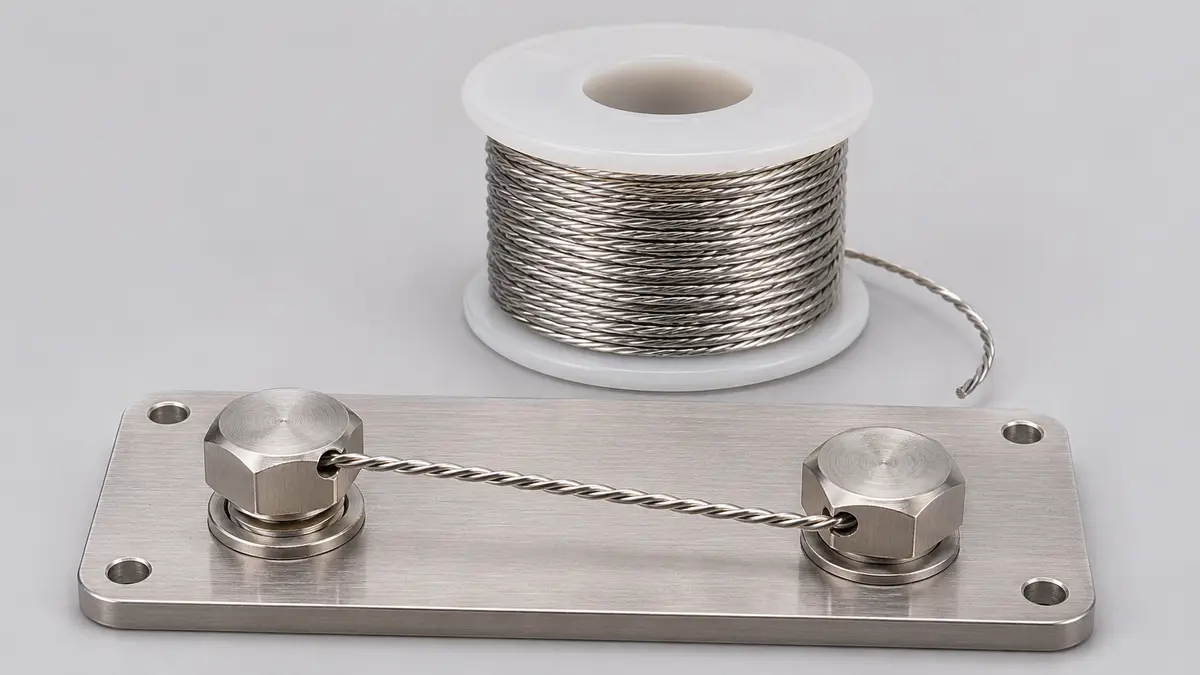
Read from the UK Trade Tariff on 1 October 2026, stainless steel wire under heading 7223 carried 0% duty on every line for goods from China. No anti-dumping or countervailing duty, steel measure or suspension was recorded. This guide concerns single wire supplied for locking fasteners. The table shows composition branches, not interchangeable lockwire grades. For other wire applications, see stainless steel wire.
The tariff attaches import and export waste controls to every line. Environment Agency guidance says waste shipment controls apply only where the material is waste. For new lockwire, establish its status as a product; for scrap, discarded stock or uncertain material from China, ask your customs broker to confirm the applicable waste requirements before shipment.
Confirm the commodity code using the mill's nickel, chromium and aluminium results, rather than the supplier's description alone. Ask HMRC or your customs broker to confirm whether these lines fall within the UK carbon border adjustment mechanism from 1 January 2027. Plan supplier emissions records using the carbon border adjustment guide.
| Goods | Commodity code | Duty | Anti-dumping or countervailing duty on China |
|---|---|---|---|
| Wire with nickel ≥2.5%, other, including 304 and 316 | 7223 00 19 00 | 0% | None |
| Wire with nickel <2.5%, other | 7223 00 99 00 | 0% | None |
| Special-composition wire: nickel 28% to 31%, chromium 20% to 22% | 7223 00 11 00 | 0% | None |
| Nickel <2.5%, chromium 13% to 25%, aluminium 3.5% to 6% | 7223 00 91 00 | 0% | None |
Specify soft temper and locking performance
State the alloy grade, diameter and tolerance, annealed condition, tensile strength and elongation, surface finish, spool dimensions and net wire weight. Describe the fasteners, installation tools and service environment. Agree a bend-and-twist acceptance test using the intended installation method, with clear rejection criteria for cracking, splitting and excessive springback.
Ask for heat-linked mill chemistry and mechanical test results. Approve a sample for threading, twisting and cutting before production. Require spool labels that retain the grade, diameter, heat and batch identity after cartons are opened. For workplace supply, section 6 of the health and safety legislation applies where no more specific product safety law applies. Keep intended-use information and test evidence with the product records.
Worked duty example
Illustrative example, not a quote: 80 kg of 304 stainless steel safety lockwire on spools; illustrative order and values under 7223 00 19 00, invoiced at £2,000 free on board, with £1,100 of freight and insurance to the UK. The customs value is £3,100. Duty at 0% is £0. Import VAT at 20% is charged on the customs value plus duty, £3,100, so it is £620. With no duty, the only import tax is the VAT, which a VAT-registered importer can usually reclaim. The import duty and VAT guide explains each step.
Inspection checklist
Material: match spool heat numbers to mill certificates and independently check alloy chemistry on samples.
Dimensions and temper: measure diameter and ovality; compare tensile strength and elongation with the agreed specification.
Twisting: thread and twist samples using the intended tools; check for cracks, splitting, springback and sharp surface defects.
Packing: check winding, uninterrupted payout, net wire weight, spool damage and readable batch labels. Use the quality inspection guide to brief the inspector.
Working out your own order? Send us the product on WhatsApp and we reply the same working day: WhatsApp us
What goes wrong
A spool marked stainless can still contain the wrong alloy or temper. Wire that is too hard springs back or cracks during twisting; uneven diameter makes threading inconsistent. Crossed winding interrupts payout, while damaged spool edges can nick the wire. A certificate without a matching heat identity does not establish which wire was delivered.
Do not accept a generic stainless wire sample as proof of lockwire performance. Keep the approved sample and application test method, and compare production batches against both. For aircraft or other critical assemblies, obtain the customer's material specification and acceptance criteria before requesting factory quotations.
Cambridge China Bridge sources these products for UK businesses, checking the factory and the documents before shipment. See factory verification. For repeat volumes, see container programmes.
Frequently asked questions
What is the UK import duty on stainless steel safety lockwire from China?
All heading 7223 lines carry 0% duty in the supplied tariff reading.
Which commodity code covers stainless safety lockwire?
304 and 316 wire sit within 7223 00 19 00 in the published wire guide. Confirm the actual alloy composition and product form before declaring the shipment.
Can ordinary stainless wire be used as safety lockwire?
Approve it against the application specification first. Alloy identity alone does not establish the required softness, elongation or behaviour during twisting.
Do waste controls apply to new safety lockwire?
Waste shipment controls apply only if the material is waste. The tariff nevertheless attaches waste controls; ask your broker to confirm requirements where the material's status is uncertain.