Sourcing stainless steel cafetieres from China
Stainless steel cafetieres from China have 0% UK duty under the candidate household-article code, subject to classification. Food-contact materials must be safe for their intended use. Specify the vessel, filter and handle materials separately. Cambridge China Bridge sources stainless steel cafetieres.
Buying from China for a business? How our UK China sourcing agent service works · China sourcing agent for small orders and first imports
UK duty on stainless steel cafetieres
Heading 7323 covers iron and steel table, kitchen and household articles and their parts, alongside steel wool and scourers. For the stainless steel cafetieres covered here, the candidate code is 7323 93 00 90. The table shows designs and parts within that shared line. Vacuum-insulated vessels need a separate classification check.
Read from the UK Trade Tariff on 13 December 2026, the supplied data records 0% duty for goods from China under this line, with no anti-dumping duty, countervailing duty or suspension. The line carries import and export waste controls. Waste shipment controls apply only if the material is waste. For discarded cafetieres or scrap from China, confirm the applicable requirements with your customs broker before shipment.
Confirm the commodity code using the construction, materials, intended use and any insulation details. For the wider heading, see stainless steel stovetop kettles.
| Goods | Commodity code | Duty | Anti-dumping or countervailing duty on China |
|---|---|---|---|
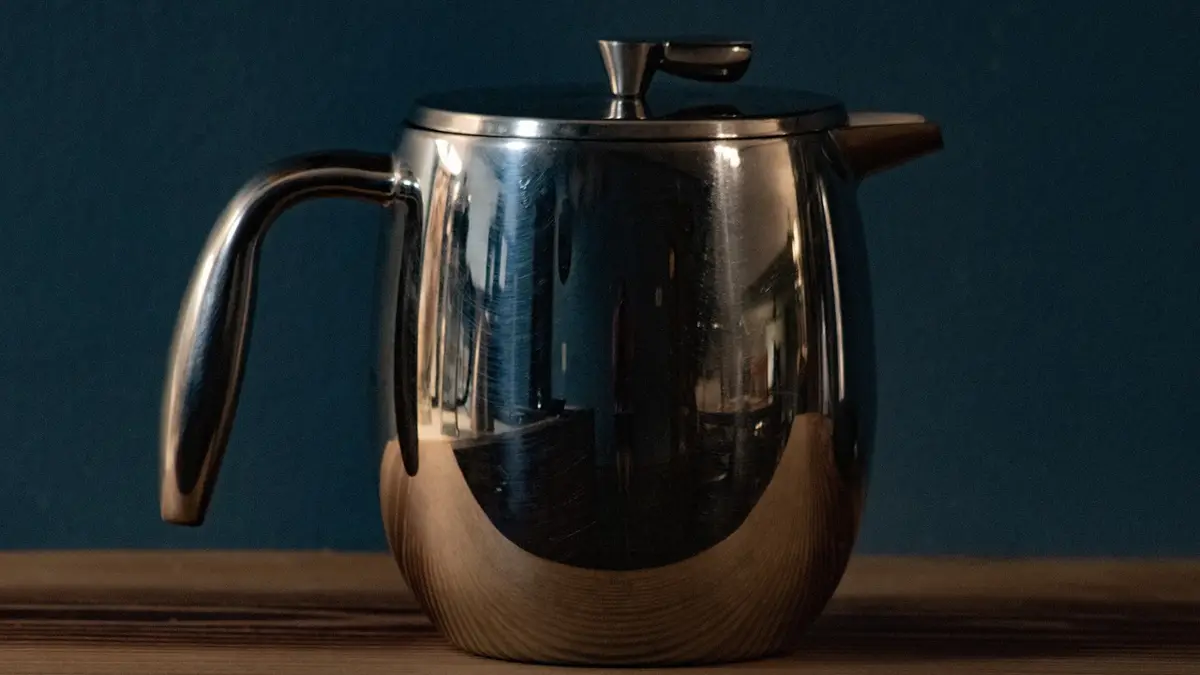
| Single-wall stainless steel cafetieres, brushed finish | 7323 93 00 90 | 0% | None |
Specify the vessel, mesh and plunger
Specify usable capacity separately from brimful capacity, vessel dimensions, wall construction and finish. Identify the materials of the inner vessel, spout, mesh, filter plates, rod, lid and fasteners. Agree handle attachment, lid orientation, replacement-filter fit and how the filter dismantles for cleaning. Retain an approved sample.
Food-contact materials must be safe for their intended application. Request material information and test evidence covering the actual contact parts and intended hot-coffee use, including any plastic or elastomer components. Agree cleaning instructions and checks for dishwasher claims. Confirm applicable consumer-product safety requirements for Great Britain with the relevant authority; assess hot-liquid escape, handle security, sharp mesh edges and plunger resistance.
Worked duty example
Illustrative example, not a quote: Illustrative order: 900 single-wall stainless steel cafetieres under 7323 93 00 90, invoiced at £7,500 free on board, with £900 of freight and insurance to the UK. The customs value is £8,400. Duty at 0% is £0. Import VAT at 20% is charged on the customs value plus duty, £8,400, so it is £1,680. With no duty, the only import tax is the VAT, which a VAT-registered importer can usually reclaim. The import duty and VAT guide explains each step.
Inspection checklist
Vessel and finish: compare materials, capacity and construction with the approved sample; inspect internal seams, spout edges, dents, rust and polishing residue.
Filter and plunger: brew with the agreed coffee grind; check mesh seating, grounds bypass, rod alignment, loose threads and excessive pressing resistance.
Handle and pouring: check attachment security and stability when filled; assess handle heating, lid retention, dribbling and hot liquid escaping during pressing.
Packing and arrival: inspect protection around handles, lids and rods; unpack delivered stock and repeat the agreed functional checks. Set the brief through quality inspection.
Working out your own order? Send us the product on WhatsApp and we reply the same working day: WhatsApp us
What goes wrong
A filter that fits an empty pot can tilt or bind during brewing. Poor mesh seating lets grounds bypass the edge, while loose threads allow the filter assembly to separate. Rough internal seams trap residue. A polished exterior can conceal inconsistent materials in the mesh, rod or fasteners.
Weak handle attachments and poorly retained lids become apparent during hot pouring. Carton pressure can distort the vessel or bend the rod, changing plunger fit. Keep the approved sample and written acceptance criteria, then compare arrival failures with the pre-dispatch inspection record.
Cambridge China Bridge sources these products for UK businesses, checking the factory and the documents before shipment. See factory verification. For repeat volumes, see container programmes.
Frequently asked questions
What is the UK import duty on stainless steel cafetieres from China?
The supplied data records 0% under candidate code 7323 93 00 90, with no anti-dumping or countervailing duty. Confirm classification for the complete product.
What food-contact evidence should I request?
Ask for material information and test evidence matching the vessel, filter, lid and other contact parts, assessed for intended hot-coffee use. Check that the tested construction matches production.
How should I check a cafetiere filter?
Brew with the agreed grind and check grounds bypass, mesh seating, pressing resistance and thread security. Dismantle and reassemble the filter to check cleaning access and fit.
Does a double-wall cafetiere use the same commodity code?
Confirm how the walls are constructed. The table covers non-vacuum designs; give your broker insulation details before using the candidate household-article code for a vacuum-insulated product.