Sourcing sliced rosewood veneer from China
Sliced rosewood veneer from China carries 0% UK duty across the relevant heading 4408 lines, with no recorded trade remedy. Confirm the botanical species and applicable CITES import permit before shipment, and keep timber legality records. Cambridge China Bridge sources sliced rosewood veneer.
Buying from China for a business? How our UK China sourcing agent service works · China sourcing agent for small orders and first imports
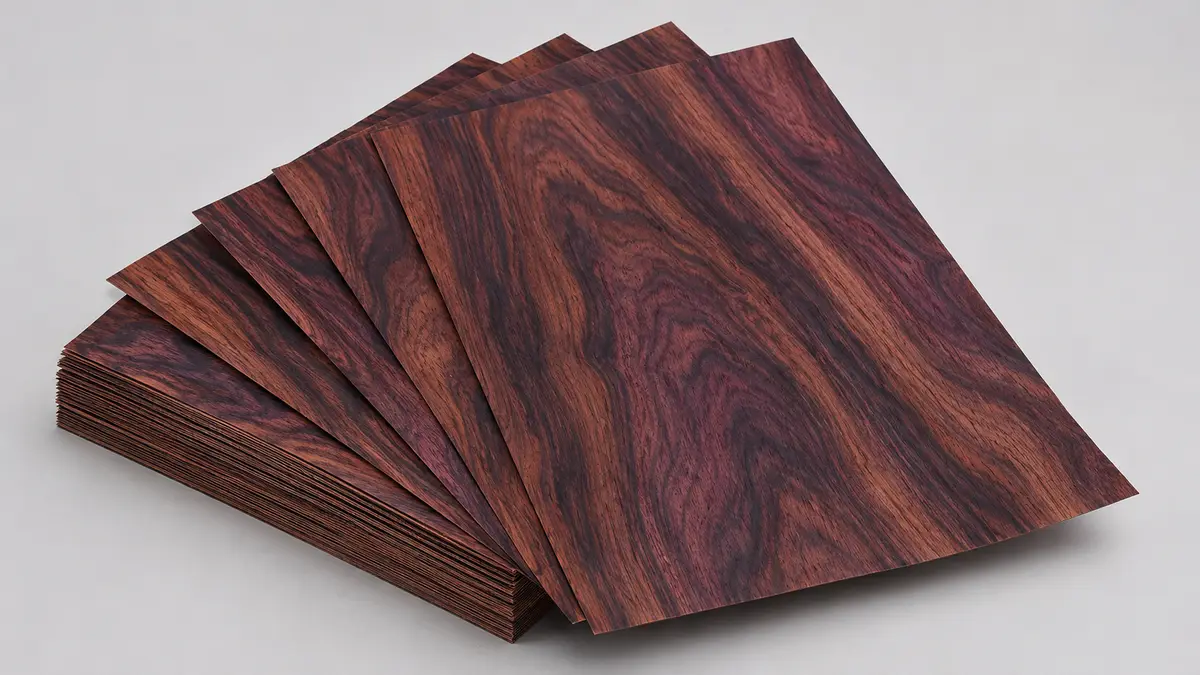
Zero duty, with species and permit checks
Read from the UK Trade Tariff on 4 October 2026, heading 4408 covers sheets for veneering and other longitudinally sawn, sliced or peeled wood of a thickness not exceeding 6 mm. Sliced rosewood veneer is classified by botanical species and whether it is planed, sanded or end-jointed. The table distinguishes the listed rosewood group from other tropical species; the trade name alone does not settle the code.
The relevant lines carry 0% duty for goods from China, with no recorded anti-dumping or countervailing duty and no listed suspension. They carry CITES import and export controls. Where the veneer is covered by a CITES listing requiring a permit, obtain the applicable import permit. Ask your customs broker to confirm the species-specific requirements for the shipment from China and for any subsequent export.
Confirm the commodity code against the scientific name, thickness and actual finish before ordering. For the broader product family, see our wood veneer sheets guide. Import VAT is normally 20%; see UK import duty and VAT.
| Goods | Commodity code | Duty | Anti-dumping or countervailing duty on China |
|---|---|---|---|
| Listed rosewoods, sanded or end-jointed | 4408 39 15 00 | 0% | None |
| Listed rosewoods, planed, neither sanded nor end-jointed | 4408 39 21 00 | 0% | None |
| Listed rosewoods, other sliced veneer | 4408 39 30 90 | 0% | None |
| Other tropical species, unfinished sliced veneer, thickness not exceeding 1 mm | 4408 39 85 00 | 0% | None |
Specify species, slicing and matching
Write the botanical species and harvest country into the order, alongside leaf dimensions, thickness tolerance, moisture acceptance, usable face grade and slicing pattern. Agree whether faces will be book-matched or slip-matched, how colour variation will be accepted, and how consecutive leaves will be identified. Approve a representative bundle and a pressed sample using your intended adhesive and substrate.
For veneer placed on the Great Britain market, confirm with the relevant authority the applicable UK timber requirements for species, harvest-country and supply-chain information, assessment and reduction of illegal-harvest risk, and records. Ask for the harvest evidence rather than treating the Chinese factory address as the timber's origin. Keep bundle references linked to the supporting documents.
Worked duty example
Illustrative example, not a quote: 40 matched bundles of sliced rosewood veneer for furniture production, illustrative only under 4408 39 30 90, invoiced at £12,000 free on board, with £2,800 of freight and insurance to the UK. The customs value is £14,800. Duty at 0% is £0. Import VAT at 20% is charged on the customs value plus duty, £14,800, so it is £2,960. With no duty, the only import tax is the VAT, which a VAT-registered importer can usually reclaim. The import duty and VAT guide explains each step.
Inspection checklist
Identity: compare botanical species, harvest records, invoice descriptions and applicable CITES permit details against the ordered material.
Thickness and moisture: measure across sampled leaves and bundles, check against agreed tolerances, and inspect for brittle edges, waviness, mould and staining.
Matching: lay out consecutive leaves to check grain alignment, colour progression and bundle sequence against the approved sample.
Usable faces: inspect splits, pinholes, missing edges and repaired areas; trial-press sampled leaves to check handling, bonding and the finished appearance.
Working out your own order? Send us the product on WhatsApp and we reply the same working day: WhatsApp us
What goes wrong
A rosewood trade name can conceal a different species, leaving the order specification and import documents inconsistent. Stop a proposed substitution until the species, code and applicable permit requirements have been checked. A visual match to the approved sample does not establish the harvest origin.
Mixed bundles break the planned grain match, while uneven thickness shows through after pressing. Wet leaves can stain or develop mould; brittle leaves split during handling. Record defects before production, preserve bundle labels and compare the delivered material with the approved sample before cutting it.
Cambridge China Bridge sources these products for UK businesses, checking the factory and the documents before shipment. See factory verification. For repeat volumes, see container programmes.
Frequently asked questions
What is the UK import duty on sliced rosewood veneer from China?
The relevant heading 4408 lines carry 0% duty in the supplied tariff reading, with no recorded anti-dumping or countervailing duty. Import VAT is normally 20%.
Do I need a CITES permit for rosewood veneer?
The relevant tariff lines flag CITES. Confirm the botanical species and listing; obtain the applicable import permit where required. Ask your broker to check the shipment-specific requirements before dispatch.
Does slicing rosewood in China establish its origin?
The factory location does not identify the harvest country. Ask for species, harvest-country and supply-chain records for the timber legality file.
How do I keep rosewood veneer faces matched?
Agree book-matching or slip-matching, approve a representative bundle, and require consecutive leaves to retain their sequence and bundle labels. Check the layout before cutting or pressing.