Sourcing shopping trolleys from China
Shopping trolleys and the relevant parts listed here carry 0% UK duty from China, with no recorded trade remedies. Consumer product safety rules cover products used by shoppers, and businesses importing consumer products are responsible for their safety. Specify loads, castors and nesting before ordering. Cambridge China Bridge sources shopping trolleys.
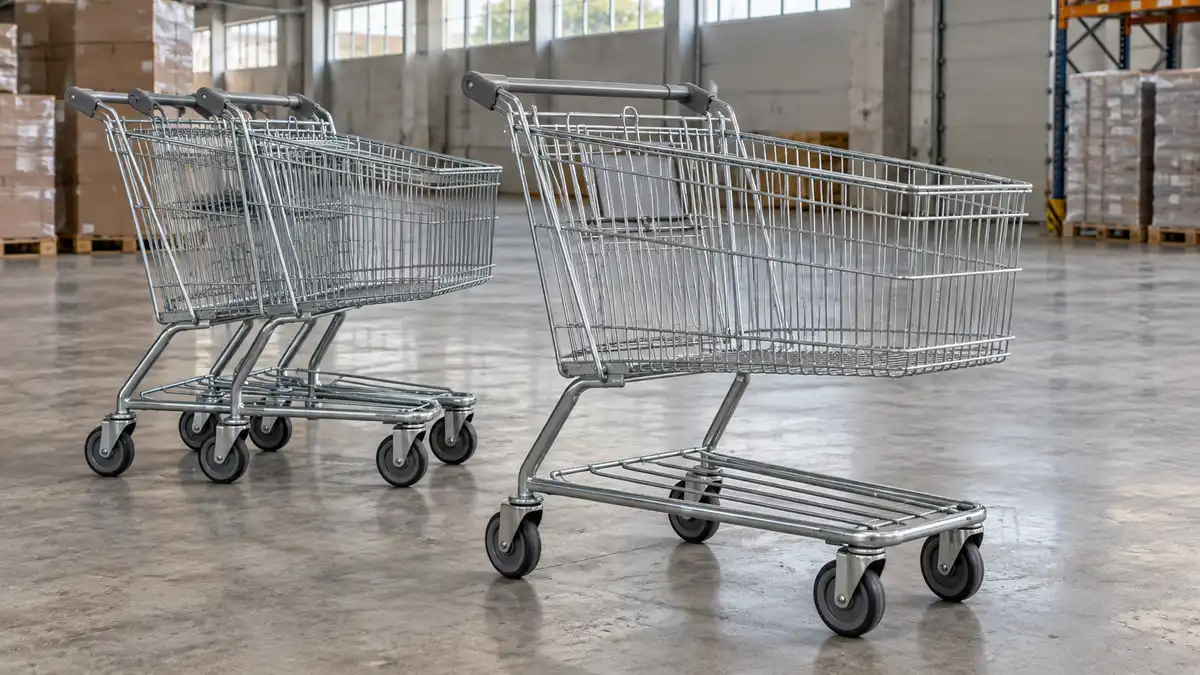
Shopping trolley duty and classification
Read from the UK Trade Tariff on 8 October 2026, heading 8716 covers trailers, other non-mechanically propelled vehicles and their parts. For this guide, the relevant complete-product line is 8716 80 00 00. Separately imported chassis, bodies and other parts need their own classification; do not assume every replacement castor belongs in this heading.
The selected lines carry 0% duty on goods from China. The supplied tariff record lists no anti-dumping or countervailing duty and no suspensions for these lines. For other products within the heading, see warehouse platform trolleys.
The tariff attaches a restriction on entry into free circulation concerning ozone-depleting substances, fluorinated greenhouse gas import control on the complete trolley, chassis and body lines, and a DCMS export licence measure. Confirm the applicable requirements and declaration documents with your customs broker. These entries do not establish that an ordinary shopping trolley needs a gas licence. Confirm the commodity code against the supplied design and shipment contents.
| Goods | Commodity code | Duty | Anti-dumping or countervailing duty on China |
|---|---|---|---|
| Non-mechanically propelled shopping trolleys | 8716 80 00 00 | 0% | None |
| Chassis for shopping trolleys, subject to classification | 8716 90 10 00 | 0% | None |
| Bodies for shopping trolleys, subject to classification | 8716 90 30 00 | 0% | None |
| Other shopping trolley parts, subject to classification | 8716 90 90 98 | 0% | None |
Basket, castors and nesting specification
Specify basket material, dimensions, usable load, handle height, castor material and mounting, finish and nesting clearance. Identify the shop floors, thresholds and outdoor surfaces the trolley will encounter. Agree a loaded rolling and stability test with the factory, and retain an approved sample.
General product safety rules in Great Britain cover products intended or reasonably likely to be used by consumers. Businesses importing consumer products are responsible for their safety. For shopping trolleys, assess sharp wire ends, finger traps, tipping and any folding child seat. Specify seat construction, restraint and warnings where fitted, and ask for test evidence matching that design.
Worked duty example
Illustrative example, not a quote: Illustrative order of 50 shopping trolleys; FOB and freight values are illustrative under 8716 80 00 00, invoiced at £8,000 free on board, with £1,500 of freight and insurance to the UK. The customs value is £9,500. Duty at 0% is £0. Import VAT at 20% is charged on the customs value plus duty, £9,500, so it is £1,900. With no duty, the only import tax is the VAT, which a VAT-registered importer can usually reclaim. The import duty and VAT guide explains each step.
Inspection checklist
Basket and frame: check weld continuity, exposed wire ends, basket alignment and coating damage against the approved sample.
Rolling and stability: check loaded steering, castor swivel, wheel retention and wobble on representative surfaces; compare results with the agreed acceptance criteria.
Nesting and locks: nest sampled trolleys together, check separation without snagging, and test coin locks and connecting chains where fitted.
Seats and shipment: check seat hinges, restraints and trapping points where fitted; inspect transit damage and count models on arrival. Arrange quality inspection before dispatch.
Working out your own order? Send us the product on WhatsApp and we reply the same working day: WhatsApp us
What goes wrong
A trolley can resemble the sample while using different castors or thinner wire. The result can be poor steering, a distorted basket or loose wheel fixings. Nesting can also fail when frame geometry varies between batches. Put component details and dimensional tolerances into the order, and compare production samples with the approved trolley.
Packing can leave handles rubbing against baskets and castors carrying transit loads. Agree protection at contact points and check the nesting arrangement before shipment. Keep replacement wheel and lock specifications on file so later spares fit the original batch.
Cambridge China Bridge sources these products for UK businesses, checking the factory and the documents before shipment. See factory verification. For machinery and equipment, see machinery imports.
Frequently asked questions
What is the UK import duty on shopping trolleys from China?
The supplied tariff record shows 0% duty for 8716 80 00 00 and the selected parts lines, with no anti-dumping or countervailing duty.
Do shopping trolleys need product safety checks?
Yes. General product safety rules cover products intended or reasonably likely to be used by consumers. Assess rolling, tipping, sharp edges, trapping points and any child seat against the actual design.
What should I specify for supermarket trolley wheels?
Specify castor material, diameter, mounting, swivel arrangement and replacement part identity. Agree loaded rolling checks on the floors, thresholds and outdoor surfaces where the trolley will be used.
How do I avoid shopping trolleys that will not nest?
Agree nesting clearance and frame tolerances using an approved sample. Test production trolleys together, including locks and chains, rather than checking each trolley in isolation.