Sourcing hospital linen trolleys from China
Hospital linen trolleys and relevant parts within heading 8716 carry 0% UK duty from China, so the duty range is 0% throughout the selected lines. Work equipment must be sold safe, so far as reasonably practicable. Specify the linen workflow, load and cleaning method before ordering. Cambridge China Bridge sources hospital linen trolleys.
UK duty on hospital linen trolleys
Read from the UK Trade Tariff on 30 September 2026, heading 8716 covers trailers, other non-mechanically propelled vehicles and their parts. For a manually pushed hospital linen trolley, 8716 80 00 00 is the line to investigate. The selected complete-trolley and parts lines carry 0% duty from China, with no anti-dumping or countervailing duty and no listed suspensions.
The supplied tariff attaches a restriction on entry into free circulation concerning ozone-depleting substances, an import control of fluorinated greenhouse gases and a cultural-object export licence entry. Confirm the applicable requirements and declaration evidence with your customs broker for the actual goods from China. These entries should not be treated as proof that an ordinary linen trolley needs a gas licence.
Confirm the commodity code using drawings, materials, intended use and the condition in which the goods arrive. Separately imported bags and castors need their own classification check. See roll cage trolleys for the wider product family.
| Goods | Commodity code | Duty | Anti-dumping or countervailing duty on China |
|---|---|---|---|
| Non-powered hospital linen trolleys | 8716 80 00 00 | 0% | None |
| Separately imported trolley chassis, subject to classification | 8716 90 10 00 | 0% | None |
| Separately imported trolley bodies, subject to classification | 8716 90 30 00 | 0% | None |
| Other trolley parts, subject to classification | 8716 90 90 98 | 0% | None |
Specify the linen workflow and cleaning method
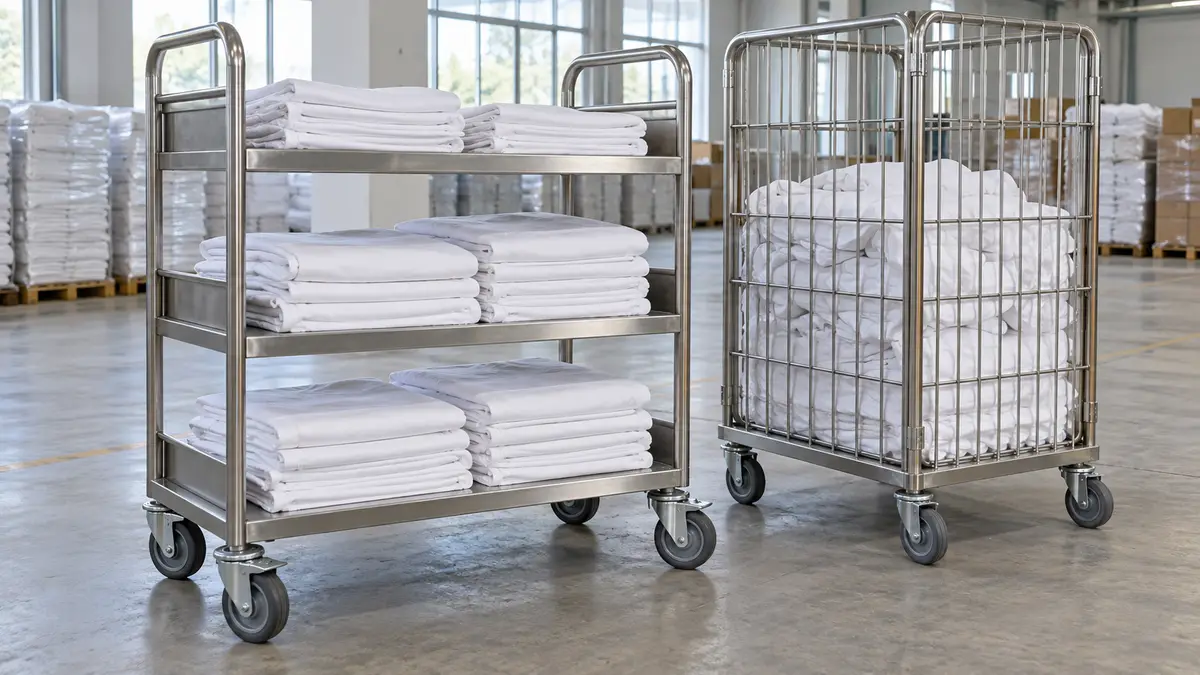
State whether the trolley carries clean folded linen or collects used linen. Agree an open shelf, enclosed cupboard or removable-bag design with the hospital buyer. Fix overall dimensions against doors, lifts and storage spaces, plus handle position, shelf spacing, bag attachment and the intended loaded weight.
Specify the frame material, surface finish, castor tread, brake arrangement and replaceable components. Give the factory the cleaning chemicals and cleaning method used on site. Ask for a sample showing how bags, shelves and covers are removed and how seams, hinges and wheel housings can be cleaned.
HSE states that all work equipment must be sold safe, so far as reasonably practicable. Make loaded stability, secure bag retention, braking and freedom from sharp edges part of the acceptance specification.
Worked duty example
Illustrative example, not a quote: Illustrative batch of hospital linen trolleys for a hospital supplies distributor under 8716 80 00 00, invoiced at £30,000 free on board, with £1,500 of freight and insurance to the UK. The customs value is £31,500. Duty at 0% is £0. Import VAT at 20% is charged on the customs value plus duty, £31,500, so it is £6,300. With no duty, the only import tax is the VAT, which a VAT-registered importer can usually reclaim. The import duty and VAT guide explains each step.
Inspection checklist
Dimensions and access: measure the assembled trolley against the approved drawing and check doors, covers and bags open without fouling the handles.
Castors and brakes: push a loaded sample over representative flooring, check tracking and swivel action, and test that the parking brakes hold under the agreed test conditions.
Cleanability and finish: inspect welds, seams and concealed surfaces for sharp edges, crevices, rust and coating damage; trial the agreed cleaning method on the sample.
Retention and assembly: check bag supports, shelf fixings, door catches and fasteners against the approved sample, then inspect packaging for bent frames and damaged wheels on arrival.
Working out your own order? Send us the product on WhatsApp and we reply the same working day: WhatsApp us
What goes wrong
A trolley can match the catalogue photograph but fail in use because the loaded frame twists, castors chatter or brakes are awkward to reach. Bags can drag on wheels, door catches can release during movement, and seams can retain dirt after cleaning.
Approve the assembled sample with the hospital buyer before production. Record the frame, castor, bag and fastener specifications so substitutions are visible. Use the inspection guide to turn these checks into a written inspection brief.
Cambridge China Bridge sources these products for UK businesses, checking the factory and the documents before shipment. See factory verification. For machinery and equipment, see machinery imports.
Frequently asked questions
What is the UK import duty on hospital linen trolleys from China?
The supplied tariff snapshot shows 0% for non-powered trolleys under 8716 80 00 00 and the selected parts lines, with no anti-dumping or countervailing duty. Confirm classification before ordering.
Which commodity code covers a hospital linen trolley?
For a manually pushed trolley, investigate 8716 80 00 00. Send your broker drawings, materials, intended use and assembly details; do not automatically apply that code to separate bags or castors.
Can I use the same trolley for clean and used linen?
Agree the intended workflow with the hospital buyer. Specify the bag, shelf or enclosure arrangement and cleaning method for that use rather than relying on the factory's general catalogue description.
What should I check when linen trolleys arrive?
Check assembled dimensions, frame alignment, castor movement, brakes, bag retention and door catches. Inspect welds and concealed surfaces, and compare components with the approved sample.