Sourcing rubberised hospital sheeting from China
Rubberised hospital sheeting from China carries 4% to 8% UK duty depending on construction, with ordinary woven sheeting at 4%. Skin-contact rubber must meet applicable UK REACH restrictions. Review any specific medical-purpose claims. Cambridge China Bridge sources rubberised hospital sheeting.
Buying from China for a business? How our UK China sourcing agent service works · China sourcing agent for UK manufacturers and engineering firms
Hospital sheeting: 4% to 8% duty
Read from the UK Trade Tariff on 1 October 2026, heading 5906 covers rubberised textile fabrics. This guide concerns hospital sheeting material supplied in rolls. Ordinary woven rubberised fabric carries 4% duty from China, knitted or crocheted fabric 6%, and rubber-agglomerated parallel-yarn fabric described in chapter note 5(c) 8%. Hospital use alone does not identify the construction.
The relevant lines show no anti-dumping or countervailing duty and no attached import controls. A 0% suspension under 5906 99 90 90 applies only to the specifically listed polyamide rubberised fabric, not hospital sheeting generally. The separate authorised-use suspension for vehicle-roof fabric is not a hospital-sheeting concession.
Confirm the commodity code using the base fabric, rubber compound, layer construction and supplied form. Have finished or made-up protectors assessed separately. Plastic-coated fabric belongs to heading 5903 rather than this rubberised-fabric heading. See the wider rubberised fabrics guide for other constructions.
| Goods | Commodity code | Duty | Anti-dumping or countervailing duty on China |
|---|---|---|---|
| Woven cotton hospital sheeting coated with rubber | 5906 99 90 90 | 4% | None |
| Knitted rubberised fabric for hospital sheeting | 5906 91 00 00 | 6% | None |
Specify the barrier and cleaning routine
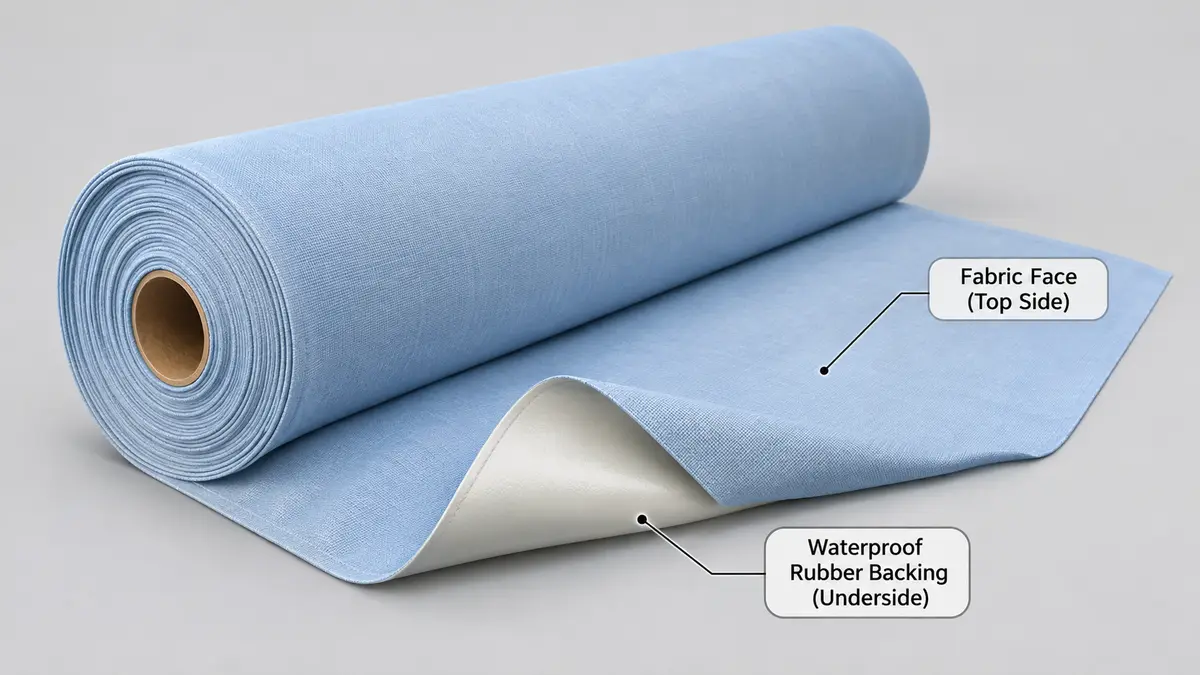
Specify the base fibre and weave or knit, rubber compound, coated faces, thickness, mass per unit area, usable width and roll length. State whether the sheet lies beneath linen or touches the patient. Agree the surface finish, flexibility and resistance to slipping against the intended bedding.
Give the factory the intended detergent, disinfectant, washing and drying routine. Agree leakage, coating adhesion and tear tests before and after that routine. For rubber in direct and prolonged skin contact, confirm with HSE whether UK REACH restrictions on polycyclic aromatic hydrocarbons apply; request test evidence for the supplied compound.
A specific primary medical purpose may bring a product within medical-device rules in Great Britain. Review the proposed claims before ordering. If the sheeting is a medical device, its overseas manufacturer must appoint a UK Responsible Person. Use testing and certification support to agree the evidence needed for the intended use.
Worked duty example
Illustrative example, not a quote: Illustrative order: 1,200 metres of woven rubberised hospital sheeting in rolls under 5906 99 90 90, invoiced at £12,000 free on board, with £1,500 of freight and insurance to the UK. The customs value is £13,500. Duty at 4% is £540. Import VAT at 20% is charged on the customs value plus duty, £14,040, so it is £2,808. Import taxes total £3,348; a VAT-registered importer can usually reclaim the VAT, so the lasting cost is the £540 of duty. The import duty and VAT guide explains each step.
Inspection checklist
Barrier: inspect against light for pinholes, bare coating and blisters; test water penetration on samples before and after the agreed cleaning routine.
Adhesion: check for peeling, cracking and separation after folding and cleaning; compare results with the approved sample.
Dimensions: measure usable width, roll length, thickness and mass per unit area; record variation across and along the roll.
Arrival condition: check for sticky layers, rubber bloom, strong odour, damp packing and colour transfer to linen; match roll identification to the supplied test records.
Working out your own order? Send us the product on WhatsApp and we reply the same working day: WhatsApp us
What goes wrong
A sheet can resist water when new yet leak after repeated cleaning. Rubber may harden, crack or peel, while poorly cured surfaces can stick together in storage. Check cleaned samples as well as unused material, and inspect incoming rolls before cutting.
A supplier may offer plastic-coated fabric instead of rubberised cloth, or provide a report for a different compound. Match the material declaration and test sample to the production lot. Include these checks in the inspection brief.
Cambridge China Bridge sources these products for UK businesses, checking the factory and the documents before shipment. See factory verification. For own-brand ranges, see sourcing for brands.
Frequently asked questions
What is the UK import duty on rubberised hospital sheeting from China?
Ordinary woven rubberised sheeting is 4%; knitted or crocheted fabric is 6%. Parallel-yarn rubberised fabric meeting chapter note 5(c) is 8%. Confirm the construction and supplied form.
Is rubberised hospital sheeting a medical device?
A specific primary intended medical purpose may make it a medical device. Review the intended use and claims before ordering; the product name alone is insufficient.
What evidence should I request for skin-contact rubber?
Confirm with HSE whether UK REACH restrictions on polycyclic aromatic hydrocarbons apply to the rubber's intended direct and prolonged skin contact, and request relevant test evidence matched to the compound supplied.
How do I check hospital sheeting survives cleaning?
Test leakage, adhesion, flexibility and colour transfer before and after the intended detergent, disinfectant, washing and drying routine. Compare production samples with the approved sample.