Sourcing rubber elevator belts from China
Rubber bucket elevator belts from China carry 6% UK duty across the conveyor-belt lines, with no listed trade remedy. Classify the belt by its reinforcement and specify the bucket-hole layout, splice and operating conditions before ordering. Cambridge China Bridge sources rubber elevator belts.
Buying from China for a business? How our UK China sourcing agent service works · China sourcing agent for UK manufacturers and engineering firms
Duty on rubber bucket elevator belts
Read from the UK Trade Tariff on 30 September 2026, heading 4010 covers conveyor or transmission belts and belting of vulcanised rubber. This guide concerns the belt carrying buckets in a material-handling elevator. The table separates textile-reinforced belting supplied unpunched or punched, alongside metal-reinforced and other conveyor-belt constructions.
The relevant conveyor-belt lines carry 6% duty for goods from China. The supplied tariff record lists no anti-dumping or countervailing duty, suspension or attached import control for these lines. Suspensions elsewhere in the heading concern specified transmission belts for vehicle manufacture and do not extend to these bucket-carrying belts.
Give your broker the cover material, reinforcement composition, belt drawing and intended function to confirm the commodity code. Both textile-only variants shown use the same tariff line. See the conveyor belts and V-belts guide for the wider heading.
| Goods | Commodity code | Duty | Anti-dumping or countervailing duty on China |
|---|---|---|---|
| Textile-reinforced rubber elevator belting, unpunched | 4010 12 00 00 | 6% | None |
| Rubber elevator belts reinforced only with metal | 4010 11 00 00 | 6% | None |
| Other reinforced rubber elevator conveyor belts | 4010 19 00 00 | 6% | None |
Specify the carcass, bucket holes and splice
Specify belt width, supplied length, tensile rating, carcass material, ply count and cover thickness on each face. Describe the conveyed material, working temperature, exposure to oil and abrasion, and the elevator's pulley arrangement. Agree the splice construction and fastening details with the equipment supplier before the factory cuts or punches the belt.
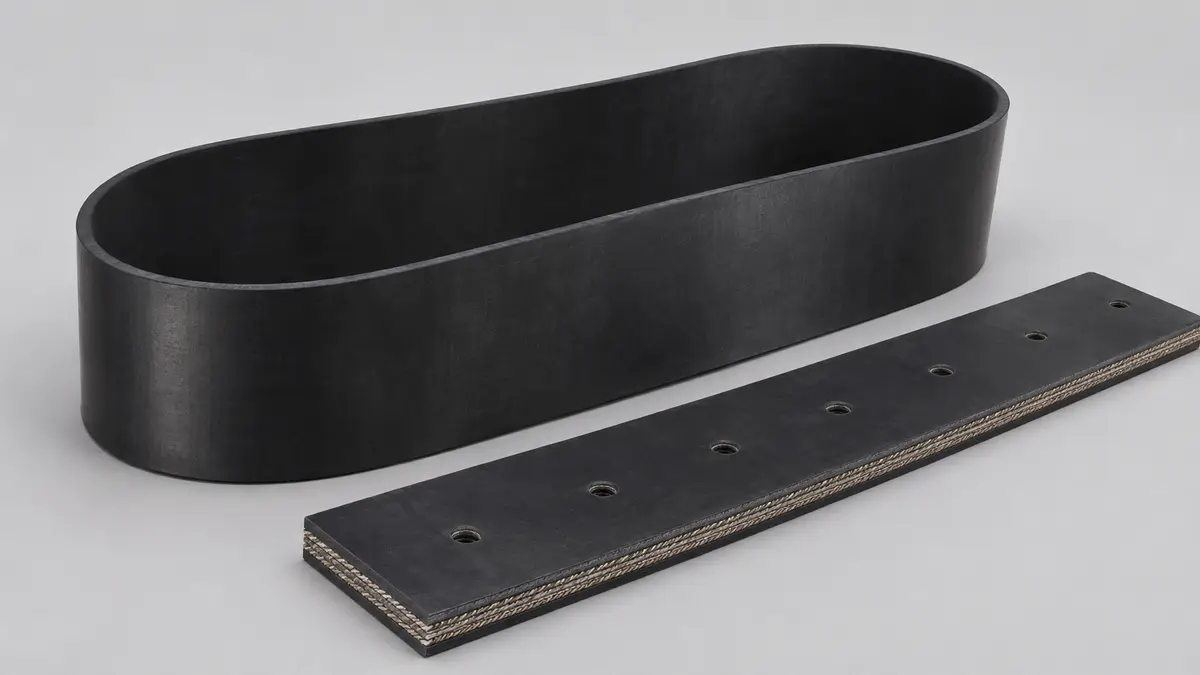
Provide a bucket mounting drawing showing hole diameter, spacing, rows and edge distances. State whether holes are factory-punched or made during installation. Approve a sample using the intended bucket bolts, washers and splice hardware. Match any conductivity or flammability report to the ordered construction.
UK REACH generally applies to chemical substances in articles. Restrictions can limit, ban or impose conditions on substances placed on the market or used. Request composition information for the rubber compound and review applicable restrictions for supply in Great Britain. Combustible dust clouds can explode when an ignition source is present, so discuss the operating environment with the equipment supplier when choosing the belt.
Worked duty example
Illustrative example, not a quote: Illustrative order: 12 rolls of textile-reinforced rubber bucket elevator belting under 4010 12 00 00, invoiced at £24,000 free on board, with £3,500 of freight and insurance to the UK. The customs value is £27,500. Duty at 6% is £1,650. Import VAT at 20% is charged on the customs value plus duty, £29,150, so it is £5,830. Import taxes total £7,480; a VAT-registered importer can usually reclaim the VAT, so the lasting cost is the £1,650 of duty. The import duty and VAT guide explains each step.
Inspection checklist
Dimensions: measure width, supplied length and cover thickness against the approved drawing; inspect edges for waviness, cuts and exposed reinforcement.
Bucket holes: check diameter, spacing and edge distances; trial-fit the intended fasteners and inspect for torn fabric around punched holes.
Carcass and splice: compare the reinforcement and ply count with the order; inspect for separation and check the splice layout against the equipment supplier's drawing.
Reports and delivery: match tensile, adhesion, abrasion and any conductivity or flammability results to the supplied construction; check roll identification and transit damage.
Working out your own order? Send us the product on WhatsApp and we reply the same working day: WhatsApp us
What goes wrong
A belt can match the nominal width yet have the wrong bucket-hole pattern or splice allowance. Buyers then discover that buckets cannot be fitted without enlarging holes or that the splice interferes with the mounting layout. Approve the complete mounting drawing and a trial assembly before production.
Thin covers, weak reinforcement and poor ply adhesion cause early wear or separation. Uneven edges contribute to tracking problems. A report for a different rubber compound or carcass does not demonstrate the supplied belt's performance. Retain an approved sample and agree the inspection checks before dispatch.
Cambridge China Bridge sources these products for UK businesses, checking the factory and the documents before shipment. See factory verification. For repeat volumes, see container programmes.
Frequently asked questions
What is the UK import duty on rubber elevator belts from China?
The relevant rubber conveyor-belt lines carry 6% duty.
Which commodity code covers textile-reinforced elevator belts?
4010 12 00 00 covers rubber conveyor belts reinforced only with textile materials. Give your broker the construction details to confirm the classification of your bucket-carrying belt.
Can the factory punch the bucket holes?
Specify the mounting pattern on an approved drawing, including hole diameter, spacing and edge distances. Trial-fit the intended fasteners and check for damage around the holes.
What should I check for an elevator handling dusty material?
Discuss combustible dust and ignition risks with the equipment supplier. Match any conductivity and flammability reports to the exact rubber compound and belt construction ordered.