Sourcing portable wood-fired saunas from China
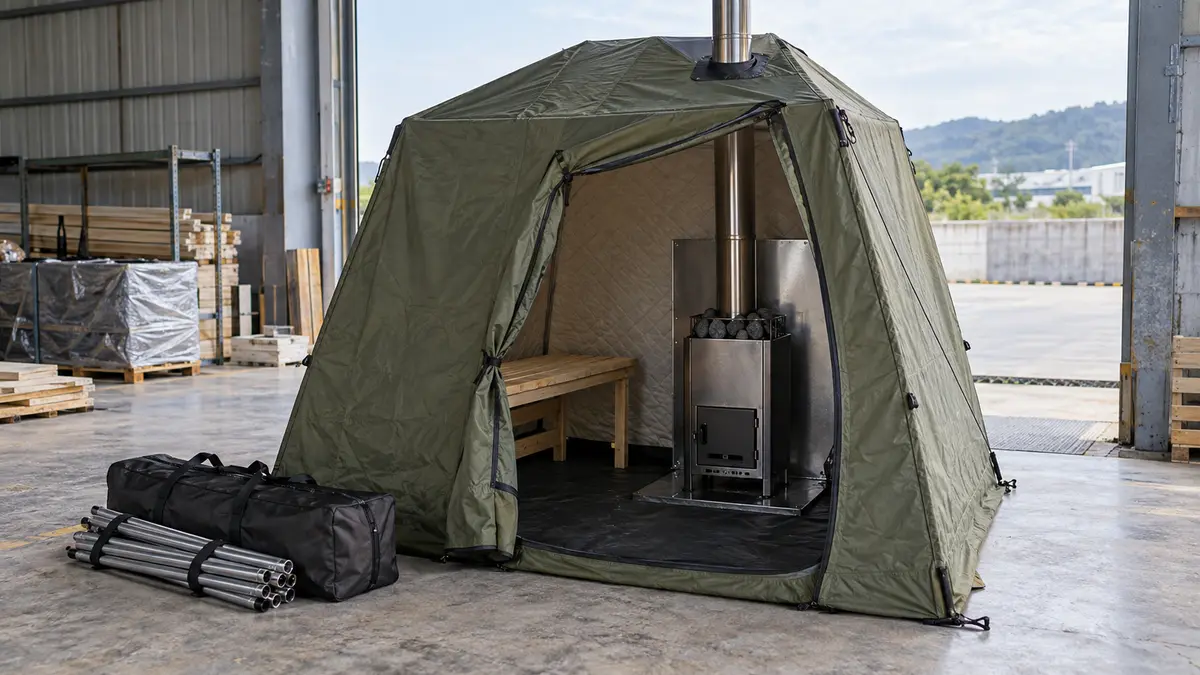
The stove is the part regulation actually reaches: BS EN 15821 is written specifically for multi-firing sauna stoves fired by natural wood logs, and it is what you should ask the factory to test and declare against rather than a generic wood-burner standard. Cambridge China Bridge sources this for UK and overseas buyers, from a first trial order to full containers.
What the standard actually covers
The stove is the part regulation actually reaches. BS EN 15821 is the standard written specifically for multi-firing sauna stoves fired by natural wood logs — the exact appliance in a portable sauna kit, not a generic wood-burner standard borrowed from a different product. It sets design, safety and performance requirements and test methods, and it is what you should ask the factory to test and declare conformity against.
Ask for the test report by name, not just a general "CE" or "certified" claim. A sauna stove that has actually been tested to EN 15821 is a specific, checkable thing; a supplier who cannot produce the report has not necessarily had the stove tested to the standard that applies to it. Wooden barrel saunas and sauna cabins, and electric sauna heaters, are covered in our wooden sauna guide.
The one exemption worth knowing
Unlike a domestic wood burner, a sauna stove does not need an Ecodesign efficiency certificate or an energy label. Sauna stoves are explicitly excluded from the EU/UK Ecodesign regulation for solid fuel local space heaters — Commission Regulation (EU) 2015/1185 lists "sauna stoves" as excluded from scope by name, and defines the term as a solid fuel local space heater incorporated in, or declared to be used in, a sauna or similar environment.
That cuts both ways. Do not let a supplier upsell you an Ecodesign certificate or energy label you do not need for this product, and do not treat its absence as a sign the stove is non-compliant — it simply is not the regime that applies here. EN 15821 is the standard doing the actual work.
Carbon monoxide is the real risk
Burning solid fuel in a small, largely enclosed fabric structure is a known carbon monoxide risk, and it is worth being precise about which law does and does not reach it. The Smoke and Carbon Monoxide Alarm (England) Regulations require a CO alarm in any room used as living accommodation that contains a fixed combustion appliance other than a gas cooker — but that duty sits with residential landlords. It does not, by its own terms, reach you as a retailer selling a portable kit to someone who owns their own home or garden.
That does not leave you off the hook. The General Product Safety Regulations 2005, which remain in force for Great Britain, place an independent general duty on anyone placing a product on the market to make sure it is safe. Given the known and serious carbon monoxide risk of this exact category of product, that general duty is squarely engaged whether or not the landlord-specific law applies to your sale.
In practice, treat a CO alarm to BS EN 50291 as a non-negotiable part of the kit rather than an optional extra, and say so clearly in the instructions. It is the cheapest insurance available against the one failure mode that actually kills people.
The tent and flue: what to specify
The fabric tent itself is not covered by a dedicated product safety directive the way electricals or toys are — no CE or UKCA marking regime exists specifically for it. It falls under the same general safety duty as everything else, which in practice means: heavy-duty, heat-resistant material where it faces the stove, and heat protection panels specified in the order rather than assumed.
For the flue, ask for its standard reference rather than accepting "stainless steel" as a full description. The BS EN 1856 series covers metal chimneys and connecting flue pipes, and a flue built to a recognised standard in that family is a specific, checkable claim. Equally important, and easy to miss, is the clearance distance the manufacturer specifies from the flue and stove to the tent fabric — that distance, correctly stated and followed, is what actually keeps the fabric from scorching, more than the metal grade on its own.
Building regulations: usually not engaged, but check before permanent siting
A freestanding, movable fabric sauna tent generally is not doing the kind of "building work" that triggers Building Regulations Part J the way installing a stove into a permanent building does, and small temporary garden structures commonly fall outside the regulations altogether.
That said, the Building Act 1984 defines "building" broadly enough that this is a genuinely fact-specific question rather than a settled yes or no, particularly if a customer plans to site the sauna semi-permanently rather than moving it. Say so plainly to buyers rather than promising a blanket exemption, and point anyone planning permanent siting to their local building control team before they assume it does not apply.
Working out your own order? Send us the product on WhatsApp and we reply the same working day: WhatsApp us
Selling into Jersey and the Channel Islands
There is nothing sauna-specific about shipping into Jersey or the other Crown Dependencies — the same duty and GST treatment applies as for any other product, and the same routing question matters: where the goods are declared decides whether UK import VAT becomes due on the way through. See our guide on importing to Jersey and the Channel Islands for the detail, since it is the difference between a competitive landed price and an unrecoverable 20% sitting in your cost base.
Frequently asked questions
What standard applies to a wood-fired sauna stove?
BS EN 15821, written specifically for multi-firing sauna stoves fired by natural wood logs. Ask the factory for a test report against it by name, not a general certification claim.
Do I need an Ecodesign certificate or energy label for the stove?
No. Sauna stoves are explicitly excluded from the EU/UK Ecodesign regulation for solid fuel local space heaters. Do not pay extra for a certificate this product does not need, and do not treat its absence as a compliance problem.
Am I legally required to include a carbon monoxide alarm?
Not under the law that specifically requires them — that duty sits with residential landlords, not retailers of portable kits. But the General Product Safety Regulations 2005 impose an independent duty to sell only safe products, and given the known CO risk of this product, that duty makes a CO alarm effectively non-negotiable in practice.
Do I need building regulations approval to sell these?
Usually not for a freestanding, movable tent, but the position is genuinely fact-specific rather than a blanket exemption, particularly for a customer planning to site the sauna permanently. Point them to their local building control team rather than assuming it does not apply.
Can I ship these to Jersey the same way as other products?
Yes. There is nothing sauna-specific about the customs or GST treatment — see our guide on importing to Jersey and the Channel Islands for how duty, GST and the routing question work.