Sourcing polypropylene baler twine from China
Polypropylene baler twine from China carries 8% UK import duty, with no rate variation on the baler-twine line. Fibre-content labelling rules apply when selling textiles in Great Britain. Specify knot strength, spool length and compatibility with your baler. Cambridge China Bridge sources polypropylene baler twine.
Buying from China for a business? How our UK China sourcing agent service works · China sourcing agent for small orders and first imports
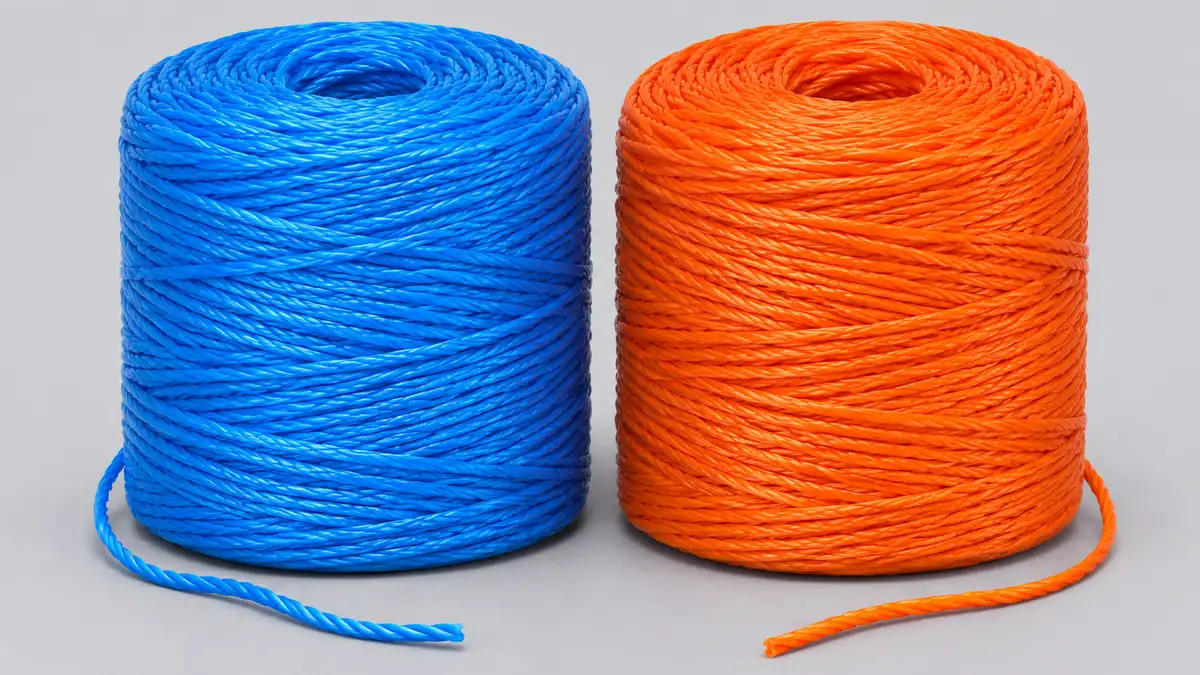
Baler twine classification and duty
Heading 5607 covers twine, cordage, ropes and cables, including plaited or braided products and those coated or covered with rubber or plastics. Polypropylene binder or baler twine falls under 5607 41 00 00. The other table rows are classification comparisons for polypropylene or polyethylene cordage that is not binder or baler twine.
Read from the UK Trade Tariff on 2 October 2026, polypropylene baler twine from China carries 8% duty. The supplied tariff record lists no anti-dumping or countervailing duty, suspension or attached import control for this line. Its duty range is therefore a single rate. The suspension elsewhere in the heading concerns surgical twine, not polypropylene baler twine.
Confirm the material, construction and binding use through our commodity code guide. For the natural-fibre alternative and wider heading context, see sisal baler twine. The order values are illustrative, not a quotation; see UK import duty and VAT for the calculation method.
| Goods | Commodity code | Duty | Anti-dumping or countervailing duty on China |
|---|---|---|---|
| Polypropylene or polyethylene binder or baler twine | 5607 41 00 00 | 8% | None |
| Other polypropylene or polyethylene cordage, over 5 g/m, plaited or braided | 5607 49 11 00 | 8% | None |
| Other polypropylene or polyethylene cordage, over 5 g/m, not plaited or braided | 5607 49 19 00 | 8% | None |
| Other polypropylene or polyethylene cordage, 5 g/m or less | 5607 49 90 00 | 8% | None |
Specify the twine for the baler and knotter
Give the factory the baler model, knotter arrangement, bale type and intended storage conditions. Specify polypropylene composition, construction, linear density, minimum straight breaking force and minimum knot breaking force separately. Agree the knot and test method used for acceptance rather than accepting an unexplained strength claim.
Specify usable length and net twine weight per spool, spool dimensions, centre-pull presentation, winding and colour. Agree outdoor exposure requirements and ask for confirmation of the UV stabiliser. Trial the approved sample in the intended baler to check feeding, knot formation and bale retention.
Great Britain textile labelling guidance requires the label to show fibre content. Agree the fibre description before printing the packaging. Ask for testing and certification support when defining the evidence needed for your specification.
Worked duty example
Illustrative example, not a quote: 12 tonnes of polypropylene baler twine for an agricultural supplies business; illustrative order under 5607 41 00 00, invoiced at £24,000 free on board, with £3,000 of freight and insurance to the UK. The customs value is £27,000. Duty at 8% is £2,160. Import VAT at 20% is charged on the customs value plus duty, £29,160, so it is £5,832. Import taxes total £7,992; a VAT-registered importer can usually reclaim the VAT, so the lasting cost is the £2,160 of duty. The import duty and VAT guide explains each step.
Inspection checklist
Length and weight: measure sampled spool lengths, weigh the twine separately from packaging and compare linear density with the agreed specification.
Strength and knots: test straight breaking force and knot breaking force using the agreed methods; record whether failure occurs at the knot or along the twine.
Feeding and winding: check centre-pull access, tangles, loose loops, splices and spool fit; run sampled spools through the intended baler.
Material and identification: compare fibre-content labels, colour, batch identification and UV-stabiliser evidence with the order and approved sample.
Working out your own order? Send us the product on WhatsApp and we reply the same working day: WhatsApp us
What goes wrong
A spool can look full while containing less usable twine than ordered. Lower linear density can reduce strength, and an acceptable straight pull result can conceal weak knots. Poor winding or unsuitable spool dimensions can interrupt feeding even when the material passes a laboratory test.
Outdoor twine without the agreed stabilisation can become brittle. Keep the approved sample and batch test records, and investigate differences before releasing the shipment. Use quality inspection guidance to turn the purchase specification into arrival checks.
Cambridge China Bridge sources these products for UK businesses, checking the factory and the documents before shipment. See factory verification. For repeat volumes, see container programmes.
Frequently asked questions
What is the UK import duty on polypropylene baler twine from China?
The supplied tariff record gives 8% for 5607 41 00 00, with no anti-dumping or countervailing duty, suspension or attached import control.
Which commodity code covers polypropylene baler twine?
5607 41 00 00 covers polyethylene or polypropylene binder or baler twine. The other polypropylene cordage lines in the table are comparisons, not alternative codes for the same baler twine.
How do I check that twine will work in my baler?
Specify the baler and knotter, spool dimensions and feeding arrangement. Trial sampled spools in that machine and agree both straight and knot breaking-force tests before ordering.
What labelling does polypropylene baler twine need?
Check that the fibre description matches the twine supplied.