Sourcing polylactic acid staple fibre from China
The supplied tariff lines carry 0% UK duty from China. Confirm the polyester code against the polylactic acid fibre's composition and processing stage. Retailers should obtain credible evidence before making environmental claims. Cambridge China Bridge sources polylactic acid staple fibre.
Buying from China for a business? How our UK China sourcing agent service works · China sourcing agent for small orders and first imports
UK duty and classification
Heading 5503 covers synthetic staple fibres not carded, combed or otherwise processed for spinning. For polylactic acid fibre, ask your broker to check the polyester line, 5503 20 00 00, against the declared polymer composition. The table shows applications of that candidate line, rather than separate tariff subdivisions.
Read from the UK Trade Tariff on 1 October 2026, all supplied lines carried 0% duty for goods from China. The supplied facts list no anti-dumping or countervailing measures, suspensions or attached import controls. These tariff findings do not establish suitability for the intended finished product.
Confirm the commodity code before ordering, especially for blends or fibre already processed for spinning. See the wider staple fibre guide for the heading and the duty and VAT guide for import costing.
| Goods | Commodity code | Duty | Anti-dumping or countervailing duty on China |
|---|---|---|---|
| Uncarded polylactic acid staple fibre for spinning | 5503 20 00 00 | 0% | None |
Specify the polymer and processing behaviour
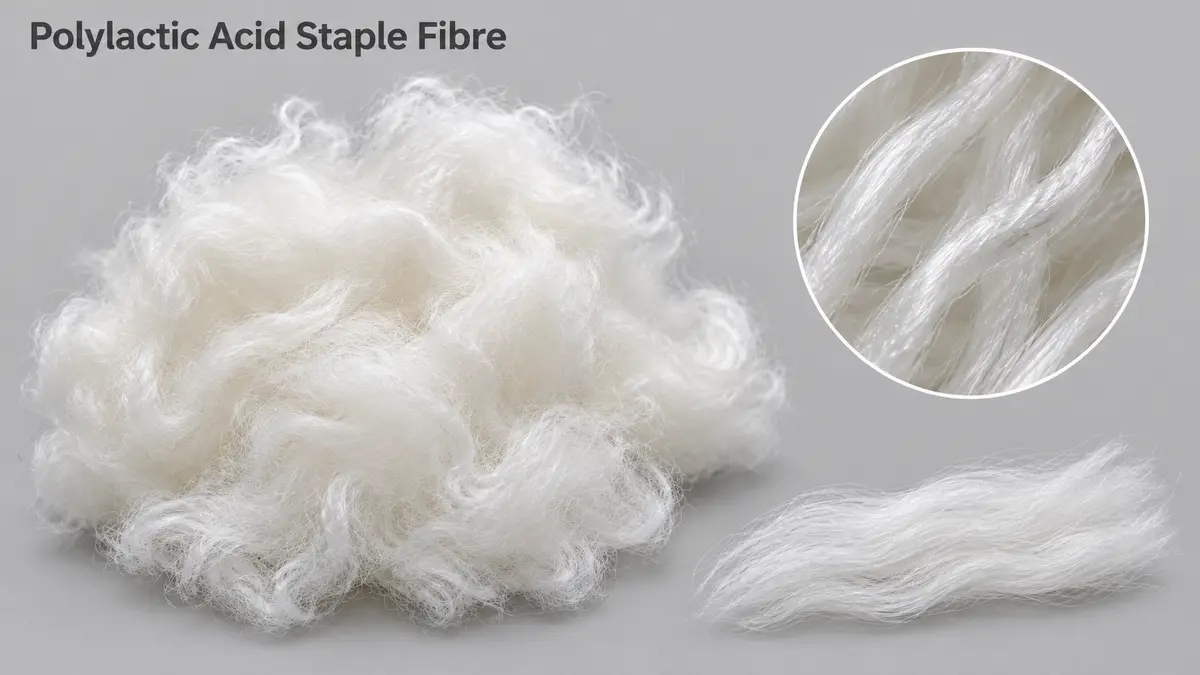
State whether you want pure polylactic acid fibre or a blend, and identify every other polymer. Agree fibre fineness, cut length, crimp, strength, elongation, colour, moisture acceptance and finish. Ask the factory to identify the resin grade and disclose additives and surface treatments.
For spinning or nonwoven manufacture, approve a sample on your own equipment. Agree the processing temperature window and check shrinkage, carding behaviour and bonding performance where relevant. Keep an approved sample and require agreement before resin or finish changes.
Retailers should obtain robust, credible and current evidence for environmental claims. Ask for reports covering the supplied fibre and check whether biodegradability or compostability claims concern particular components or conditions. For domestic upholstered furniture filling, confirm applicable ignitability testing requirements with Trading Standards, using the wider guide as background.
Worked duty example
Illustrative example, not a quote: A baled polylactic acid staple fibre trial lot for a small converter, illustrative under 5503 20 00 00, invoiced at £16,000 free on board, with £1,200 of freight and insurance to the UK. The customs value is £17,200. Duty at 0% is £0. Import VAT at 20% is charged on the customs value plus duty, £17,200, so it is £3,440. With no duty, the only import tax is the VAT, which a VAT-registered importer can usually reclaim. The import duty and VAT guide explains each step.
Inspection checklist
Identity: check the declared polymer composition, resin grade and finish against the approved sample and batch documents.
Fibre: sample across bales and compare fineness, cut length, crimp, strength and contamination with the specification.
Processing: repeat the agreed carding, spinning or bonding trial and compare shrinkage and finished material performance.
Bales: check net weight, moisture, wrapping, batch identification, odour and signs of water damage.
Working out your own order? Send us the product on WhatsApp and we reply the same working day: WhatsApp us
What goes wrong
A substituted resin or changed finish can make the bulk fibre behave differently from the approved sample. Uneven cut length causes feeding problems, while unexpected shrinkage or bonding behaviour spoils the finished web. Damp bales and foreign fibres make acceptance harder.
A generic compostability report may cover a different formulation or test environment. Match the report to the supplied material and proposed claim, then assess the finished blend separately. Agree sample retention and shipment checks through the quality inspection guide.
Cambridge China Bridge sources these products for UK businesses, checking the factory and the documents before shipment. See factory verification. For repeat volumes, see container programmes.
Frequently asked questions
What is the UK import duty on polylactic acid staple fibre from China?
The supplied polyester line, 5503 20 00 00, carries 0% duty from China, with no listed trade remedy. Confirm that this code fits your fibre's composition and processing stage.
Is polylactic acid fibre automatically home compostable?
Do not assume it is. Ask for evidence matching the supplied formulation and check the stated composting conditions. Assess any finished blend separately.
What should I specify before ordering?
Specify polymer composition, resin grade, fineness, cut length, crimp, strength, finish, moisture acceptance and processing behaviour. Approve a trial on your equipment.
Can I use polylactic acid fibre as furniture filling?
For domestic upholstered furniture filling, confirm applicable ignitability testing requirements with Trading Standards, using the wider staple fibre guide as background. Check the supplied material rather than relying on a generic claim.