Sourcing polyester flocking fibres from China
Ordinary polyester flocking fibres from China pay 2% UK duty; the narrowly defined 0% suspension on the same line concerns a different fibre. Check applicable UK REACH restrictions on the supplied material and its intended use before ordering. Cambridge China Bridge sources polyester flocking fibres.
Buying from China for a business? How our UK China sourcing agent service works · China sourcing agent for small orders and first imports
Polyester flock pays 2% duty
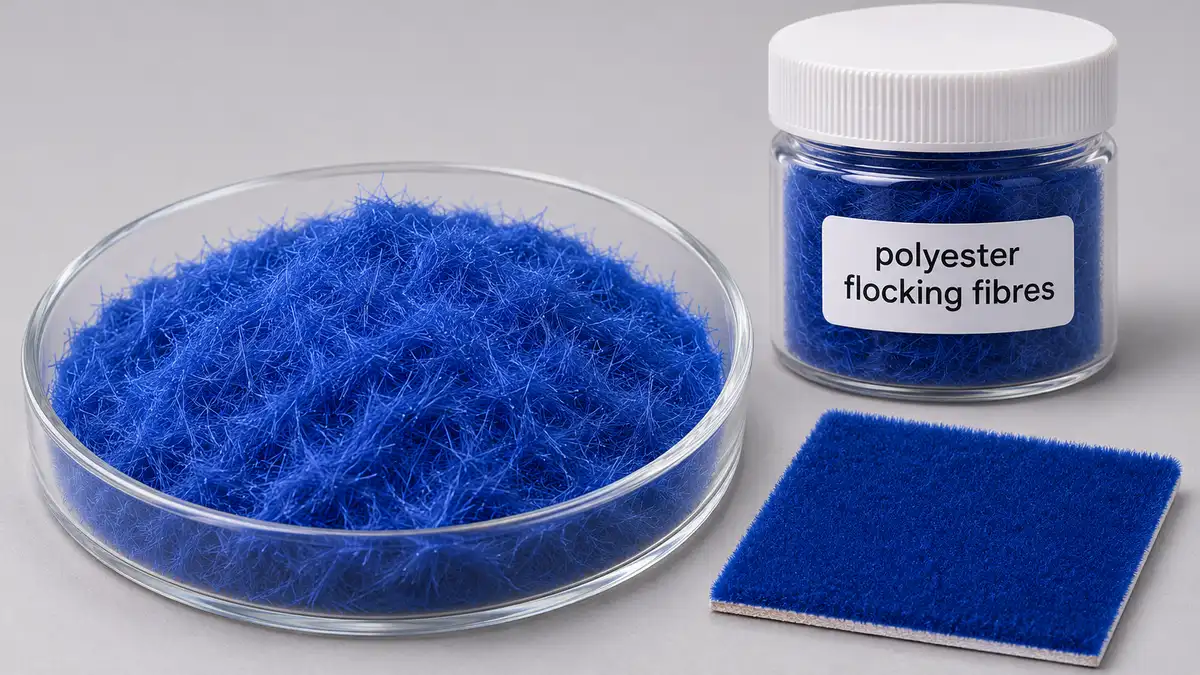
Read from the UK Trade Tariff on 5 October 2026, heading 5601 covers wadding, textile flock, dust and mill neps. This guide concerns loose polyester flocking fibres not exceeding 5 mm in length, normally within 5601 30 00 90. The table describes product variants sharing that commodity line.
The supplied tariff snapshot records 2% duty from China, with no anti-dumping or countervailing measure and no attached import controls on this line. Its 0.00 % suspension is restricted to the specified copolymer short fibre, not ordinary polyester flock. Do not assume that sharing the code makes polyester eligible for that suspension.
Confirm the fibre composition, cut length and supplied form using our commodity code guide. Longer loose polyester fibres are discussed in our polyester staple fibre guide. For another flock material within this heading, see nylon flocking fibres.
| Goods | Commodity code | Duty | Anti-dumping or countervailing duty on China |
|---|---|---|---|
| Undyed polyester flocking fibres | 5601 30 00 90 | 2% | None |
Specify the cut and electrostatic finish
State polyester composition, cut length and tolerance, linear density, colour reference, lustre and intended application method. For electrostatic flocking, agree the surface finish, conditioning method and conductivity test with the factory. Approve a trial using your actual adhesive, substrate and equipment, then retain both the loose fibre sample and the finished flocked panel.
UK REACH restrictions can limit, ban or set conditions on supplying or using particular substances. Ask the factory to identify dyes and surface treatments, then check applicable restrictions against the composition and intended use. Agree any supporting chemical testing through testing and certification.
HSE identifies current hazardous-substance assessments, exposure control and health surveillance as priorities where dust is hazardous. Include bag opening, hopper filling and cleaning in your handling assessment before conducting production trials.
Worked duty example
Illustrative example, not a quote: Illustrative order: 2 tonnes of dyed polyester flocking fibres under 5601 30 00 90, invoiced at £14,000 free on board, with £2,200 of freight and insurance to the UK. The customs value is £16,200. Duty at 2% is £324. Import VAT at 20% is charged on the customs value plus duty, £16,524, so it is £3,304.80. Import taxes total £3,628.80; a VAT-registered importer can usually reclaim the VAT, so the lasting cost is the £324 of duty. The import duty and VAT guide explains each step.
Inspection checklist
Fibre and cut: verify polyester identity and examine samples for uneven cuts, oversized fibres, excessive fines and foreign fibres.
Colour and finish: compare samples from different bags with the retained reference under agreed lighting; check colour transfer using your intended adhesive and substrate.
Application: trial conditioned samples on your equipment; compare coverage, fibre orientation, shedding and adhesion after the agreed cure.
Packing and traceability: check net weight, sealed liners, moisture, clumping and batch identification against the packing list. Use our quality inspection guide to agree sampling.
Working out your own order? Send us the product on WhatsApp and we reply the same working day: WhatsApp us
What goes wrong
Uneven cuts can produce an irregular pile, while fines and foreign fibres spoil the surface. A changed electrostatic finish or moisture condition can make fibres feed or stand differently from the approved sample. Shade variation becomes visible when adjacent panels use different batches.
Hold a suspect batch apart and compare it with the retained sample using the same conditioning, adhesive and equipment settings. Check whether the difference follows the fibre batch before changing your process. Record the agreed replacement or rework against the affected batch.
Cambridge China Bridge sources these products for UK businesses, checking the factory and the documents before shipment. See factory verification. For repeat volumes, see container programmes.
Frequently asked questions
What is the UK import duty on polyester flocking fibres from China?
The supplied tariff snapshot shows 2% for ordinary polyester flock under 5601 30 00 90. The specific suspension on that line does not cover ordinary polyester.
Does the flock suspension make polyester duty-free?
No. The suspension on this line is for a specified copolymer short fibre. Ordinary polyester flock retains the 2% rate.
What should I send a polyester flock factory?
Send the fibre composition, cut length, linear density, colour reference, application method and retained sample. Include your substrate and adhesive details for a production trial.
Why does the flock look patchy on my equipment?
Check cut consistency, fines, conditioning and the electrostatic finish. Compare the batch with your approved sample using the same adhesive, substrate and machine settings.