Sourcing palm mid fraction from China
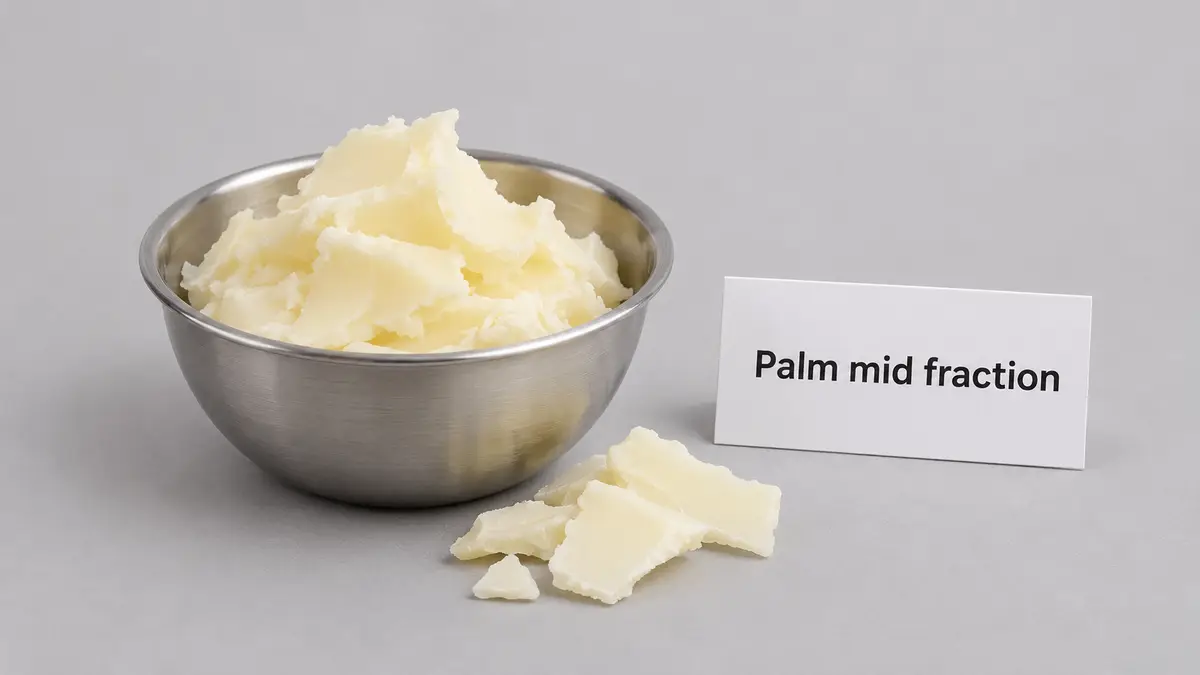
Solid palm mid fraction from China normally attracts 10% to 12% UK duty, depending on packing size. A listed industrial-use line has a conditional suspension to 0%. Organic food consignments entering Great Britain need a valid Certificate of Inspection. Cambridge China Bridge sources palm mid fraction.
Buying from China for a business? How our UK China sourcing agent service works · China sourcing agent for small orders and first imports
Usually 10% or 12% for solid fractions
Read from the UK Trade Tariff on 29 September 2026, heading 1511 covers palm oil and its fractions, refined or otherwise, without chemical modification. For solid palm mid fraction, immediate packings not exceeding 1 kg attract 12%; other solid fractions normally attract 10%. The 8% other-edible-fractions line is relevant only if classification falls outside the solid-fraction branch. For wider heading context, see our palm stearin guide.
The listed industrial-manufacture solid-fraction line has a 0.00 % suspension, excluding mixtures, preparations and products made up of different components containing these products. Do not assume edible palm mid fraction qualifies. The supplied tariff record shows no anti-dumping or countervailing duty. Confirm composition, packing and intended use with your broker using our commodity code guide.
The relevant lines carry organic import and waste import/export controls. Organic food from China entering Great Britain needs a valid Certificate of Inspection. For waste subject to notification controls, destination, dispatch and transit authorities must consent before shipment. Ask your broker to confirm the China-to-UK waste requirements if material is discarded or recovered; the tariff control alone does not establish its waste status.
| Goods | Commodity code | Duty | Anti-dumping or countervailing duty on China |
|---|---|---|---|
| Solid palm mid fraction in immediate packings over 1 kg, other uses | 1511 90 19 90 | 10% | None |
| Solid palm mid fraction in immediate packings not exceeding 1 kg | 1511 90 11 00 | 12% | None |
| Solid palm fractions over 1 kg for the listed industrial manufacture | 1511 90 19 20 | 10% | None |
| Other edible palm fractions, only if outside the solid-fraction branch | 1511 90 99 00 | 8% | None |
Specify the melting and crystallisation profile
Describe the product as palm mid fraction and state whether it is a pure fraction or a blend. Request its fractionation and refining history, fatty acid and triglyceride profiles, iodine value, melting behaviour and solid fat content across your processing and storage temperatures. Agree test methods and acceptance criteria before approving a sample.
For confectionery applications, trial the material in your actual recipe. Check crystallisation, firmness, mouthfeel, oil separation and bloom during storage. Agree limits for free fatty acids, peroxide value, moisture and impurities, and ask a laboratory to define the contaminant testing appropriate to the intended food use. Specify sealed liners, batch identification and handling temperatures.
Worked duty example
Illustrative example, not a quote: Illustrative order: 20 tonnes of food-grade solid palm mid fraction in 10 kg cartons under 1511 90 19 90, invoiced at £30,000 free on board, with £2,500 of freight and insurance to the UK. The customs value is £32,500. Duty at 10% is £3,250. Import VAT at 20% is charged on the customs value plus duty, £35,750, so it is £7,150. Import taxes total £10,400; a VAT-registered importer can usually reclaim the VAT, so the lasting cost is the £3,250 of duty. The import duty and VAT guide explains each step. This assumes the goods are standard-rated for VAT. Most food for human consumption is zero-rated, and animal feed can be too, in which case no import VAT is due, so check the rate for your product in HMRC's VAT Notice 701/14.
Inspection checklist
Identity: match the batch analysis and manufacturing description to the approved pure fraction or blend.
Performance: compare melting behaviour and solid fat content with the approved sample using the agreed methods.
Condition: inspect liners, seals and cartons for leakage, moisture and contamination; assess odour and retain a batch sample.
Documents: reconcile batch identifiers across analysis reports, packing lists and labels; check the organic Certificate of Inspection where applicable.
Working out your own order? Send us the product on WhatsApp and we reply the same working day: WhatsApp us
What goes wrong
A supplier substitutes a different fraction or blend that looks similar but crystallises differently. The finished filling becomes too hard, soft or oily, or develops bloom. A melting-point result alone may miss these differences. Approve the complete performance profile and repeat the recipe trial when the supplier changes the material.
Packing size or intended use is described incorrectly, leading to the wrong tariff line or an unsupported suspension claim. Heat exposure, damaged liners and mismatched batch reports also cause disputes. Check the shipment against the agreed specification through quality inspection before release.
Cambridge China Bridge sources these products for UK businesses, checking the factory and the documents before shipment. See factory verification. For repeat volumes, see container programmes.
Frequently asked questions
What is the UK import duty on palm mid fraction from China?
Solid fractions normally pay 10% in immediate packings over 1 kg and 12% in smaller packs. A listed industrial-use line has a conditional suspension to 0%. The other edible fractions line carries 8% if applicable.
Does organic palm mid fraction need an import certificate?
Organic food consignments imported from China into Great Britain need a valid Certificate of Inspection. Confirm the arrangements before dispatch.
Is a melting-point certificate enough to approve palm mid fraction?
Request solid fat content and crystallisation data as well. Trial the batch in your recipe because similar melting points can conceal different processing and storage behaviour.
Can I claim the industrial duty suspension for confectionery fat?
Do not assume so. The suspension belongs to a line for listed industrial manufacture and excludes mixtures and preparations. Ask your broker to verify the exact product and use.