Sourcing Oyster Knives from China
Oyster knives and their separate blades and base-metal handles from China carry 2% to 8% UK duty; complete fixed-blade knives carry 8%. Confirm applicable knife-sales age restrictions and any Scottish kitchen-knife exception with the relevant Trading Standards authority. Specify blade strength and wet grip. Cambridge China Bridge sources oyster knives.
Buying from China for a business? How our UK China sourcing agent service works · China sourcing agent for small orders and first imports
Oyster-knife duty and classification
Read from the UK Trade Tariff on 30 September 2026, heading 8211 covers knives with cutting blades and their blades. For fixed-blade oyster knives within this heading, the relevant line is 8211 92 00 00. Separate blades and base-metal handles have their own lines. The table repeats the fixed-blade line for different handle materials; these are product variants, not separate tariff subdivisions.
Complete fixed-blade knives carry 8% duty from China, separate blades 6% and base-metal handles 2%. The supplied record lists no anti-dumping or countervailing measures or suspensions. The UK Trade Tariff attaches ivory import control to the fixed-blade line and CITES import control to all selected lines. Confirm the applicable requirements with your customs broker before shipping, particularly for animal-derived or unusual wooden handles.
Supply the blade drawing, handle materials and details of any separately shipped components when confirming the commodity code. For other knife types and assorted sets, see the kitchen and folding knives guide.
| Goods | Commodity code | Duty | Anti-dumping or countervailing duty on China |
|---|---|---|---|
| Fixed-blade oyster knives with moulded handles | 8211 92 00 00 | 8% | None |
| Oyster-knife blades supplied separately | 8211 94 00 00 | 6% | None |
| Base-metal oyster-knife handles supplied separately | 8211 95 00 00 | 2% | None |
Specify the tip, tang and wet grip
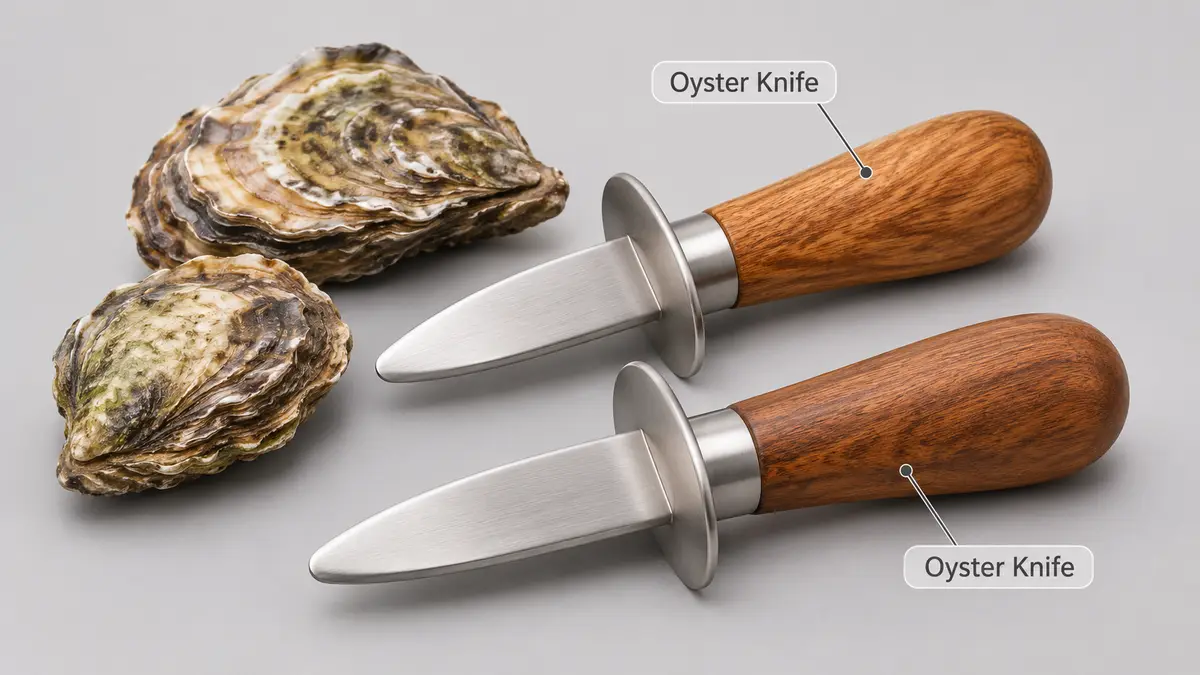
Describe whether the knife opens the shell at the hinge or from the side. Agree blade length, thickness, tip profile, curvature and edge finish against a drawing and approved sample. Specify the steel grade, heat treatment and acceptance checks for bending and twisting. Assess the knife on representative oysters using an agreed safe handling method.
Specify the tang construction, handle attachment, finger guard and grip texture. Check grip with wet hands and cleaning access around the blade-to-handle joint. Request a food-contact declaration and supporting material information for the blade, coatings and relevant handle surfaces. Agree cleaning instructions and test any dishwasher-safe claim before accepting it.
Confirm applicable knife-sales age restrictions and any Scottish kitchen-knife or cutlery exception with the relevant Trading Standards authority. Online sellers should also confirm applicable age-verification and delivery requirements. Check unusual designs against the banned-knife rules before ordering. Importers remain responsible for product safety after products reach the market.
Worked duty example
Illustrative example, not a quote: Illustrative order of 3,000 fixed-blade oyster knives for a catering wholesaler under 8211 92 00 00, invoiced at £4,500 free on board, with £450 of freight and insurance to the UK. The customs value is £4,950. Duty at 8% is £396. Import VAT at 20% is charged on the customs value plus duty, £5,346, so it is £1,069.20. Import taxes total £1,465.20; a VAT-registered importer can usually reclaim the VAT, so the lasting cost is the £396 of duty. The import duty and VAT guide explains each step.
Inspection checklist
Blade: compare tip shape, thickness and finish with the approved sample; check for burrs, cracks, corrosion and permanent bending after the agreed use trial.
Handle: pull and twist samples to check attachment; inspect tang construction, moulding gaps, wooden-handle cracks and grip when wet.
Cleaning: inspect the blade-to-handle joint for trapped residue; repeat the agreed cleaning trial and check for rust, swelling or loosening.
Packing: check tip protection and restraint so knives cannot pierce retail packs or cartons; compare supplied instructions and food-contact documents with the actual model. Agree sampling through the inspection guide.
Working out your own order? Send us the product on WhatsApp and we reply the same working day: WhatsApp us
What goes wrong
A tip that looks suitable can be too thick to enter the hinge or too thin to withstand twisting. Poor heat treatment can leave the blade bent or chipped. A smooth handle may slip when wet, while a loose tang or inadequate attachment lets the blade move inside the handle.
Cleaning can reveal corrosion, swollen wooden handles and gaps that retain shell fragments or food. Approve the complete knife after use and cleaning trials, then compare production samples with it. Hold stock with cracked blades, loose handles or damaged tip protection for assessment before release.
Cambridge China Bridge sources these products for UK businesses, checking the factory and the documents before shipment. See factory verification. For repeat volumes, see container programmes.
Frequently asked questions
What is the UK import duty on oyster knives from China?
Fixed-blade oyster knives under 8211 92 00 00 carry 8% duty. Separately imported blades carry 6%, and base-metal handles 2%, in the supplied tariff record.
What should I specify for an oyster knife?
Specify the opening method, tip profile, blade thickness, steel grade, heat treatment, tang construction and wet grip. Approve a sample after oyster-opening and cleaning trials.
What food-contact paperwork should I request?
Request a food-contact declaration and supporting material information matched to the actual blade, coatings and relevant handle surfaces, rather than paperwork for a different knife.
Can I sell oyster knives to children?
Check the applicable sales and delivery rules for your product and location.