Sourcing NFC label tags from China
NFC label tags within heading 8523 carry 0% UK duty from China across the supplied tariff lines. Radio equipment must meet the essential requirements before sale in Great Britain. Confirm the tag construction and code, then test encoded content and adhesion. Cambridge China Bridge sources NFC label tags.
Zero duty, with classification checks
Heading 8523 covers recording media, including semiconductor media and smart cards. For NFC label tags, give your customs broker the chip datasheet, antenna construction, finished-label sample and encoding details. The table shows blank and encoded buying formats against the same smart-card line, plus neighbouring semiconductor categories for classification checks. These entries are not interchangeable codes. For SIM cards, see our SIM card sourcing guide.
Read from the UK Trade Tariff on 30 September 2026, every supplied line carried 0% duty for goods from China. The supplied facts list no anti-dumping or countervailing duties, suspensions or attached import controls. This tariff snapshot does not establish product compliance for sale.
Confirm the commodity code before ordering, rather than copying a supplier's invoice code. For wider coverage, see RFID smart cards. Use the import duty and VAT guide when calculating landed costs.
| Goods | Commodity code | Duty | Anti-dumping or countervailing duty on China |
|---|---|---|---|
| Smart-card media: blank NFC labels, subject to classification | 8523 52 00 00 | 0% | None |
| Other unrecorded semiconductor media, if outside the smart-card line | 8523 59 10 00 | 0% | None |
| Other semiconductor media, if outside the smart-card line | 8523 59 90 00 | 0% | None |
Specify the chip, encoded content and mounting surface
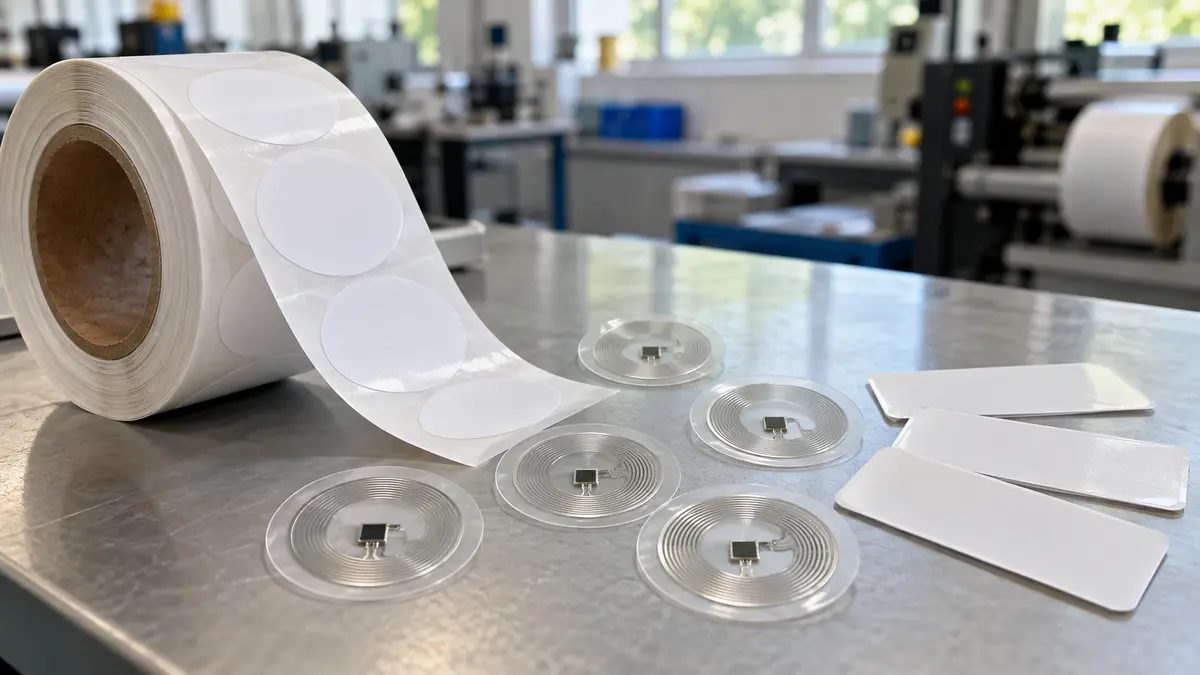
Specify the chip manufacturer and model, usable memory, intended phones or readers, antenna layout, label dimensions, face material and adhesive. State whether the label will be applied to glass, plastic, cardboard or metal. Approve samples on the actual mounting surface; include an on-metal construction where your application needs it.
Agree the exact encoded content, destination address, identifier allocation, password settings and whether memory remains writable. Approve print artwork, roll direction, liner and compatibility with your label applicator. Keep an approved encoded sample and the corresponding data file.
For tags within the radio-equipment rules, the importer must not place non-conforming equipment on the Great Britain market. Ask for compliance evidence matching the finished tag. Where hazardous-substance rules apply, the importer must check that manufacturer details and conformity marking are correct and clearly identifiable. Check whether electrical-equipment producer obligations apply to your supply; producers must register annually.
Worked duty example
Illustrative example, not a quote: Illustrative order: 20,000 printed on-metal NFC label tags, subject to code confirmation under 8523 52 00 00, invoiced at £40,000 free on board, with £1,500 of freight and insurance to the UK. The customs value is £41,500. Duty at 0% is £0. Import VAT at 20% is charged on the customs value plus duty, £41,500, so it is £8,300. With no duty, the only import tax is the VAT, which a VAT-registered importer can usually reclaim. The import duty and VAT guide explains each step.
Inspection checklist
Chip and reading: compare chip identity with the specification and test sampled labels with the intended phones or readers after application to the actual surface.
Encoded content: read back the complete payload, follow the destination, reconcile identifiers with the approved file and test the agreed write protection.
Adhesive and construction: check adhesion after the agreed conditioning, edge lift, liner release and damage to the antenna after application.
Print and records: check artwork, print alignment, roll direction and batch identification. Match supplied compliance evidence to the production construction during inspection.
Working out your own order? Send us the product on WhatsApp and we reply the same working day: WhatsApp us
What goes wrong
A label can read on the factory bench but fail after mounting on metal. Other failures include a substituted chip, insufficient memory for the payload, wrong destinations, repeated identifiers and memory locked before encoding is approved. Test finished production labels in the intended application.
Labels can also lift from textured or contaminated surfaces, tear during dispensing or arrive wound for the wrong applicator. Agree acceptance checks using your substrate and equipment, then repeat them on arrival before releasing stock.
Cambridge China Bridge sources these products for UK businesses, checking the factory and the documents before shipment. See factory verification. For components and parts, see sourcing for manufacturers.
Frequently asked questions
What is the UK import duty on NFC label tags from China?
The supplied heading 8523 tariff lines carry 0% duty from China, with no listed anti-dumping or countervailing duties. Confirm the code for the finished tag.
Will NFC labels work on metal packaging?
Test samples on the actual packaging. Specify an on-metal construction where needed; a successful read on a loose label does not prove performance after mounting.
Can the factory encode and lock NFC labels?
Agree the payload, identifier allocation and lock settings. Read back production samples and approve the content before permanent locking.
What compliance evidence should I ask the supplier for?
Ask for evidence matching the finished chip, antenna and label construction. Check the applicable radio-equipment and hazardous-substance rules, and whether your supply creates electrical-equipment producer obligations.