Sourcing NAS appliances from China
Network-attached storage appliances classified within heading 8471 carry 0% UK duty from China across the supplied lines. Confirm the complete appliance's code and check compliance for its intended market, including consumer security rules where applicable. Cambridge China Bridge sources network-attached storage appliances.
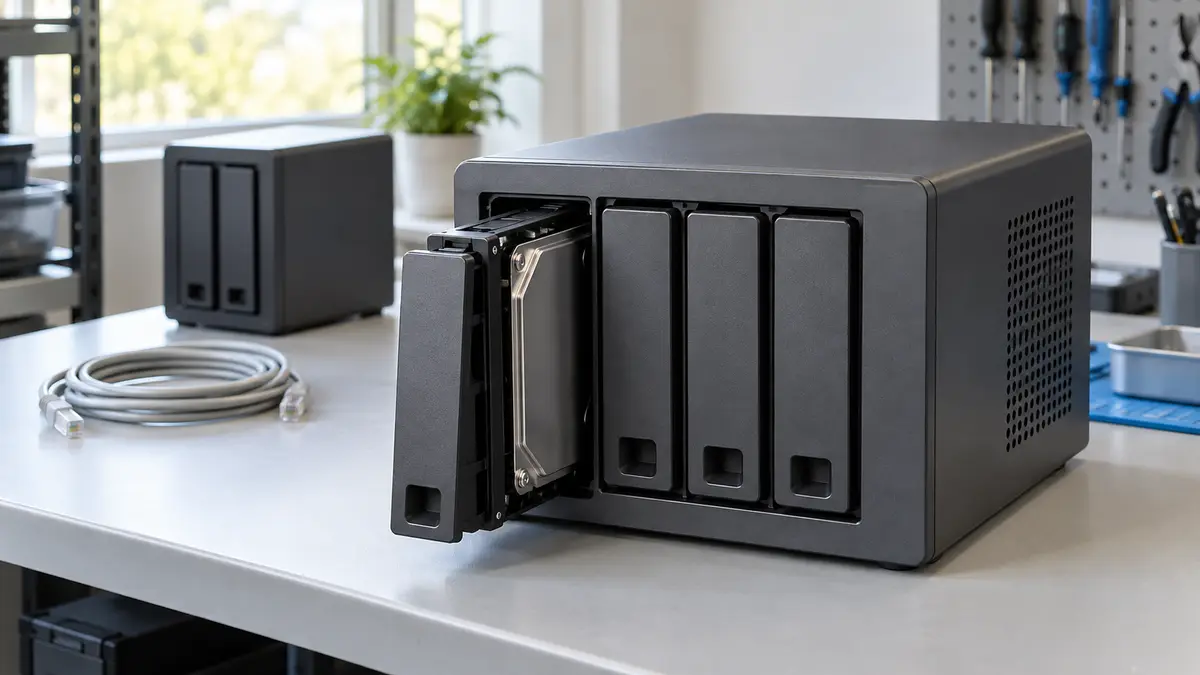
Duty on network-attached storage appliances
Heading 8471 covers automatic data-processing machines and their units, including processing and storage units. The rows identify relevant classification candidates and separately supplied drives. A complete network-attached storage appliance should not automatically use the code for its installed hard disk drives.
Read from the UK Trade Tariff on 30 September 2026, all supplied lines carried 0% duty for goods from China. The supplied facts list no anti-dumping or countervailing duties, suspensions or attached import controls. Standard import VAT is 20%; zero customs duty does not remove VAT.
Confirm the appliance's principal function, hardware configuration and presentation with your customs broker using finding your commodity code. For the wider computing heading, see rack servers. For thin clients, see our thin client sourcing guide.
| Goods | Commodity code | Duty | Anti-dumping or countervailing duty on China |
|---|---|---|---|
| Processing units, potentially including storage appliances | 8471 50 00 00 | 0% | None |
| Hard disk drives supplied separately | 8471 70 50 00 | 0% | None |
| Other disk storage units | 8471 70 70 00 | 0% | None |
| Other storage units | 8471 70 98 00 | 0% | None |
Specify the storage platform and supported firmware
State whether appliances are diskless or populated. Fix the processor, memory, drive bays, compatible drive models, network interfaces, usable capacity, supported file-sharing protocols and recovery behaviour. Agree firmware ownership, administrator access, update delivery, replacement power supplies and spare drive trays.
For Great Britain, electrical safety conformity assessment is required for equipment within scope, and electromagnetic compatibility rules permit CE or UKCA marking. Importers must be able to evidence compliance with hazardous-substance restrictions. Ask a testing and certification adviser to review the exact appliance and power supply, including the scope of ecodesign requirements.
Consumer network-connectable products fall within the product security regulations where relevant. Do not assume a business purchase establishes an exemption. For appliances intended for consumer sale, review the product security scope before ordering. If importing for resale, arrange annual electrical-equipment producer registration; the official guidance distinguishes equipment brought in solely for your own use.
Worked duty example
Illustrative example, not a quote: Illustrative small-business batch of diskless network-attached storage appliances under 8471 50 00 00, invoiced at £10,000 free on board, with £1,000 of freight and insurance to the UK. The customs value is £11,000. Duty at 0% is £0. Import VAT at 20% is charged on the customs value plus duty, £11,000, so it is £2,200. With no duty, the only import tax is the VAT, which a VAT-registered importer can usually reclaim. The import duty and VAT guide explains each step.
Inspection checklist
Build: compare processor, memory, drive identity, power supply and firmware with the approved specification; record serial numbers.
Storage: test drive recognition, file transfer, permissions, disk replacement and recovery using disposable test data.
Operation: run sustained transfers with the agreed drive configuration; check cooling, fan noise, network reconnection and restart after interrupted power.
Handover: check administrator access, update installation, reset behaviour, English instructions and matching compliance documents during quality inspection.
Working out your own order? Send us the product on WhatsApp and we reply the same working day: WhatsApp us
What goes wrong
A sample can perform differently from production after changes to memory, network controllers, drives or firmware. A populated appliance may arrive with substituted drives or an untested compatibility combination. Require written approval of substitutions and repeat the agreed transfer and recovery checks.
Storage redundancy does not replace a separate backup. Test restoration as well as normal file access. Agree who fixes firmware faults and how updates remain available if the factory changes its software supplier. For tape backup equipment, see our magnetic tape backup drive sourcing guide.
Cambridge China Bridge sources these products for UK businesses, checking the factory and the documents before shipment. See factory verification. For machinery and equipment, see machinery imports.
Frequently asked questions
What is the UK import duty on network-attached storage from China?
The supplied heading 8471 lines carry 0% duty from China, with no listed trade remedies, suspensions or attached import controls. Confirm the complete appliance's code. Standard import VAT is 20%.
Should I import diskless or populated storage appliances?
Specify this before comparing quotations. Diskless units need a tested drive compatibility list; populated units need fixed drive models, condition and capacity, checked against the shipment.
Do consumer security rules apply to network-attached storage?
They apply to relevant consumer products connecting to the internet or a network. Review the appliance's intended market and legal scope; do not infer an exemption from a business purchase.
What should I test before accepting the shipment?
Check the component build, drive recognition, sustained transfers, permissions, disk replacement, recovery, firmware updates and administrator reset. Use disposable data and test restoration from a separate backup.
Sources
- UK Trade Tariff — commodity codes and duty
- Consumer connectable product security guidance
- Electrical equipment safety guidance for Great Britain
- Electromagnetic compatibility guidance for Great Britain
- Hazardous-substance restriction guidance for Great Britain
- Electrical equipment producer responsibilities