Sourcing Mooring Buoys from China
Mooring buoys from China carry a flat 0% UK import duty under 8907 90 00 00, with no listed trade remedy. Products containing banned fluorinated gases must not be placed on the Great Britain market. Specify buoyancy and the mooring load path before ordering. Cambridge China Bridge sources mooring buoys.
Buying from China for a business? How our UK China sourcing agent service works · China sourcing agent for small orders and first imports
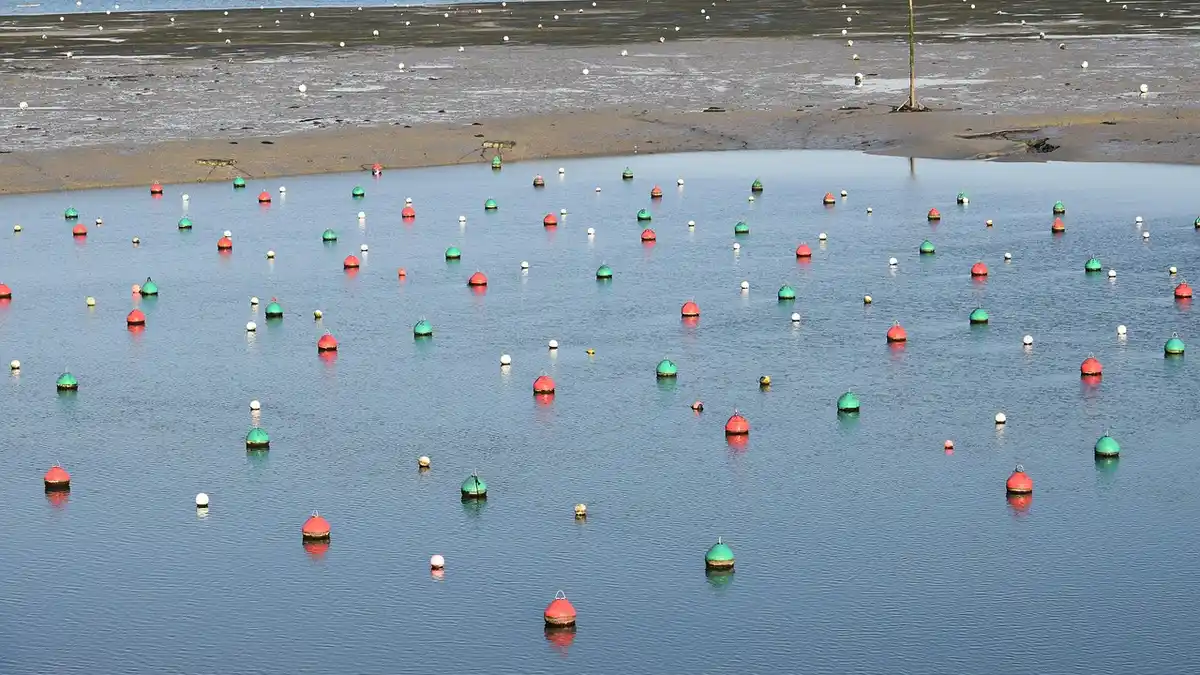
Mooring buoy duty and tariff controls
Read from the UK Trade Tariff on 4 October 2026, heading 8907 covers other floating structures, including buoys. Mooring buoys fall within 8907 90 00 00, carrying 0% duty for goods from China. The supplied tariff record lists no anti-dumping or countervailing duty and no suspension. The table shows product variants under the same commodity line.
The UK Trade Tariff attaches an import control for fluorinated greenhouse gases. Ask for the foam composition and blowing agent, and have your customs broker confirm the applicable import documents. The record also attaches a DCMS Export Licence control. Cultural-object guidance states that importing objects of cultural interest into Great Britain has no licensing requirement under that scheme; confirm any onward-export issue with your broker.
Confirm the finished buoy's construction and supplied components using finding your commodity code. Describe separately supplied chain, anchors and fittings to your broker for classification. See the floating pontoons and liferafts guide for the wider heading.
| Goods | Commodity code | Duty | Anti-dumping or countervailing duty on China |
|---|---|---|---|
| Hollow moulded plastic mooring buoys | 8907 90 00 00 | 0% | None |
Specify buoyancy and the mooring load path
State the buoy's purpose, shell material, shape, dimensions, colour and identification. Specify usable buoyancy with the supplied fittings and suspended chain, and the freeboard you expect under that load. For foam-filled designs, name the foam, water-absorption performance and blowing agent. For steel shells, agree the coating system and weld inspection.
Show how the mooring load passes through the assembly. Distinguish a pickup eye from a load-bearing attachment, and specify the through-rod or chain passage, attachment strength, corrosion protection and replaceable wear parts. Give the designer the vessel details, water depth, tidal range, current and wave conditions.
In English waters, installing, maintaining or removing a mooring can involve activities requiring a marine licence. Have the site operator establish the permission position before installation.
Worked duty example
Illustrative example, not a quote: Illustrative order: 60 moulded plastic mooring buoys; illustrative FOB and freight values under 8907 90 00 00, invoiced at £6,500 free on board, with £3,000 of freight and insurance to the UK. The customs value is £9,500. Duty at 0% is £0. Import VAT at 20% is charged on the customs value plus duty, £9,500, so it is £1,900. With no duty, the only import tax is the VAT, which a VAT-registered importer can usually reclaim. The import duty and VAT guide explains each step.
Inspection checklist
Buoyancy: test sample buoys with the agreed suspended load, measure freeboard and check for water ingress.
Load path: inspect the through-rod, eyes, welds and chain passage against the drawing; check attachment test records and fitting compatibility.
Materials: compare shell weight and thickness with the approved sample; check foam composition, ultraviolet protection and steel coating records.
Arrival condition: inspect for dents, cracked shells, loose fittings and coating damage; check identification and assembly instructions. Use a written quality inspection brief.
Working out your own order? Send us the product on WhatsApp and we reply the same working day: WhatsApp us
What goes wrong
A buoy can look correct but sit too low once the chain is attached. Thin shells, water entry and unsuitable foam reduce usable buoyancy. An eye intended only for pickup can be mistaken for the mooring attachment, while a rough chain passage can wear the chain or buoy.
Agree a drawing and a loaded sample before approving production. Check wear points, water tightness and the foam formulation rather than accepting a generic buoyancy claim. Review the maker's moulding or welding capability through factory verification.
Cambridge China Bridge sources these products for UK businesses, checking the factory and the documents before shipment. See factory verification. For machinery and equipment, see machinery imports.
Frequently asked questions
What is the UK import duty on mooring buoys from China?
The supplied tariff record shows 0% under 8907 90 00 00, with no listed anti-dumping or countervailing duty and no suspension.
How much buoyancy should I specify?
Specify usable buoyancy with the fittings and suspended chain attached, plus the required freeboard. Have the mooring designer assess the vessel and site conditions.
What should I check on foam-filled mooring buoys?
Ask for the foam composition, blowing agent and water-absorption results. Products containing banned fluorinated gases must not be placed on the Great Britain market; confirm tariff documents with your broker.
Do I need permission to install a mooring buoy?
In English waters, installing, maintaining or removing a mooring can involve marine licensable activities. Have the site operator check whether the proposed work needs a marine licence.