Sourcing men's woven pea coats from China
Men's woven pea coats from China carry 12% UK duty across the listed wool, cotton and man-made fibre lines, with no anti-dumping duty recorded. Confirm fibre-composition labelling and any additional declaration for leather tabs and other non-textile animal parts with the relevant authority. Cambridge China Bridge sources men's woven pea coats.
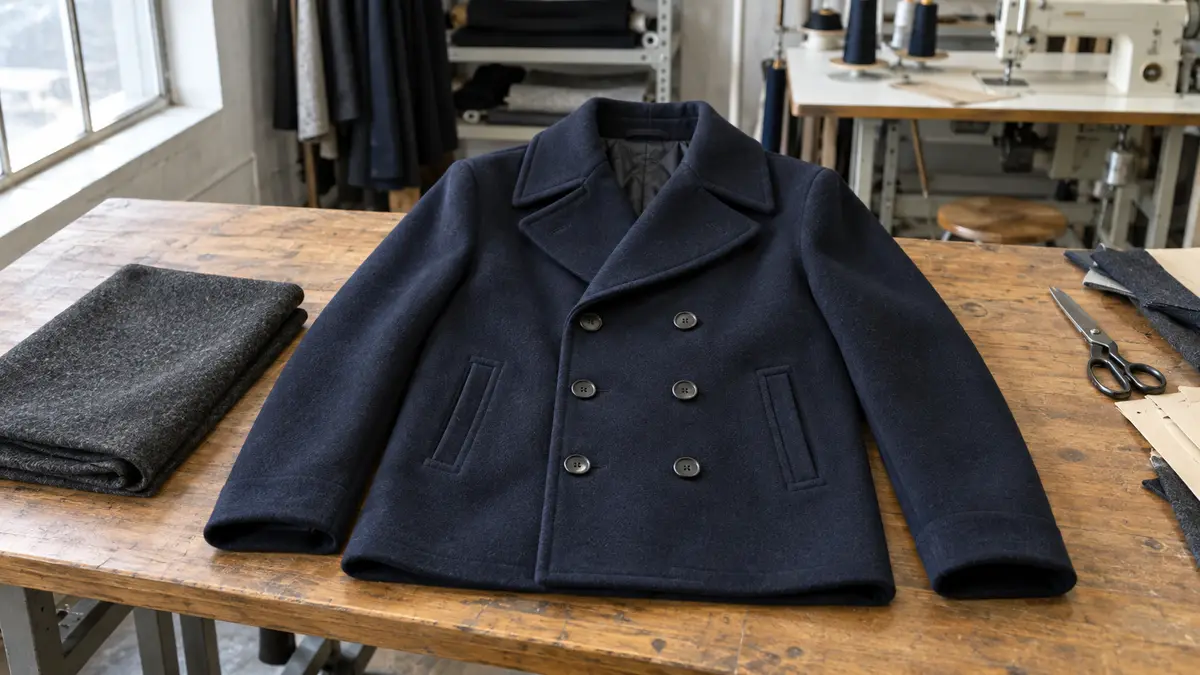
Duty by shell fibre and garment weight
Read from the UK Trade Tariff on 11 October 2026, the selected men's woven pea-coat lines under heading 6201 carry 12% duty for goods from China. The supplied tariff data records no anti-dumping or countervailing duty and no suspensions. This heading covers overcoats and similar outerwear; these rows focus on pea coats rather than parkas. For trench coats, see our men's woven trench coat sourcing guide. For women's styles, see our women's woven pea coat sourcing guide.
The tariff attaches import controls on cat and dog fur and seal products, plus an export control on cat and dog fur. Cat and dog fur and products made from it are banned from import and export. Seal products for sale in Great Britain must qualify under the Inuit and other indigenous communities exemption and have a seal catch certificate. For any proposed seal trim sourced through China, confirm eligibility and documents with your customs broker before ordering.
Confirm the commodity code using the shell composition and finished garment. Cotton and man-made fibre lines split at 1 kg per garment; weigh production samples rather than estimating from fabric weight. Blends need classification checked against their actual composition. See the wider coats and jackets guide for other outerwear. For anoraks, see our men's woven anorak sourcing guide.
| Goods | Commodity code | Duty | Anti-dumping or countervailing duty on China |
|---|---|---|---|
| Men's woven pea coats of wool or fine animal hair | 6201 20 00 19 | 12% | None |
| Men's woven cotton pea coats, not exceeding 1 kg per garment | 6201 30 10 19 | 12% | None |
| Men's woven cotton pea coats, exceeding 1 kg per garment | 6201 30 90 19 | 12% | None |
| Men's woven man-made fibre pea coats, not exceeding 1 kg per garment | 6201 40 10 19 | 12% | None |
| Men's woven man-made fibre pea coats, exceeding 1 kg per garment | 6201 40 90 19 | 12% | None |
Specify the shell, lapels and double-breasted fit
Specify the woven shell's fibre composition, fabric weight, colour, surface finish and lining separately. For wool blends, agree the wool content and verify production fabric against the approved sample. Set expectations for pilling, rubbing colour transfer and dimensional change after the agreed care process. For wool overcoat specifications, see sourcing men's woven wool overcoats.
Provide a size chart with tolerances for chest, shoulder, sleeve and coat length, allowing room for clothing underneath. Agree the front overlap, lapel shape, collar roll, button spacing, internal fastening, pocket position and vent construction. Approve a fitted sample with the coat buttoned and the wearer moving their arms.
Confirm fibre-composition labelling requirements, including durability and legibility, with the relevant authority. Ask whether leather branding tabs or other non-textile animal parts need an additional animal-origin statement. Agree care instructions suited to the finished coat, and approve label artwork against the actual shell, lining and trims.
Worked duty example
Illustrative example, not a quote: Illustrative order of 500 men's woven wool pea coats; FOB value and freight are illustrative, not a quotation. under 6201 20 00 19, invoiced at £33,000 free on board, with £4,500 of freight and insurance to the UK. The customs value is £37,500. Duty at 12% is £4,500. Import VAT at 20% is charged on the customs value plus duty, £42,000, so it is £8,400. Import taxes total £12,900; a VAT-registered importer can usually reclaim the VAT, so the lasting cost is the £4,500 of duty. The import duty and VAT guide explains each step.
Inspection checklist
Shell: compare composition evidence, colour, handle and surface finish with the approved sample; check shade variation, pilling and colour transfer to the lining.
Fit and shape: measure each sampled size; check front overlap, symmetrical lapels, collar roll, sleeve movement and lining allowance.
Fastenings and seams: check button attachment, buttonhole finish, pocket reinforcement and seam security; look for puckering, loose threads and exposed lining.
Arrival and labels: check cartons for damp, coats for mould or crushing, and size breakdowns against the order. Match fibre labels and animal-origin declarations to the materials. Plan these checks through the inspection guide.
Working out your own order? Send us the product on WhatsApp and we reply the same working day: WhatsApp us
What goes wrong
A substituted wool blend can change the coat's handle and pilling behaviour. Poor pressing leaves uneven lapels, while unsuitable interlining can bubble after care. Tight lining restricts movement, and weak button attachment or rough buttonholes cause failures during wear.
Keep an approved finished sample and record the agreed fabric, fit and care checks before production. Compare bulk coats after the same care process, including lapel shape and lining movement. Separate damp or mouldy stock on arrival and record defects before discussing replacement or rework with the factory.
Cambridge China Bridge sources these products for UK businesses, checking the factory and the documents before shipment. See factory verification. For own-brand ranges, see sourcing for brands. For UK-to-China trade, see exporting coats to China. For sleeveless outerwear, see our men's woven padded gilet sourcing guide.
Frequently asked questions
What is the UK import duty on men's pea coats from China?
The selected woven pea-coat lines carry 12% duty for goods from China, with no anti-dumping or countervailing duty and no suspension recorded in the supplied tariff data.
Does a pea coat's weight change its commodity code?
For cotton and man-made fibre coats, the listed codes split at 1 kg per garment. Both weight bands carry 12% duty. Weigh a finished production sample.
What labels do men's pea coats need?
Confirm with the relevant authority whether a durable, legible fibre-composition label and an animal-origin statement for leather tabs or other non-textile animal parts are required. Match label artwork to the actual materials.
What should I check before accepting bulk pea coats?
Check shell composition, fit over clothing, lapel symmetry, lining allowance, button attachment and buttonholes. Compare production coats with the approved sample after the agreed care process.