Sourcing liquid makeup removers from China
Liquid makeup removers within heading 3304 carry 0% UK duty from China across the supplied lines. Before sale in Great Britain, arrange a qualified cosmetic safety assessment and confirm the UK Responsible Person, product information file and notification requirements with the relevant authority. Cambridge China Bridge sources liquid makeup removers.
Buying from China for a business? How our UK China sourcing agent service works · China sourcing agent for small orders and first imports
UK duty on liquid makeup removers
Heading 3304 covers beauty, make-up and skin care preparations other than medicaments. Liquid makeup removers within this heading fall under 3304 99 00 00. The table describes remover formats sharing that code, rather than separate tariff subdivisions. See the facial toners guide for wider heading context.
Read from the UK Trade Tariff on 13 December 2026, all supplied lines carry 0% duty for goods from China, with no recorded anti-dumping or countervailing duty and no listed suspensions. Import VAT is 20%. The remover line has CITES import and export controls attached. For ingredients covered by CITES, confirm the applicable permit with your customs broker before shipment from China.
The tariff also attaches a mercury export control across the supplied heading. Ask your customs broker to confirm its relevance if exporting. Confirm the actual formula, intended use and commodity code before ordering.
| Goods | Commodity code | Duty | Anti-dumping or countervailing duty on China |
|---|---|---|---|
| Micellar liquid makeup remover | 3304 99 00 00 | 0% | None |
Specify removal performance and the final bottle
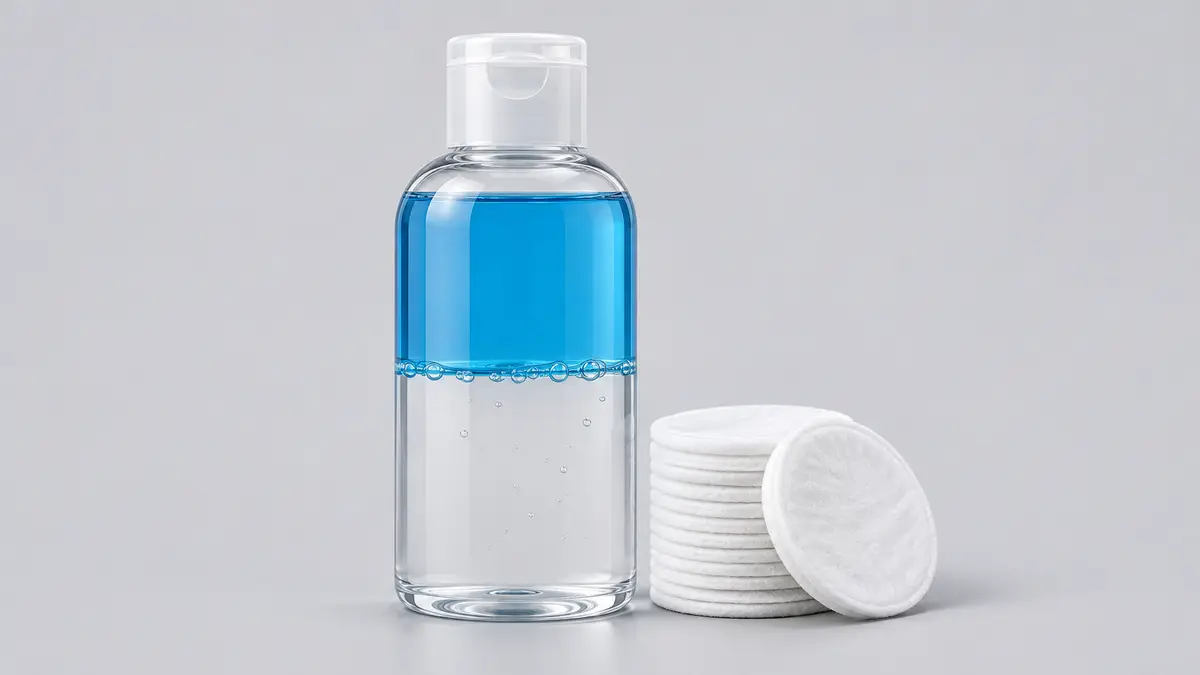
Specify micellar, oil-based or dual-phase liquid, intended application area, rinse-off or leave-on directions, fragrance, appearance and fill quantity. Agree a retained sample and a repeatable removal comparison using the makeup your customers use. Record the application method, residue and rinsing behaviour. For dual-phase products, agree how the liquid mixes when shaken and separates again.
Ask for the full quantitative formula for the safety assessor, under confidentiality if needed. For sale in Great Britain, confirm the Responsible Person and UK address requirements, product information file and pre-sale notification requirements with the relevant authority. A qualified safety assessor must check safety before the product is made available to consumers.
Approve the formula in the actual bottle, closure and dispensing insert. Ask for stability, microbiological and packaging compatibility evidence for that combination. Include leakage, closure loosening, bottle distortion, label adhesion and changes in smell or appearance in your purchasing specification.
Worked duty example
Illustrative example, not a quote: Illustrative order: 200 bottles of micellar makeup remover under 3304 99 00 00, invoiced at £6,000 free on board, with £600 of freight and insurance to the UK. The customs value is £6,600. Duty at 0% is £0. Import VAT at 20% is charged on the customs value plus duty, £6,600, so it is £1,320. With no duty, the only import tax is the VAT, which a VAT-registered importer can usually reclaim. The import duty and VAT guide explains each step.
Inspection checklist
Liquid: compare colour, smell, clarity or intended phase separation with the retained sample; investigate particles, unexpected cloudiness and sediment.
Performance: repeat the agreed removal comparison and check residue, rinsing behaviour and dispensing; compare dual-phase mixing and separation with the approved sample.
Bottle and closure: check fill quantity, cap fit, dispensing insert, seals and leakage on filled production packs; inspect cartons for staining.
Artwork and traceability: compare ingredients, durability information, warnings, function and the Responsible Person’s name and address with approved artwork; match batch identification to production records.
Working out your own order? Send us the product on WhatsApp and we reply the same working day: WhatsApp us
What goes wrong
A sample that removes ordinary foundation may perform poorly on waterproof mascara. Agree the makeup and application method used for approval. A dual-phase remover should be judged against its intended separation behaviour, rather than rejected simply because it separates.
Liquid can seep through an unsuitable closure, stain cartons or loosen labels. Approving a laboratory sample in a different bottle misses these problems. Keep sealed production samples and require written approval before changes to fragrance, preservatives, oils, bottle material or closure.
Cambridge China Bridge sources these products for UK businesses, checking the factory and the documents before shipment. See factory verification. For repeat volumes, see container programmes.
Frequently asked questions
What is the UK import duty on liquid makeup removers from China?
For removers within 3304 99 00 00, duty is 0%, with no recorded anti-dumping or countervailing duty and no listed suspensions. Import VAT is 20%.
What documents should I request from the factory?
Request the full quantitative formula for your safety assessor, stability and microbiological evidence, packaging compatibility results, approved artwork and batch records.
Can I sell Chinese liquid makeup removers in Great Britain?
Arrange a qualified safety assessment. Confirm the Responsible Person and UK address requirements, product information file and pre-sale notification requirements with the relevant authority.
Why does my makeup remover separate?
Dual-phase removers are intended to separate. Compare mixing and separation with the retained sample. Unexpected separation in a product approved as uniform needs investigation before acceptance.
Sources
What most often fails: Cosmetics
UK OPSS + EU / EEA Safety Gate (alerts counted separately in each system) · China-origin alerts over the 24 calendar month coverage window(2024-12 – 2026-11) · 165
Combined counts are alerts from both systems, not unique products across markets. Each source uses its own publication window; the same product may appear in both. · OPSS: 2024-12 – 2026-11 · Safety Gate: 2024-12 – 2026-11
- Other / unclassified: 142
- Chemical: 18
- Burns: 2
Most-cited regulations
- Cosmetic Products Regulation: 153
- Regulation (EC) 1223/2009: 7
- Cosmetic Products Enforcement Regulations 2013: 5
Checks to ask the factory for
- Ask the factory to identify the applicable product safety requirements and supporting tests.
- Compare the final sample, labels and instructions with the agreed specification.
- Ask for batch traceability and documented review of any safety-related design changes.
Questions for due diligence, not a certification checklist or a guarantee of compliance. Select the applicable standards and tests with a competent laboratory.
The current calendar month is partial. These are published alerts, safety reports and recalls, not a measure of all products sold or a recall rate. Hong Kong is reported separately.
All recall dataContains public sector information licensed under the Open Government Licence v3.0 (OPSS, GOV.UK product safety alerts)
Source: European Commission, Safety Gate, English XML (en), extracted 2026-11-09. XML distribution: CC0. Cambridge China Bridge analysis.