Sourcing leather hiking boots from China
For adult leather hiking boots, approve the complete boot after wet flexing and sole-bond testing before ordering bulk stock. If the midsole contains PU, add hydrolysis testing and record its moulding date: an unworn sole can age in storage. The two ankle-boot tariff lines below carry 8% duty from China; budget 20% import VAT.
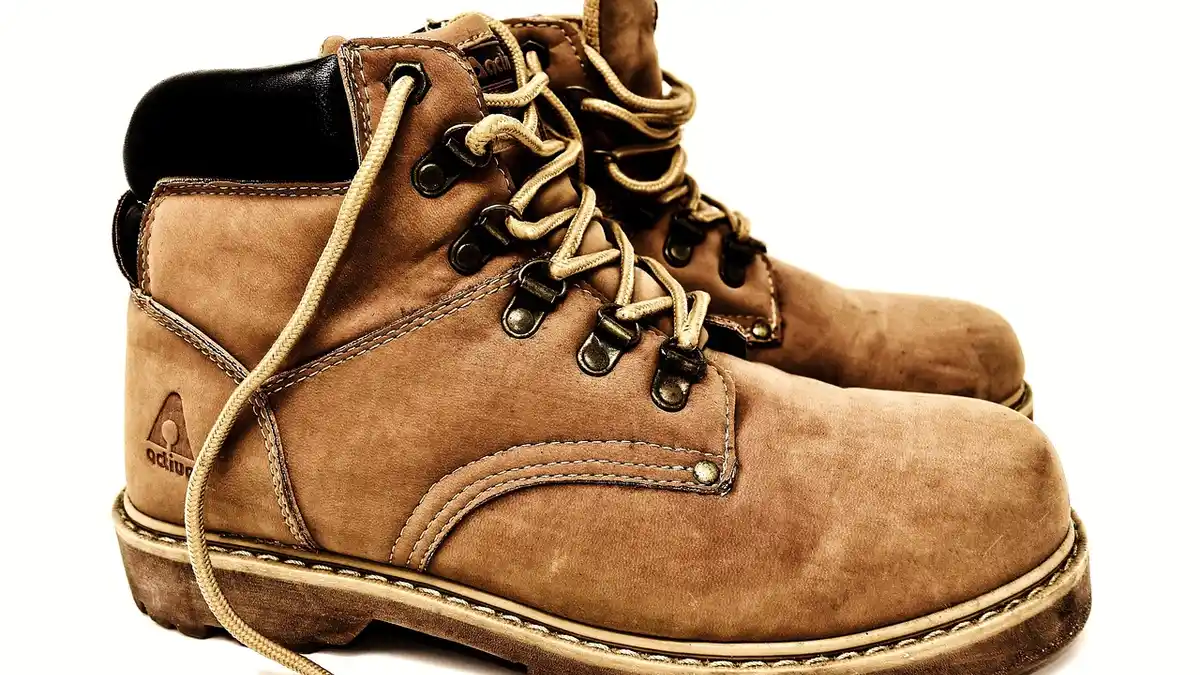
Where to look: Jinjiang's footwear and component chain
Start supplier research around Chendai town, Jinjiang, Fujian. Jinjiang's government identifies a sports-footwear production cluster and associated footwear-material businesses. Jinjiang International Shoe and Textile City is in Chendai's Yangdai village. Use it to compare upper materials, soles and fittings, then identify the factory responsible for assembling your boot. These locations are sourcing leads, not evidence that a particular business can make waterproof leather hiking boots. (S1, S2)
There is product-specific component evidence nearby: a 2025 environmental-assessment notice identifies a hiking-shoe sole project in Jinjiang's Xintang subdistrict. That supports investigating the local sole supply chain; it does not establish that the named project is an approved supplier or a finished-boot manufacturer. (S3)
The China (Jinjiang) International Footwear and International Sports Industry Expo is another supplier-discovery route. A government report documents an international purchasing meeting at the Shoe and Textile City satellite venue in 2023. Treat that as evidence of the event's sourcing role, and verify the next edition's arrangements before travelling. (S4)
Turn 'waterproof leather boot' into a testable specification
Write down the leather species and construction, finish, thickness, last reference, lining, membrane, gusseted tongue, sole layers, adhesive system and lacing hardware. Require a material list that distinguishes leather from coated leather and textile panels. Keep signed samples and photographs of the construction; use the product specification guide to turn these details into an order document.
Approve fit with the intended walking socks. Check heel movement, toe clearance when walking downhill, pressure from the tongue and hooks, and left/right consistency. Compare the ordered sizes rather than approving only the display size. SATRA identifies correct fit and terrain-appropriate traction as important performance-footwear properties. Ask the laboratory to assess grip on the surfaces and wet conditions relevant to your intended use. (S5)
A membrane specification alone is insufficient evidence for the assembled boot. SATRA highlights seam waterproofing and the upper-to-sole joint as production-control points. Its guidance recommends assessing completed footwear during development. Request a report identifying the actual boot construction, rather than accepting a report for an unnamed membrane or another style. (S6)
Specify tests for leakage, sole separation and ageing
Water entry: SATRA TM230 is a dynamic footwear water-penetration method that flexes the finished footwear in water. Agree the water level, test duration, flexing conditions and acceptance criteria with the laboratory before sampling. The method excludes footwear too stiff to flex in normal wear, so obtain laboratory advice for unusually rigid boots. (S7)
Sole separation: SATRA TM411 measures footwear sole-bond peel strength. Ask for results at identified positions and, where relevant, between the outsole and midsole as well as between sole and upper. A clean-looking glued edge is not a substitute for this destructive bond test. (S8)
PU deterioration: SATRA documents hiking-boot midsoles breaking down through hydrolysis, including boots worn infrequently. If the construction contains PU, request SATRA TM344 conditioning followed by appropriate mechanical tests. Record the sole moulding date and storage history; assess existing stock as well as newly made samples. Do not turn a short conditioning test into an unsupported promise of years of shelf life. (S9, S10)
Eyelets: SATRA TM150 measures attachment strength to the base material. Include this where the design uses eyelets, and agree separate checks for hooks and reinforcement. These are footwear test methods for the purchasing specification; agree performance limits for your construction rather than treating a method number as a pass certificate. (S11)
Great Britain: composition labels, safety and leather chemistry
This guide covers adult leisure hiking boots imported into Great Britain. Obtain a separate assessment for protective-footwear claims, mountaineering equipment or sales into Northern Ireland.
Under the Footwear (Indication of Composition) Labelling Regulations 1995, labels identify the material accounting for at least 80% of the upper's surface area, the lining and sock's surface area, and the outer sole's volume. If no material reaches the relevant threshold, identify the two main materials. The sock here means the footwear's insole lining, not the walking sock worn by the customer. Approve the label against the production material list. Use the prescribed pictograms or English written indications; Chinese-only material wording is insufficient for the written-label route. (S12–S14)
The General Product Safety Regulations 2005 require consumer products placed on the GB market to be safe. Keep the risk assessment, identified test reports and complaint records with the model specification. Ordinarily, the product or packaging should identify the producer's name and address and the product reference or applicable batch, subject to the regulation's reasonableness qualification. Check sharp hooks, exposed fasteners and sole separation as part of your safety review. (S15–S17)
For skin-contact leather, UK REACH Annex XVII entry 47 prohibits placing articles on the market when the relevant leather contains chromium VI at 3 milligrams per kilogram or more, measured against dry leather weight. Request testing that identifies the relevant production leather, particularly leather lining and collar components. UK REACH operates independently from EU REACH; a generic claim of EU compliance does not identify the GB assessment. The cited UK legislative provisions were checked in their revised versions and were not marked revoked. (S18, S19)
Duty: two defined ankle-boot lines, not every hiking boot
The following UK Trade Tariff lines were checked with China selected on 14 October 2026. Both carry 8% third-country duty, and neither China-selected measure list showed an anti-dumping duty. This is a dated finding for these codes, not a statement about every leather boot. (S20–S23)
The rows concern leather uppers, rubber or plastic outer soles, coverage of the ankle but no part of the calf, and insoles at least 24 centimetres long. They are the men's and women's 'other' lines within that branch. Give your broker the sample, materials, boot height and actual insole measurements; check shorter insoles and taller boots separately. Use the commodity-code guide before treating a supplier's proposed code as final. (S20, S21)
| Goods | Commodity code | Duty | Anti-dumping duty on China |
|---|---|---|---|
| Men's other footwear: leather upper, rubber/plastic outer sole, covering ankle but no calf; insole at least 24 centimetres | 6403911690 | 8% | None listed on the checked date |
| Women's other footwear: leather upper, rubber/plastic outer sole, covering ankle but no calf; insole at least 24 centimetres | 6403911890 | 8% | None listed on the checked date |
Working out your own order? Send us the product on WhatsApp and we reply the same working day: WhatsApp us
Worked example: include UK delivery in the VAT value
Hypothetical calculation only, not a supplier price or freight quote: assume adult men's boots correctly classified under 6403911690, goods valued at £10,000, and £1,000 freight and insurance to the UK border. Assume these establish a customs value of £11,000, with no other valuation adjustments.
Duty is £11,000 × 8% = £880. Assume another £200 of incidental transport costs to the documented first UK destination, not already included in the customs value. The import VAT value is £11,000 + £880 + £200 = £12,080. At the standard adult-footwear rate of 20%, import VAT is £2,416. HMRC requires import duty and relevant destination expenses to be included in that VAT value. (S22, S24, S25)
Duty plus import VAT totals £3,296. The hypothetical goods, transport and import-tax total is £14,496 before other charges. This is a cash calculation before any VAT recovery or accounting adjustment. See the import duty and VAT guide when preparing your shipment budget.
Release the batch against the approved construction
Ask the inspector to select production pairs across the ordered sizes and colours. Compare last references, leather and lining, tongue construction, sole layers and fittings with the signed sample. Check pair matching, size markings, loose eyelets, sharp hooks, sole-edge lifting, glue contamination, dampness and mould. Record each defect against a pair and carton identifier in the inspection plan.
Keep visual inspection and laboratory acceptance as separate release conditions. Obtain the agreed wet-flex, sole-bond and applicable PU-ageing results for identifiable production materials or boots. An inspector bending a boot by hand does not reproduce a laboratory method.
Require written approval before changing the last, leather finish, membrane, sole formulation or adhesive system. Use the repeat-order material-change guide to record what changed and which tests must be repeated.
For help matching the boot's construction and sales claims to a laboratory brief, use Cambridge China Bridge's testing and certification service. Send the material list, intended use, sample photographs and existing reports together.
Frequently asked questions
Does a waterproof membrane report prove the boot is waterproof?
Request finished-boot evidence. The development test should cover the assembled construction, and production checks should address seams and the upper-to-sole joint. Agree the wet-flex conditions before approving the claim. (S6, S7)
Can an unworn PU sole deteriorate?
Yes. SATRA describes hiking-boot PU components deteriorating through hydrolysis despite infrequent wear. Ask for moulding dates, storage history and appropriate ageing-test evidence; appearance alone does not establish remaining life. (S9, S10)
Is 8% duty correct for every leather hiking boot?
The two listed codes carried 8% duty on 14 October 2026. Their branch requires ankle coverage without calf coverage and insoles at least 24 centimetres long. Different construction or dimensions require a fresh classification check. (S20–S23)
Sources
- S1 — Jinjiang government: footwear production cluster
- S2 — Jinjiang government: Shoe and Textile City address
- S3 — Jinjiang government: hiking-shoe sole project
- S4 — Jinjiang government: 2023 footwear expo purchasing meeting
- S5 — SATRA: performance-footwear fit and traction
- S6 — SATRA: production controls for water-resistant footwear
- S7 — SATRA TM230: dynamic water penetration
- S8 — SATRA TM411: sole-bond peel strength
- S9 — SATRA: hiking-boot hydrolysis failure
- S10 — SATRA TM344: hydrolysis conditioning
- S11 — SATRA TM150: eyelet attachment strength
- S12 — Footwear labelling regulations: regulation 5
- S13 — GOV.UK: footwear labelling
- S14 — Footwear labelling regulations: Schedule 2
- S15 — General Product Safety Regulations: safety requirement
- S16 — General Product Safety Regulations: producer obligations
- S17 — GOV.UK: product safety regulations in Great Britain
- S18 — UK REACH: Annex XVII leather restriction
- S19 — HSE: UK REACH explained
- S20 — UK Trade Tariff: 6403911690 classification
- S21 — UK Trade Tariff: 6403911890 classification
- S22 — UK Trade Tariff: men's line, China, 14 October 2026
- S23 — UK Trade Tariff: women's line, China, 14 October 2026
- S24 — HMRC: import VAT valuation
- S25 — HMRC: standard VAT rate