Sourcing leather riding boots from China
Leather riding boots from China carry 4% to 8% UK duty across the selected tall-boot lines. Classification depends on sole material, calf coverage, insole length and the tariff's gender categories. Confirm composition-labelling requirements for the upper, lining and sock, and outer sole materials with the relevant authority. Cambridge China Bridge sources leather riding boots.
Duty and material controls
Read from the UK Trade Tariff on 29 September 2026, the selected tall leather riding-boot lines under heading 6403 carried 4% to 8% duty for goods from China. The heading covers leather uppers with rubber, plastic, leather or composition-leather outer soles. The selected lines show no anti-dumping or countervailing duty and no tariff suspensions.
The selected lines attach CITES, cat and dog fur, and seal-product import controls. Cat and dog fur products are banned from import and export. Protected-species leather needs a CITES documentation check before ordering. Seal products may only be imported and sold in limited cases; for a China shipment, ask your customs broker to confirm eligibility and the required documents.
The table covers tall boots rather than ankle-only styles. Confirm sole material, calf coverage, insole length and the applicable gender category through finding your commodity code. For the wider leather-footwear heading, see leather Chelsea boots.
| Goods | Commodity code | Duty | Anti-dumping or countervailing duty on China |
|---|---|---|---|
| Tall leather riding boots, leather soles, insoles under 24 cm | 6403 51 91 00 | 8% | None |
| Men's tall leather riding boots, leather soles, insoles 24 cm or more | 6403 51 95 00 | 8% | None |
| Women's tall leather riding boots, leather soles, insoles 24 cm or more | 6403 51 99 00 | 8% | None |
| Tall leather riding boots, rubber or plastic soles, insoles under 24 cm | 6403 91 91 00 | 8% | None |
| Unisex tall leather riding boots, rubber or plastic soles, insoles 24 cm or more | 6403 91 93 00 | 8% | None |
| Women's tall leather riding boots, rubber or plastic soles, insoles 24 cm or more | 6403 91 98 00 | 4% | None |
Specify the calf fit and riding sole
Specify the leather species, finish, thickness, lining and outer-sole material. Provide a measurement sheet for foot length, instep, ankle, calf circumference and shaft height, with agreed tolerances for each size. Approve fitting samples with riding socks and check the boot while the knee is bent.
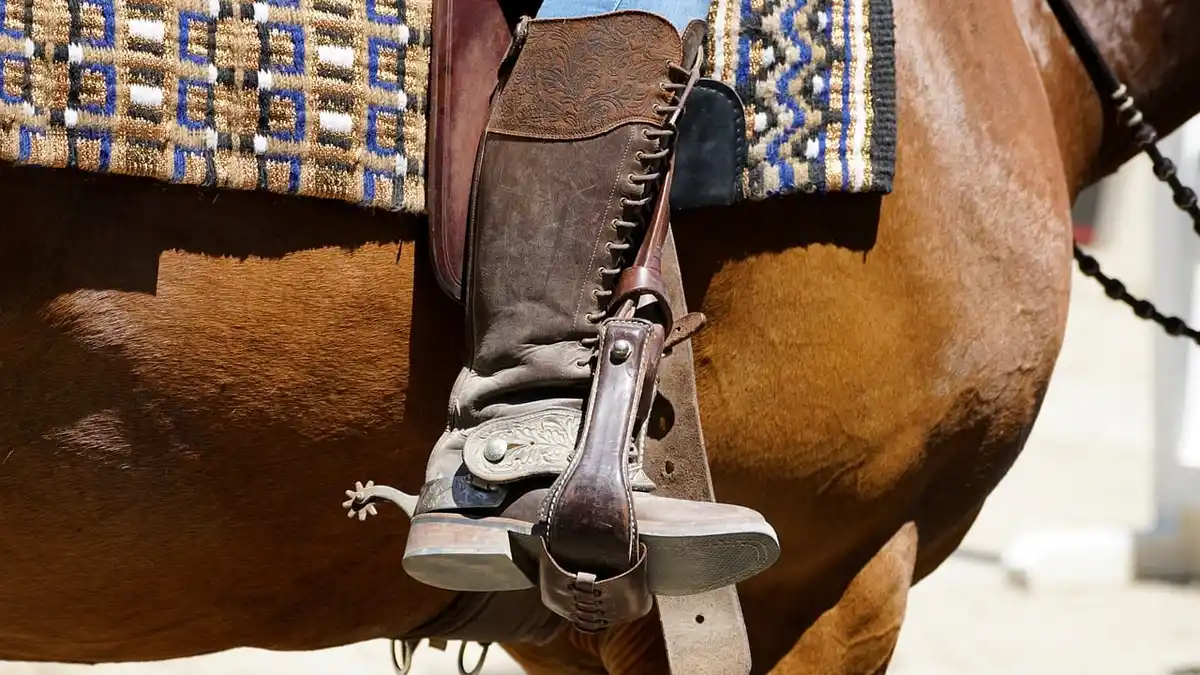
Agree heel shape, tread, stirrup clearance, zip position, elastic panels and spur-rest placement. Assess a sample with the intended stirrup rather than relying on appearance. State whether the sole is cemented or stitched and agree a production bond test.
Ask the relevant authority to confirm the applicable REACH chromium and azo-dye restrictions for skin-contact leather and relevant leather and textile parts before relying on the site's footwear-component guide. Agree finished-material testing through testing and certification.
Worked duty example
Illustrative example, not a quote: Mixed-size stock order of women's tall leather riding boots (illustrative) under 6403 91 98 00, invoiced at £32,000 free on board, with £3,000 of freight and insurance to the UK. The customs value is £35,000. Duty at 4% is £1,400. Import VAT at 20% is charged on the customs value plus duty, £36,400, so it is £7,280. Import taxes total £8,680; a VAT-registered importer can usually reclaim the VAT, so the lasting cost is the £1,400 of duty. The import duty and VAT guide explains each step.
Inspection checklist
Fit: measure the foot, instep, calf and shaft against the approved size sheet; compare paired boots and check movement in the fitting sample.
Construction: operate zips, inspect seam ends and elastic panels, check heel alignment and sole bonding, and inspect spur rests for secure attachment.
Leather: compare colour, grain and finish against the approved sample; rub-check colour transfer and inspect for cracks, glue marks and mould.
Labels and records: match composition labels to the agreed materials, check carton sizes and pair counts, and match chemical reports and species declarations to the supplied materials.
Working out your own order? Send us the product on WhatsApp and we reply the same working day: WhatsApp us
What goes wrong
A boot can fit the foot but pinch the calf or crease behind the knee. A supplier may grade foot sizes while leaving calf measurements almost unchanged. Approve the calf and shaft measurements separately, including narrow and wide fits where ordered.
Weak zip stitching, lifting heels, sole separation and colour transfer can turn a satisfactory sample into returned stock. Damp leather and cartons can arrive mouldy. Compare production pairs with the approved sample and use an agreed quality inspection before dispatch.
Cambridge China Bridge sources these products for UK businesses, checking the factory and the documents before shipment. See factory verification. For own-brand ranges, see sourcing for brands.
Frequently asked questions
What is the UK import duty on leather riding boots from China?
The selected tall-boot lines carried 4% to 8% duty on 29 September 2026. Leather-soled examples shown carry 8%; the selected women's rubber or plastic-soled tall-boot line carries 4%.
Are riding boots classified as sports footwear?
Do not choose a sports-footwear code solely because the boots are used for riding. Confirm the tariff description using the actual sole, upper, calf coverage, insole length and gender category.
What labels do leather riding boots need?
Ask the relevant authority to confirm how composition labels should identify the upper, lining and sock, and outer sole materials, including whether the 80% rule applies or the main materials should be shown.
How do I check riding-boot sizing before ordering?
Approve a size sheet covering foot length, instep, ankle, calf and shaft height. Try fitting samples with riding socks and a bent knee; do not approve the full size run from foot length alone.