Sourcing knitted eyelash pile fabric from China
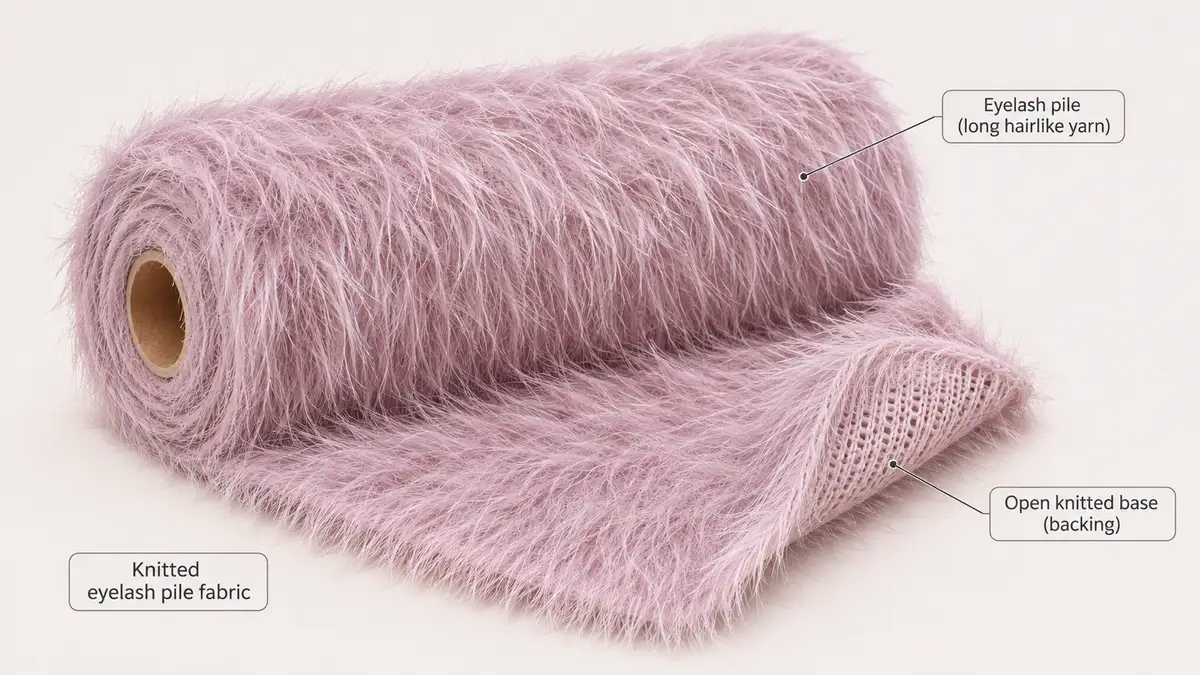
Knitted eyelash pile fabric from China carries a flat 8% UK duty under heading 6001, with no listed trade remedies or suspensions. Fibre composition must be stated when fabric is sold to consumers; confirm the construction before choosing a code. Cambridge China Bridge sources knitted eyelash pile fabric.
Buying from China for a business? How our UK China sourcing agent service works · China sourcing agent for small orders and first imports
Flat 8% duty on knitted pile fabric
Read from the UK Trade Tariff on 1 October 2026, heading 6001 covers knitted or crocheted pile fabrics, including long-pile and terry fabrics. All listed lines carry 8% duty for goods from China, with no listed anti-dumping or countervailing duty and no suspensions. This guide concerns eyelash pile fabric supplied in rolls.
The tariff attaches CITES import and export controls to some long-pile and looped-pile lines; the synthetic long-pile line carries an export-control flag. If animal-derived material is proposed, identify the species and check the relevant CITES permit route before importing from China. Ask your customs broker to confirm which controls and documents apply to the actual fabric.
Use the commodity-code guide to confirm classification from the sample, construction and fibre composition. The table presents alternative classification routes, not interchangeable codes. Do not select the long-pile route from visible lash length alone. See the wider pile-knit fabric guide for other fabrics within the heading.
| Goods | Commodity code | Duty | Anti-dumping or countervailing duty on China |
|---|---|---|---|
| Synthetic long-pile fabric, where the construction qualifies | 6001 10 00 10 | 8% | None |
| Long-pile fabric of wool, fine animal hair, cotton or artificial fibres | 6001 10 00 20 | 8% | None |
| Other knitted pile fabric of man-made fibres | 6001 92 00 00 | 8% | None |
| Other knitted pile fabric of cotton | 6001 91 00 00 | 8% | None |
Specify the lashes and knitted ground
Send a sealed sample showing the eyelash effect and the reverse of the fabric. Specify the ground yarn and projecting yarn, overall fibre composition, lash length, surface coverage, pile direction, usable width, mass per square metre and stretch recovery. Agree the appearance with the fabric relaxed and stretched, because an open ground can become visible during wear.
Agree washing, rubbing, shedding and snagging checks against the approved sample. Fabric sold by the metre to consumers must carry its fibre composition; an eyelash description does not identify the fibre. Request composition testing and agree chemical testing for the intended end use before approving bulk production.
Worked duty example
Illustrative example, not a quote: Illustrative order: 1,200 metres of man-made-fibre knitted eyelash pile fabric under 6001 92 00 00, invoiced at £12,000 free on board, with £1,200 of freight and insurance to the UK. The customs value is £13,200. Duty at 8% is £1,056. Import VAT at 20% is charged on the customs value plus duty, £14,256, so it is £2,851.20. Import taxes total £3,907.20; a VAT-registered importer can usually reclaim the VAT, so the lasting cost is the £1,056 of duty. The import duty and VAT guide explains each step.
Inspection checklist
Pile: compare lash length, coverage and direction with the sealed sample; brush and tape-test for loose fibres, then inspect for bald patches and trapped lashes.
Ground and dimensions: inspect the reverse for holes and needle lines, measure usable width and mass per square metre, and compare stretch recovery with the approved sample.
Colour and washing: check shade between rolls and across the width, test rubbing and washing, and inspect washed samples for shrinkage, tangling and loss of the eyelash effect.
Rolls and identification: check measured lengths against roll tickets, keep dye lots identifiable, and look for dampness or packing pressure that has flattened the pile.
Working out your own order? Send us the product on WhatsApp and we reply the same working day: WhatsApp us
What goes wrong
A sample can look dense while bulk fabric has a more open ground or fewer projecting fibres. Loose lashes shed during cutting and sewing, long projections catch on trims, and washing can leave the surface tangled. Reversed pile direction can also make matching panels appear different in shade.
Approve a sewn and washed sample before bulk cutting. Record acceptable shedding, appearance and dimensional change in the order, then compare production rolls with that sample. Inspect before shipment and repeat the key checks on arrival; the inspection guide explains how to prepare the inspection brief.
Cambridge China Bridge sources these products for UK businesses, checking the factory and the documents before shipment. See factory verification. For own-brand ranges, see sourcing for brands.
Frequently asked questions
What is the UK import duty on knitted eyelash pile fabric from China?
The supplied tariff snapshot shows 8% across heading 6001, with no listed anti-dumping or countervailing duty and no suspensions. Confirm the precise code from the fabric's construction and fibre composition.
Which commodity code covers knitted eyelash fabric?
Confirm whether the construction qualifies as long pile or another knitted pile fabric, then establish the fibre category. An eyelash trade name or a photograph alone is insufficient to choose the code.
Does eyelash fabric sold by the metre need a fibre label?
Yes, when sold to consumers, its fibre composition must be stated. Obtain the mill's composition declaration and check it against a test on the ordered fabric.
How do I check whether eyelash fabric will shed?
Compare brushing and tape-test results with the sealed sample, then sew and wash a sample. Inspect for loose fibres, bald areas and tangled lashes before accepting bulk rolls.