Sourcing knitted bouclé pile fabric from China
Knitted bouclé pile fabric from China carries a flat 8% UK duty across the listed looped-pile lines. Fabric sold to consumers by the metre must show its fibre composition; upholstery use also needs applicable fire-safety checks. Specify the knitted pile construction, not just the bouclé name. Cambridge China Bridge sources knitted bouclé pile fabric.
Buying from China for a business? How our UK China sourcing agent service works · China sourcing agent for small orders and first imports
A flat 8% on the listed looped-pile fabrics
Read from the UK Trade Tariff on 1 October 2026, heading 6001 covers knitted or crocheted pile fabrics, including long pile and terry fabrics. This guide focuses on knitted bouclé with a looped pile surface. The listed looped-pile lines carry 8% duty for goods from China, with no recorded anti-dumping or countervailing duty and no tariff suspension.
The wool or fine animal hair and other-textile-material looped-pile lines carry CITES import and export controls. If the material is a CITES specimen, confirm the required import permit before bringing it from China into Great Britain. Ask your customs broker to confirm the species, applicable documents and export-control requirements. A tariff control entry alone does not establish whether a particular fabric needs a permit.
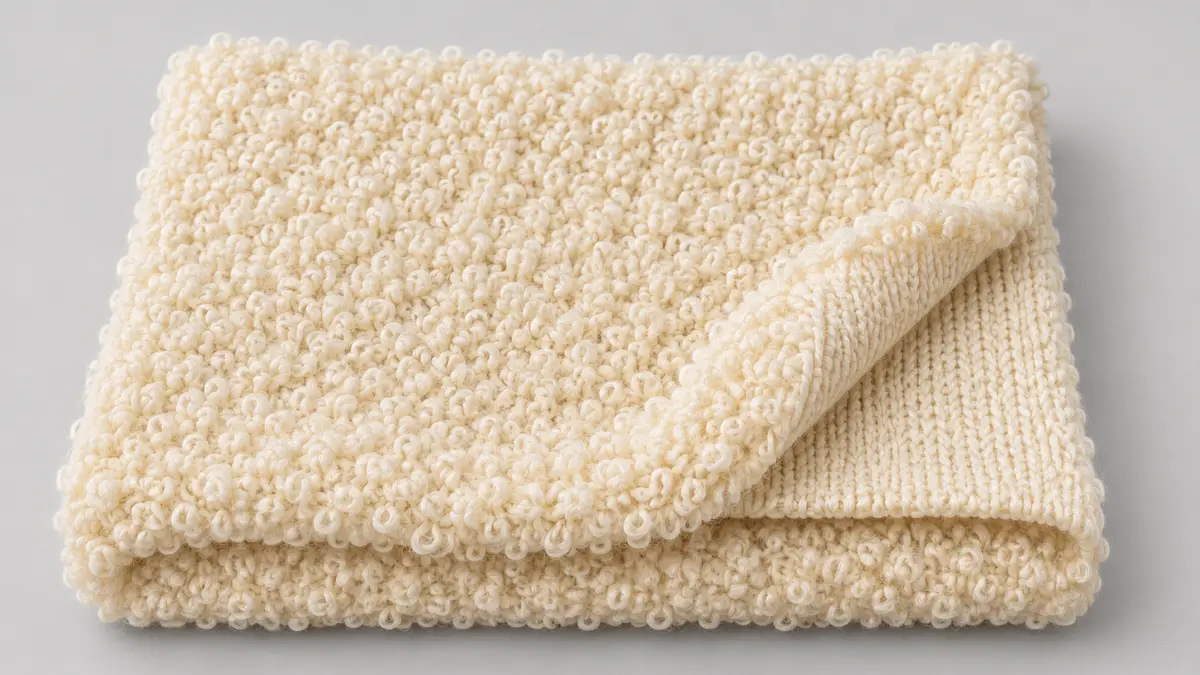
Ask the mill for a construction description, fibre breakdown and sample showing the face and reverse. Confirm the commodity code from the actual construction and fibres rather than the bouclé trade name. For the wider heading, see our knitted chenille fabric guide.
| Goods | Commodity code | Duty | Anti-dumping or countervailing duty on China |
|---|---|---|---|
| Cotton knitted looped-pile fabric | 6001 21 00 00 | 8% | None |
| Man-made fibre knitted looped-pile fabric | 6001 22 00 00 | 8% | None |
| Wool or fine animal hair knitted looped-pile fabric | 6001 29 00 10 | 8% | None |
| Other textile material knitted looped-pile fabric | 6001 29 00 90 | 8% | None |
Specify the loops, backing and intended use
Specify fibre composition, ground yarn and pile yarn, loop size and density, mass per square metre, usable width, stretch and recovery. Agree the shade, handle, backing or coating, and care method. Keep an approved sample showing the face and reverse, since a similar photograph can hide a different ground structure or looser loops.
Tell the mill whether the fabric is for garments or upholstery before finishing. Confirm with Trading Standards which furniture fire-safety requirements apply to the intended upholstery use. Agree the relevant cover tests and request reports matching the ordered construction and finish. Do not assume an interliner makes every cover acceptable. Use our testing and certification service to define the testing brief.
Fabric sold to consumers by the metre must carry its fibre composition. Check the mill's declared composition against a test sample before preparing retail information. A bouclé description identifies the surface appearance; it does not replace the fibre declaration.
Worked duty example
Illustrative example, not a quote: Illustrative order: 1,200 metres of polyester knitted bouclé pile fabric under 6001 22 00 00, invoiced at £12,000 free on board, with £1,200 of freight and insurance to the UK. The customs value is £13,200. Duty at 8% is £1,056. Import VAT at 20% is charged on the customs value plus duty, £14,256, so it is £2,851.20. Import taxes total £3,907.20; a VAT-registered importer can usually reclaim the VAT, so the lasting cost is the £1,056 of duty. The import duty and VAT guide explains each step.
Inspection checklist
Loops and surface: compare loop size, density and firmness with the approved sample. Look for pulled loops, bald patches, needle lines and uneven texture across the roll.
Dimensions and stability: measure usable width and mass per square metre. Check stretch recovery, edge curl and dimensional change after the agreed care treatment.
Colour and wear: compare rolls and the edges against the centre under consistent lighting. Check rubbing colour transfer, pilling, shedding and snagging against agreed acceptance criteria.
Rolls and records: check roll lengths, dye-lot identification, joins, dampness and crushed pile. Match test reports to the supplied finish and retain labelled samples. See quality inspection explained.
Working out your own order? Send us the product on WhatsApp and we reply the same working day: WhatsApp us
What goes wrong
Loose loops catch during cutting, sewing or use, leaving pulled yarns and visible tracks. A soft sample can become a firmer bulk fabric after backing, while poorly stabilised ground fabric stretches during upholstery fitting or shrinks after cleaning. Shade changes between rolls can make adjacent panels look different.
Agree defect acceptance and care tests before bulk production. Inspect after the final backing or finish, then repeat the key checks on arrival before cutting. Quarantine rolls with shade differences, loose loops or damp packaging and record the roll identities for the supplier.
Cambridge China Bridge sources these products for UK businesses, checking the factory and the documents before shipment. See factory verification. For own-brand ranges, see sourcing for brands.
Frequently asked questions
What is the UK import duty on knitted bouclé pile fabric from China?
The listed looped-pile lines carry 8% duty for goods from China, with no recorded anti-dumping or countervailing duty and no tariff suspension in the supplied tariff data.
Is every bouclé fabric covered by this guide?
No. This guide covers knitted looped-pile fabric. Ask for a sample and construction details; the bouclé name alone does not confirm the structure or commodity code.
Can knitted bouclé pile fabric be used for sofa covers?
Confirm suitability for the intended upholstery use and the applicable furniture fire-safety requirements with Trading Standards. Agree the cover tests before ordering and check reports against the actual fabric and finish.
How do I check whether bouclé loops will snag?
Compare bulk fabric with the approved sample, inspect for pulled loops and agree a snagging test for the intended use. Check after backing or finishing, since these can change the fabric's behaviour.