Sourcing heavy polycotton fabrics from China
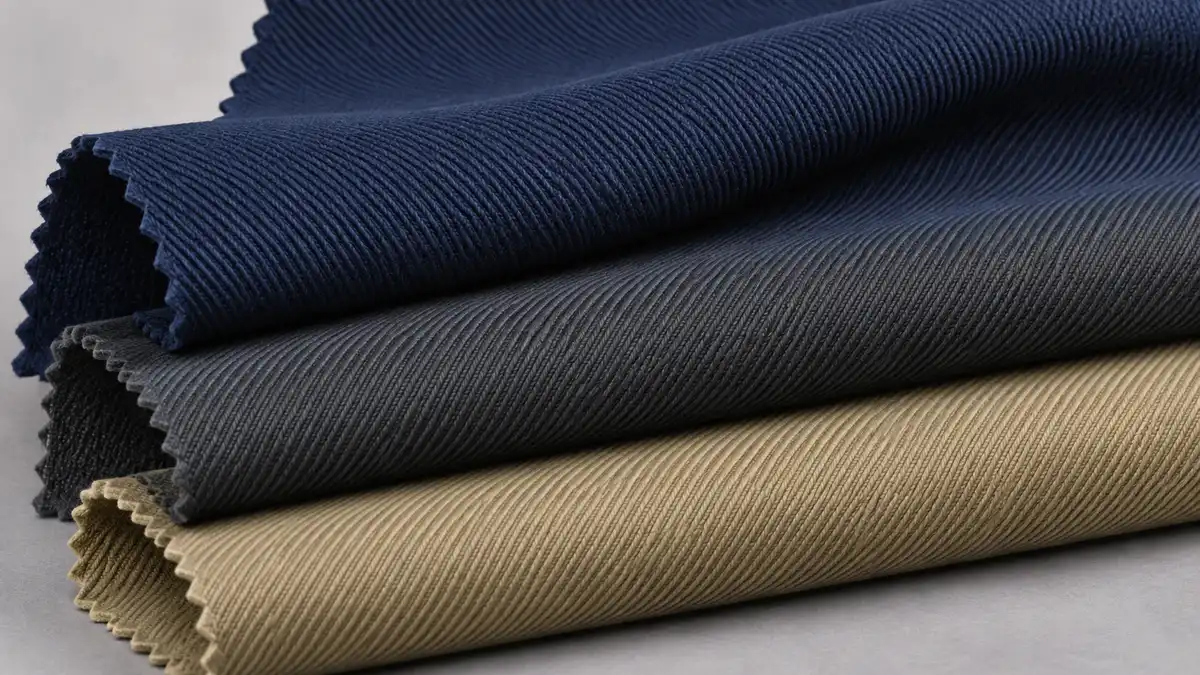
Woven fabrics of cotton with under 85% cotton, mixed mainly or solely with man-made fibres and weighing more than 200 g/m2, from China, such as polycotton twill, drill and canvas for workwear and uniforms, pay 8% UK duty across heading 5211, with no anti-dumping duty. Buyers check blend ratio, weight, shrinkage, tear strength and colour fastness to industrial washing.
Buying from China for a business? How our UK China sourcing agent service works · China sourcing agent for small orders and first imports
8% duty
Read from the UK Trade Tariff on 17 November 2026, heading 5211 covers woven fabrics of cotton, containing less than 85% by weight of cotton, mixed mainly or solely with man-made fibres, weighing more than 200 g/m2, split by finish and weave. The lines shown carried 8% on goods from China, with no anti-dumping measure.
Lighter polycotton is covered in our polycotton woven fabrics guide, and fabrics where polyester predominates in our polyester-cotton twill and canvas guide; the predominant fibre decides the heading, so confirm the commodity code from a fibre test.
| Goods | Commodity code | Duty | Anti-dumping duty on China |
|---|---|---|---|
| Unbleached plain weave, not handloom | 5211 11 00 90 | 8% | None |
| Unbleached twill, not handloom | 5211 12 00 90 | 8% | None |
| Dyed plain weave, not handloom | 5211 31 00 90 | 8% | None |
| Dyed twill, not handloom | 5211 32 00 90 | 8% | None |
| Yarn-dyed denim, not handloom | 5211 42 00 90 | 8% | None |
| Printed twill, not handloom | 5211 52 00 90 | 8% | None |
Specifying workwear fabric
Specify blend ratio, weight, weave, width, shrinkage after industrial washing, tear and tensile strength, pilling, colour fastness to washing, light and rubbing, and any finish such as soil release. Garments and home textiles sold to consumers need fibre composition labels under the Textile Products (Labelling and Fibre Composition) Regulations 2012, so the blend must be tested and stated accurately.
Worked duty example
Illustrative example, not a quote: 8,000 metres of dyed 60/40 cotton-polyester drill under 5211 32 00 90, invoiced at £22,000 free on board, with £1,200 of freight and insurance to the UK. The customs value is £23,200. Duty at 8% is £1,856. Import VAT at 20% is charged on the customs value plus duty, £25,056, so it is £5,011.20. Import taxes total £6,867.20; a VAT-registered importer can usually reclaim the VAT, so the lasting cost is the £1,856 of duty. The import duty and VAT guide explains each step.
Inspection checklist
Fibre: test the blend ratio, since it decides the tariff heading and the label.
Performance: test shrinkage, strength and fastness to your wash process.
Rolls: check shade and faults with a four-point fabric inspection. See our quality inspection guide.
Working out your own order? Send us the product on WhatsApp and we reply the same working day: WhatsApp us
What goes wrong
Heavy polycotton orders fail on blend, shrinkage and fastness. Polyester content is higher than stated, which also changes the tariff heading, fabric shrinks in industrial laundry, and colours fade.
Cambridge China Bridge sources fabrics and yarns for UK brands and makers from small lots, with lab dips and samples approved first; see small orders.
Frequently asked questions
What is the UK import duty on polycotton workwear fabric from China?
Read from the UK Trade Tariff on 17 November 2026, polycotton over 200 g/m2 under heading 5211 carried 8% from China.
Why does the blend ratio matter for duty?
If cotton predominates the fabric is chapter 52; if polyester predominates it is chapter 55, a different heading.
What is the weight limit for heading 5211?
More than 200 g/m2; lighter polycotton is heading 5210.
What tests suit workwear fabric?
Shrinkage and colour fastness to industrial washing, tear strength and pilling.