Sourcing hand-operated tomato presses from China
Hand-operated tomato presses weighing 10 kg or less pay 2% UK duty from China, with no listed trade remedies. The rate is the same across the supplied tariff line. Confirm applicable food-contact requirements and the evidence needed for plastic parts with the relevant authority. Cambridge China Bridge sources hand-operated tomato presses.
Buying from China for a business? How our UK China sourcing agent service works · China sourcing agent for small orders and first imports
UK duty on hand-operated tomato presses
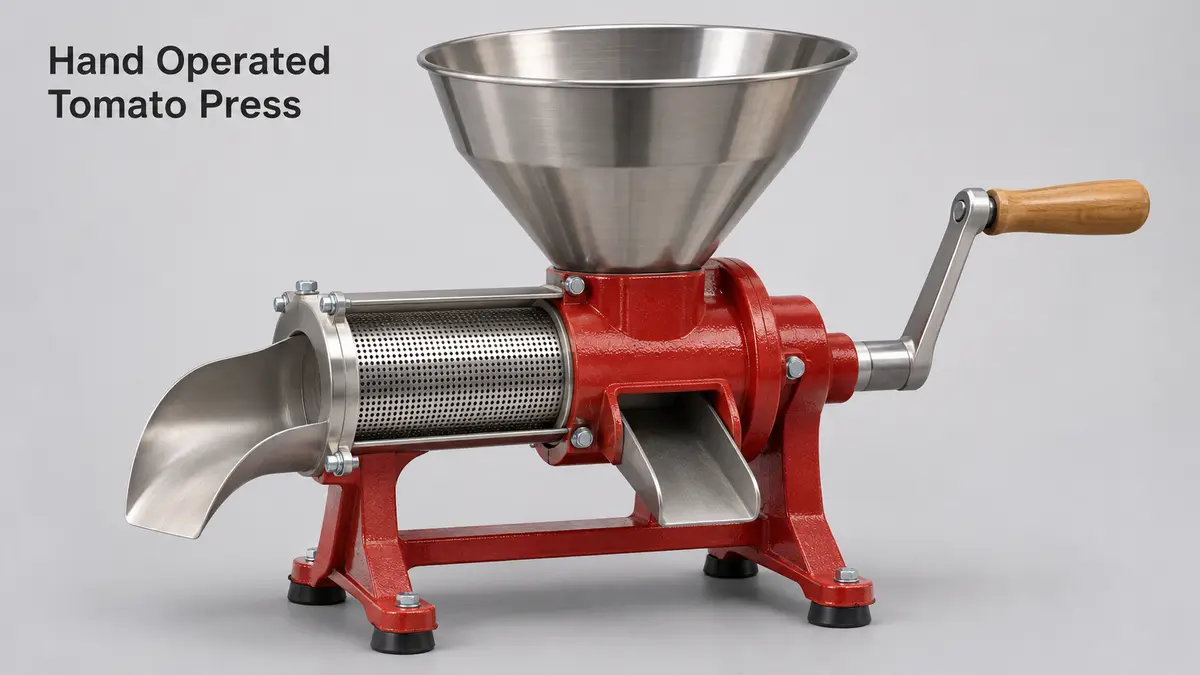
Heading 8210 covers hand-operated mechanical appliances weighing 10 kg or less, used to prepare, condition or serve food or drink. A hand-operated tomato press with a mechanical pressing or straining mechanism falls within this description when it meets the weight condition.
Read from the UK Trade Tariff on 30 September 2026, the supplied commodity line carries 2% duty for goods from China. No anti-dumping or countervailing duty, suspension or import control is listed in the supplied facts. The table contains the sole supplied commodity line.
Confirm the mechanism, complete appliance weight and commodity code before ordering. The manual kitchen gadgets guide covers the wider heading.
| Goods | Commodity code | Duty | Anti-dumping or countervailing duty on China |
|---|---|---|---|
| Hand-operated tomato presses weighing 10 kg or less | 8210 00 00 00 | 2% | None |
Specify the screen, screw and food-contact parts
Specify whether the press processes raw or cooked tomatoes, whether it separates skins and seeds, and the intended purée texture. Agree the screen perforations, screw fit, hopper opening, discharge chute and collection arrangement. Define the worktop clamp opening or suction-base arrangement, handle clearance and how the press comes apart for cleaning.
Confirm applicable food-contact requirements with the relevant authority, including whether plastic food-contact parts need a declaration of compliance and supporting evidence. Match any evidence obtained to the actual hopper, screw, chute and seals supplied. Request separate evidence for coatings and rubber parts, and specify contact with acidic tomatoes at the intended temperature and duration.
For consumer presses supplied in Great Britain, general product safety rules require safe products. Review accessible screen edges, pinch points, handle retention and stability while cranking. Agree assembly, feeding and cleaning instructions, and back any dishwasher-safe claim with testing of the complete press.
Worked duty example
Illustrative example, not a quote: 450 hand-operated tomato presses, illustrative order under 8210 00 00 00, invoiced at £4,500 free on board, with £450 of freight and insurance to the UK. The customs value is £4,950. Duty at 2% is £99. Import VAT at 20% is charged on the customs value plus duty, £5,049, so it is £1,009.80. Import taxes total £1,108.80; a VAT-registered importer can usually reclaim the VAT, so the lasting cost is the £99 of duty. The import duty and VAT guide explains each step.
Inspection checklist
Separation: run the agreed raw or cooked tomatoes through samples; check purée texture, skin and seed carry-over, screen blockage and leakage around the screw housing.
Crank and mounting: operate under load; check handle loosening, shaft movement, screw rubbing, clamp grip and whether the base moves on the intended worktop.
Materials and cleaning: match food-contact parts to the material specification and compliance evidence; inspect burrs, rust, coating damage and trapped pulp after dismantling and washing.
Arrival and packing: assemble samples from delivered cartons; check screen distortion, cracked hoppers, missing seals, complete fittings and clear English instructions.
Working out your own order? Send us the product on WhatsApp and we reply the same working day: WhatsApp us
What goes wrong
A screen that looks suitable can let seeds through or clog with skins. Poor screw clearance can leave wet pulp in the waste outlet, rub against the screen or leak at the housing. Weak clamps and loose crank fittings become apparent when tomatoes are fed under load.
Food-contact evidence can describe a different plastic grade or omit a coating or seal. Check documents against the approved parts list and repeat the processing and cleaning trial on production samples. Use testing and certification support to agree the evidence needed for the supplied materials.
Cambridge China Bridge sources these products for UK businesses, checking the factory and the documents before shipment. See factory verification. For repeat volumes, see container programmes.
Frequently asked questions
What is the UK import duty on hand-operated tomato presses from China?
The supplied tariff line, 8210 00 00 00, carries 2% duty for goods from China. It covers qualifying hand-operated mechanical food appliances weighing 10 kg or less.
Do plastic tomato press parts need food-contact documents?
Confirm with the relevant authority whether the plastic parts touching food need a declaration of compliance and supporting evidence under the applicable food-contact rules. Match any evidence obtained to the materials and intended tomato-processing conditions.
How do I check whether a tomato press removes skins and seeds?
Process the agreed raw or cooked tomatoes through samples. Check the purée for skins and seeds, inspect the waste outlet and record clogging, leakage and the effort needed to turn the crank.
What should I specify before ordering tomato presses?
Specify tomato preparation, purée texture, screen perforations, screw fit, food-contact materials, mounting, cleaning method and supplied fittings. Approve a sample through a processing and cleaning trial.