Sourcing hand-operated grain mills from China
Hand-operated grain mills weighing 10 kg or less carry a single UK duty rate of 2% from China, with no listed trade remedies. Food-contact parts must meet the applicable food-contact rules, including the plastics rules where used. Specify the grain, flour fineness and mounting method before sampling. Cambridge China Bridge sources hand-operated grain mills.
Buying from China for a business? How our UK China sourcing agent service works · China sourcing agent for small orders and first imports
UK duty on hand-operated grain mills
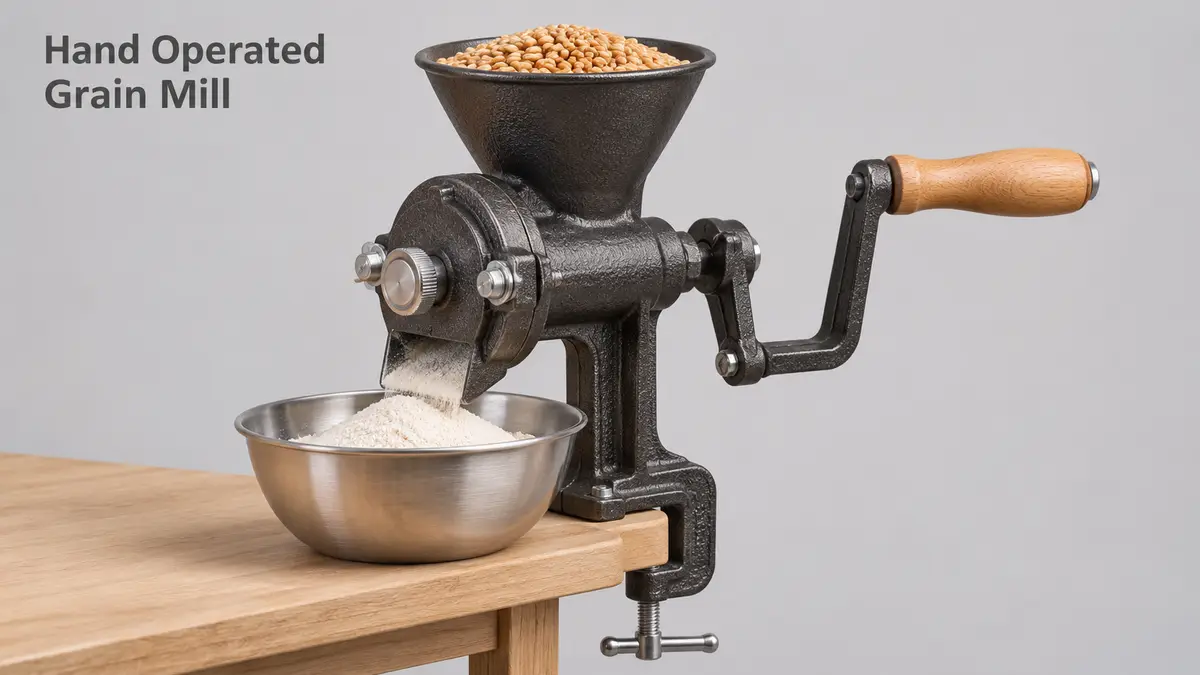
Heading 8210 covers hand-operated mechanical appliances weighing 10 kg or less, used in preparing, conditioning or serving food or drink. This guide covers grain mills within that description. The table shows product variants sharing the same commodity line, rather than separate tariff classifications.
Read from the UK Trade Tariff on 30 September 2026, commodity code 8210 00 00 00 carries 2% duty for goods from China. The supplied tariff record lists no anti-dumping or countervailing measures, suspensions or import controls.
Confirm the complete mill's mechanism, weight and use through finding your commodity code. For another product family within the heading, see manual coffee grinders.
| Goods | Commodity code | Duty | Anti-dumping or countervailing duty on China |
|---|---|---|---|
| Hand-operated grain mills with metal grinding plates, weighing 10 kg or less | 8210 00 00 00 | 2% | None |
Specify the grain, grinding surfaces and mounting
Name the grains to be milled and agree whether the output should be coarse meal or fine flour. Specify grinding plate or stone composition, adjustment range, hopper construction, crank attachment and replacement grinding parts. State the table thickness and edge shape for clamp-mounted models, or the fixing arrangement for bolt-mounted models. Test the sample with the intended grain rather than accepting a demonstration with an easier material.
Food-contact parts must meet Regulation 1935/2004. For plastic food-contact parts, confirm with the relevant food safety authority whether Regulation 10/2011 applies and what declaration of compliance and supporting migration evidence are needed. Match that evidence to the supplied hopper, outlet and other contact parts; request separate evidence for coatings. Products should only be sold once compliance with product safety regulations has been demonstrated appropriately.
Worked duty example
Illustrative example, not a quote: 50 hand-operated grain mills, illustrative only under 8210 00 00 00, invoiced at £3,000 free on board, with £450 of freight and insurance to the UK. The customs value is £3,450. Duty at 2% is £69. Import VAT at 20% is charged on the customs value plus duty, £3,519, so it is £703.80. Import taxes total £772.80; a VAT-registered importer can usually reclaim the VAT, so the lasting cost is the £69 of duty. The import duty and VAT guide explains each step.
Inspection checklist
Grinding: mill the agreed grain at the approved settings, compare the output with the agreed flour sample, and check for uneven feeding, adjustment drift and particles shed by the grinding surfaces.
Mounting and crank: fit the mill to the intended surface, check clamp grip or fixing alignment, and operate it under load to identify movement, handle loosening and excessive shaft play.
Contact surfaces: compare materials and coatings with the approved specification and food-contact documents; inspect for rust, flaking, casting residue and lubricant reaching the grain path.
Cleaning and packing: dismantle and reassemble the sample, check access to trapped flour, and verify that grinding parts, fixings and English assembly and cleaning instructions arrive intact.
Working out your own order? Send us the product on WhatsApp and we reply the same working day: WhatsApp us
What goes wrong
A mill demonstrated on soft grain may struggle with the buyer's intended grain or produce coarse meal when fine flour was expected. Grinding surfaces can rub or shed particles, adjustment screws can move under load, and a narrow clamp can slip on the intended worktop. Agree the grain, mounting surface and output sample before approving production.
Inspect arrival samples before releasing stock for sale. Look for transport damage to grinding elements, corrosion, loose crank fittings and flour traps that cannot be cleaned as instructed. A generic food-contact report may describe different plastics or coatings; compare its material identification with the delivered product.
Cambridge China Bridge sources these products for UK businesses, checking the factory and the documents before shipment. See factory verification. For repeat volumes, see container programmes.
Frequently asked questions
What is the UK import duty on hand-operated grain mills from China?
The supplied tariff record gives 2% for code 8210 00 00 00, covering qualifying hand-operated food appliances weighing 10 kg or less. It lists no anti-dumping or countervailing measures.
What food-contact paperwork should I request?
Request evidence for all food-contact materials. For plastic contact parts, confirm with the relevant food safety authority what declaration of compliance and supporting migration evidence are needed, and match the documents to the materials supplied.
Can a hand-operated grain mill produce fine flour?
Agree the required flour sample and test with the intended grain. Check output at the approved setting and whether the adjustment stays stable during milling.
How do I check a clamp-mounted grain mill?
Fit it to a surface matching the intended table thickness and edge shape. Mill under load and check for slipping, movement, surface damage and handle loosening.