Sourcing hand-cranked salad spinners from China
Hand-cranked salad spinners weighing 10 kg or less carry a single UK duty rate of 2% from China under heading 8210. Confirm the applicable food-contact rules and any requirements for plastic declarations of compliance and supporting evidence with the relevant authority. Check crank durability and basket balance. Cambridge China Bridge sources hand-cranked salad spinners.
Buying from China for a business? How our UK China sourcing agent service works · China sourcing agent for small orders and first imports
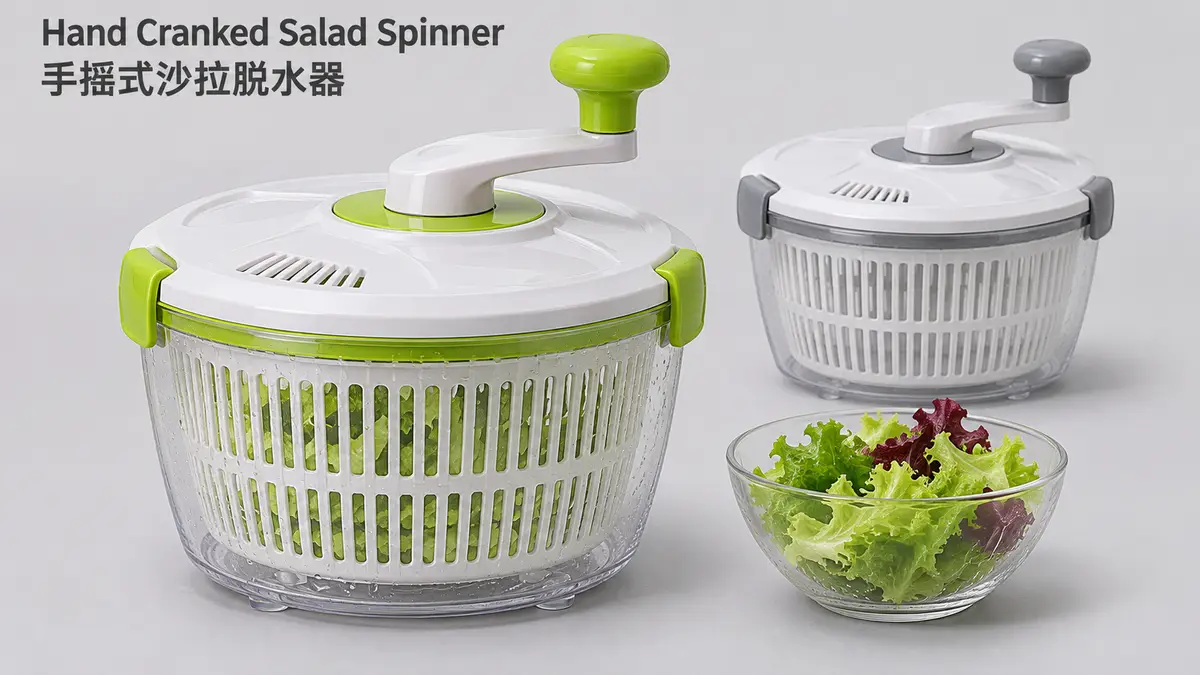
UK duty on hand-cranked salad spinners
Read from the UK Trade Tariff on 30 September 2026, heading 8210 covers hand-operated mechanical appliances weighing 10 kg or less, used in the preparation, conditioning or serving of food or drink. This guide covers complete hand-cranked salad spinners within that description.
Commodity code 8210 00 00 00 carries 2% duty for goods from China. The supplied tariff record lists no anti-dumping or countervailing measures, suspensions or attached import controls. The table shows product variants sharing the same commodity line, rather than separate tariff subdivisions.
Confirm the complete appliance's mechanism, purpose and weight using the commodity code guide. For related appliances across the wider heading, see the hand-operated vegetable choppers guide.
| Goods | Commodity code | Duty | Anti-dumping or countervailing duty on China |
|---|---|---|---|
| Hand-cranked salad spinner with plastic bowl | 8210 00 00 00 | 2% | None |
Specify the crank, basket and cleaning method
Specify usable basket capacity, bowl dimensions, crank position, grip shape, lid retention and base stability. Identify the material of the bowl, basket, lid, spindle and gears. Agree how the basket locates on its pivot and how the crank engages the drive. Approve a sample using wet leaves at the intended working load.
Agree a repeated-use test for the crank and gears, acceptable effort and basket clearance. State whether the crank folds, whether a brake is fitted and how water drains without spilling leaves. Require the factory to demonstrate dismantling, washing and reassembly. Test any dishwasher-safe claim on the complete product.
Confirm the applicable food-contact materials rules with the relevant authority, including whether plastic parts need a declaration of compliance and supporting evidence demonstrating compliance with migration limits. Consumer products supplied in Great Britain must be safe. Agree checks for finger traps, sharp moulding edges and lid security.
Worked duty example
Illustrative example, not a quote: Illustrative small retailer's batch of hand-cranked salad spinners with plastic bowls under 8210 00 00 00, invoiced at £3,000 free on board, with £960 of freight and insurance to the UK. The customs value is £3,960. Duty at 2% is £79.20. Import VAT at 20% is charged on the customs value plus duty, £4,039.20, so it is £807.84. Import taxes total £887.04; a VAT-registered importer can usually reclaim the VAT, so the lasting cost is the £79.20 of duty. The import duty and VAT guide explains each step.
Inspection checklist
Materials and documents: match the bowl, basket and other food-contact parts to the approved material list, plastic declarations of compliance and supporting migration evidence.
Crank and gears: repeat the agreed operating test with wet leaves; check slipping, binding, loose handles, gear wear and contact between the basket and bowl.
Balance and drainage: check basket seating, wobble, base grip, lid retention and water removal under the agreed load; inspect the brake where fitted.
Cleaning and arrival condition: dismantle and reassemble samples; inspect trapped water, inaccessible residues, cracks and distorted baskets. Check instructions and protective packing against the order. Agree sampling through the inspection guide.
Working out your own order? Send us the product on WhatsApp and we reply the same working day: WhatsApp us
What goes wrong
An empty spinner can turn smoothly while a loaded basket rubs against the bowl or makes the base slide. Loose spindle seating, distorted baskets and worn gears can cause wobble or drive failure. Compare loaded performance with the approved sample before accepting the batch.
Water can remain inside a lid that is difficult to dismantle, while detergent or heat can distort an unsuitable plastic bowl. A generic food-contact report may describe a different material from the delivered parts. Match documents to the actual materials and test cleaning claims before approving packaging.
Cambridge China Bridge sources these products for UK businesses, checking the factory and the documents before shipment. See factory verification. For repeat volumes, see container programmes.
Frequently asked questions
What is the UK import duty on hand-cranked salad spinners from China?
The supplied tariff record gives 2% duty under 8210 00 00 00 for qualifying appliances weighing 10 kg or less, with no listed anti-dumping or countervailing measures.
What food-contact documents should I request?
Request plastic declarations of compliance and supporting migration evidence matched to the actual food-contact parts. Confirm with the relevant authority which food-contact rules apply to non-plastic parts touching food.
How should I test a hand-cranked salad spinner?
Use wet leaves at the agreed load. Check water removal, crank effort, basket clearance, wobble, lid security and base grip, then repeat operation and inspect the gears.
Can I accept a supplier's dishwasher-safe claim?
Ask for evidence from testing the complete spinner. Check distortion, cracking, crank operation and reassembly after the agreed cleaning test before approving the claim.