Sourcing hand-cranked apple peelers from China
Hand-cranked apple peelers within heading 8210 carry 2% UK duty from China, with no trade remedies recorded. Confirm the applicable food-contact rules, including any plastics requirements, with the relevant authority. Check blade adjustment, mounting stability and crank wear. Cambridge China Bridge sources hand-cranked apple peelers.
Buying from China for a business? How our UK China sourcing agent service works · China sourcing agent for small orders and first imports
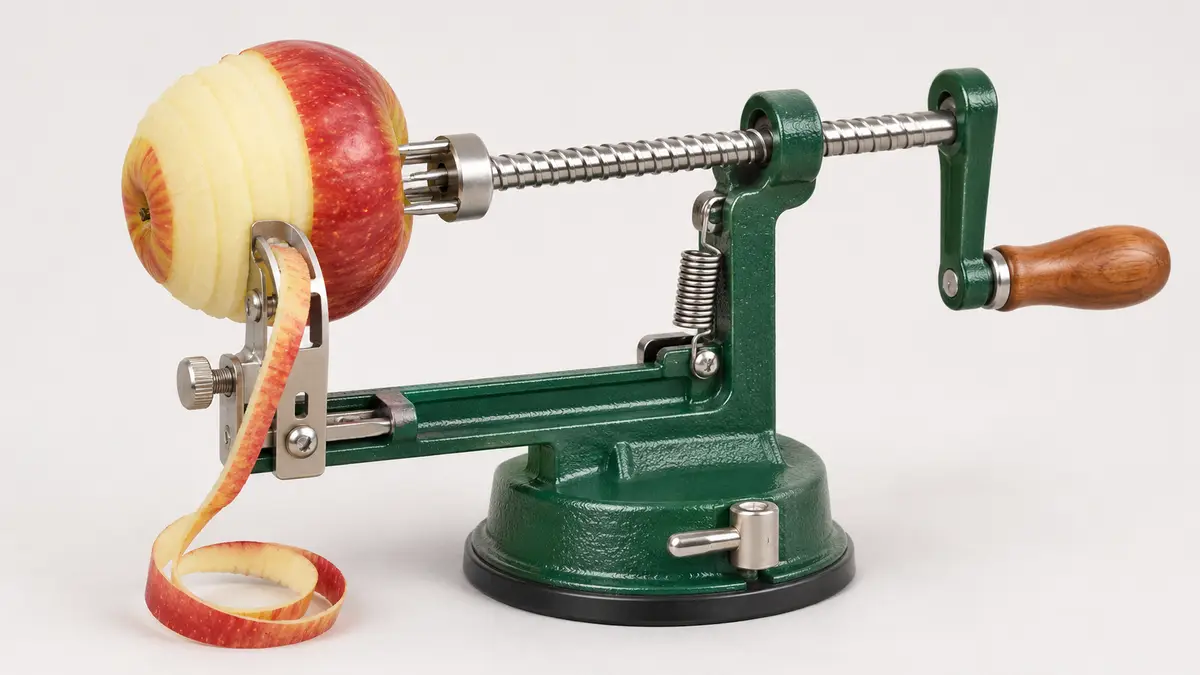
2% UK duty on hand-cranked apple peelers
Heading 8210 covers hand-operated mechanical appliances weighing 10 kg or less used to prepare, condition or serve food or drink. This guide concerns hand-cranked apple peelers with a mechanical feed. Simple handheld peelers without a mechanism need separate classification. See the wider manual kitchen gadgets guide.
Read from the UK Trade Tariff on 30 September 2026, commodity code 8210 00 00 00 carries 2% duty for goods from China. The supplied tariff record lists no anti-dumping or countervailing duties, suspensions or import controls. Only the single commodity line supplied is shown in the table.
Confirm the complete appliance's weight, mechanism and functions before choosing its commodity code. Do not assume that separately supplied replacement blades use the complete appliance's code.
| Goods | Commodity code | Duty | Anti-dumping or countervailing duty on China |
|---|---|---|---|
| Hand-cranked mechanical apple peelers weighing 10 kg or less | 8210 00 00 00 | 2% | None |
Specify the blade, apple feed and mounting
Specify whether the appliance peels only or also cores and slices. Agree the apple sizes and shapes to use in sample trials, blade adjustment, peel thickness, spindle travel and how the fruit is held. Choose a suction base or bench clamp and define the surfaces or bench edges on which it must hold.
Record materials for the blade, fruit-holding prongs, coring cutter and any parts touching apples. Confirm the applicable food-contact materials rules and any declaration of compliance or supporting migration evidence needed for food-contact plastics with the relevant authority. Match this paperwork to the actual materials supplied. Importers and sellers are responsible for consumer product safety.
Agree cleaning access, blade removal, crank assembly, replacement parts and protective packing. Ask for clear English instructions covering mounting, loading, adjustment and cleaning. Assess exposed blades, pointed prongs and finger traps during sample approval.
Worked duty example
Illustrative example, not a quote: Illustrative order: 2,000 hand-cranked apple peelers under 8210 00 00 00, invoiced at £30,000 free on board, with £2,000 of freight and insurance to the UK. The customs value is £32,000. Duty at 2% is £640. Import VAT at 20% is charged on the customs value plus duty, £32,640, so it is £6,528. Import taxes total £7,168; a VAT-registered importer can usually reclaim the VAT, so the lasting cost is the £640 of duty. The import duty and VAT guide explains each step.
Inspection checklist
Peeling and feed: try the agreed apples, checking missed patches, excessive flesh removal, fruit slipping on the prongs and feed alignment. Test coring and slicing if included.
Mounting and crank: check suction on the agreed surfaces or clamp fit on the agreed bench edges. Operate repeatedly under load and inspect spindle wobble, stripped threads and loose handles.
Materials and cleaning: match food-contact evidence to the supplied parts. Inspect blade corrosion, coating damage, burrs and places where peel or juice remains after cleaning.
Packing and instructions: check covers over blades and prongs, secure loose accessories and confirm that English assembly and cleaning instructions match the supplied model.
Working out your own order? Send us the product on WhatsApp and we reply the same working day: WhatsApp us
What goes wrong
A sample may peel a regular apple neatly but leave patches on uneven fruit or cut away too much flesh. Poor alignment can let the apple rotate on its prongs instead of advancing through the blade. A suction base may release on the buyer's worktop even when it holds on the factory's test surface.
Crank screws work loose, feed threads wear and coatings chip where moving parts rub. Prevent disputes by approving trials on the agreed apples and mounting surfaces, recording acceptable peeling results and checking production samples against the approved mechanism and materials.
Cambridge China Bridge sources these products for UK businesses, checking the factory and the documents before shipment. See factory verification. For repeat volumes, see container programmes.
Frequently asked questions
What is the UK import duty on hand-cranked apple peelers from China?
The supplied tariff record gives 2% for qualifying appliances under 8210 00 00 00, with no trade remedies or suspensions recorded.
Do apple peelers need food contact evidence?
Check the parts touching apples, including blades and prongs. Confirm with the relevant authority whether food-contact plastics need a declaration of compliance and supporting migration evidence matched to their materials.
Should I choose a suction base or a bench clamp?
Trial suction bases on the intended worktop. For clamps, agree bench-edge fit and check holding strength under peeling load. Choose from actual sample results.
How do I test peeling performance before ordering?
Use apples of the agreed sizes and shapes. Check missed peel, flesh loss, fruit grip and feed alignment, then repeat operation to reveal loosening or wear.