Sourcing frozen roasted peppers from China
Frozen roasted peppers from China generally fall under 2004 90 98 80 at 16% UK duty; prepared vegetable mixtures also carry 16%. Importers must ensure the food is safe and legal before import into Great Britain. Fix the recipe and check the tariff's control flags before shipping. Cambridge China Bridge sources frozen roasted peppers.
Buying from China for a business? How our UK China sourcing agent service works · China sourcing agent for small orders and first imports
Duty on frozen roasted peppers
Read from the UK Trade Tariff on 30 September 2026, heading 2004 covers frozen vegetables prepared or preserved otherwise than by vinegar or acetic acid, excluding products of heading 2006. Frozen roasted peppers without other vegetables are a likely fit for 2004 90 98 80; mixtures with other prepared vegetables may fit 2004 90 98 10. The table shows product forms sharing these codes, rather than separate tariff subdivisions.
Both selected codes carry 16% duty for goods from China, with no anti-dumping or countervailing duty and no suspension recorded. The tariff attaches veterinary control and import control of organic products. Official guidance says fruit and vegetables do not normally need a health certificate; confirm the veterinary requirement for the exact recipe with your customs broker. For organic orders, the inspection certificate is issued by the exporter's control body; confirm the consignment requirements with your broker.
Send the broker the complete recipe, roasting process, frozen presentation and any animal ingredients to confirm the commodity code. Do this before approving packaging or shipping documents. For the wider heading, see the frozen grilled aubergine guide.
| Goods | Commodity code | Duty | Anti-dumping or countervailing duty on China |
|---|---|---|---|
| Frozen roasted pepper halves, without other vegetables | 2004 90 98 80 | 16% | None |
| Frozen roasted peppers mixed with other prepared vegetables | 2004 90 98 10 | 16% | None |
Specify roasting, peeling and cooked yield
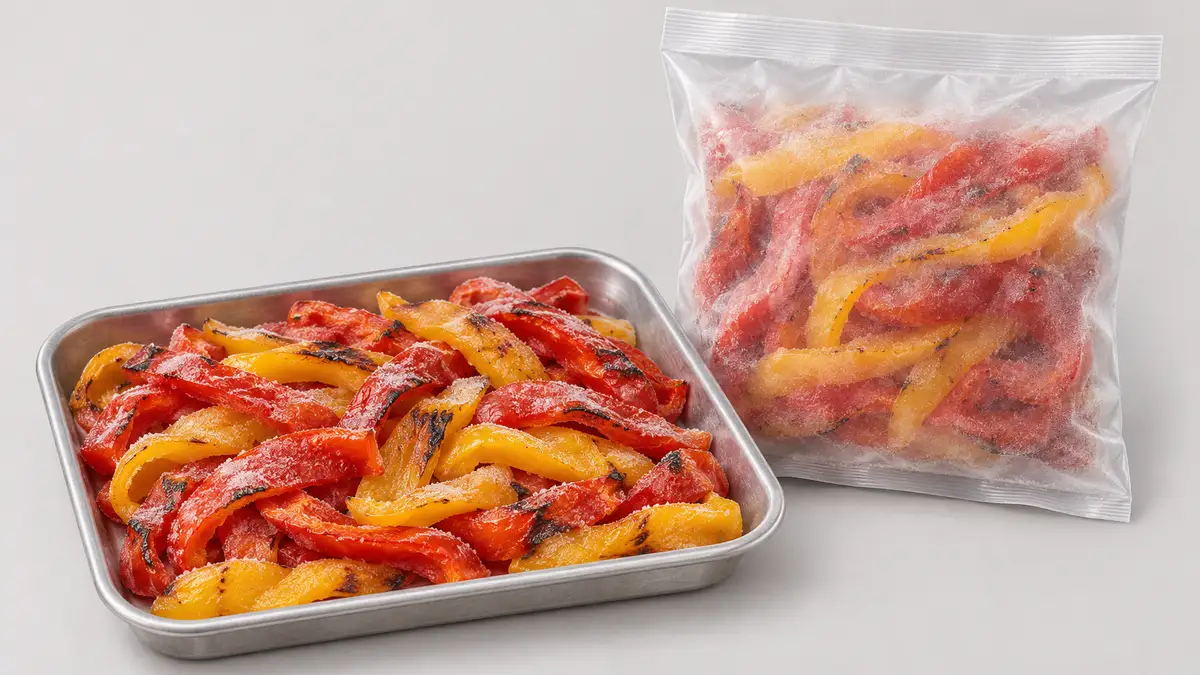
Specify sweet pepper variety, colour mix, halves, strips or dice, skin removal, seed removal and acceptable char. State whether the product is plain or contains oil, salt, seasoning or other vegetables. Agree whether pieces must remain individually separable when frozen, and compare thawed and cooked samples with the approved sample.
Agree a method for checking thaw loss and usable cooked yield, rather than buying on frozen appearance alone. Request roasting and freezing records, batch-linked microbiological results and a documented basis for shelf life and cooking instructions. These are purchasing checks: the importer must ensure the food is safe and legal before it enters Great Britain.
Worked duty example
Illustrative example, not a quote: Illustrative order: 1 tonne of frozen roasted pepper strips under 2004 90 98 80, invoiced at £3,000 free on board, with £1,000 of freight and insurance to the UK. The customs value is £4,000. Duty at 16% is £640. Import VAT at 20% is charged on the customs value plus duty, £4,640, so it is £928. Import taxes total £1,568; a VAT-registered importer can usually reclaim the VAT, so the lasting cost is the £640 of duty. The import duty and VAT guide explains each step. This assumes the goods are standard-rated for VAT. Most food for human consumption is zero-rated, and animal feed can be too, in which case no import VAT is due, so check the rate for your product in HMRC's VAT Notice 701/14.
Inspection checklist
Pepper pieces: check colour mix, cut consistency, peel remnants, seeds, stalks and burnt patches against the approved sample.
Thaw and cook: check liquid loss, firmness, bitterness, smoky flavour and usable yield using the agreed preparation method.
Frozen condition: review transport temperature records and check for fused blocks, heavy surface ice, damaged bags and leaking seals.
Labels and batches: compare the recipe, declared weight, storage and cooking instructions with the agreed artwork; match batch marks to test reports. Solid food packed in an ice glaze must show drained net weight. Use the quality inspection guide to plan sampling.
Working out your own order? Send us the product on WhatsApp and we reply the same working day: WhatsApp us
What goes wrong
A charred surface can hide excessive roasting: thawed peppers become soft, bitter or difficult to portion. Incomplete peeling leaves tough skin, and poor trimming leaves seeds and stalks. Excess thaw liquid reduces usable yield even when the frozen bag meets the agreed weight.
Fused pieces and heavy ice can signal a freezing or handling problem, but appearance alone does not establish its cause. Compare temperature records and retained samples before accepting the lot. Keep suspect stock separate while investigating, and require written approval before the factory changes the recipe, cut or freezing method.
Cambridge China Bridge sources these products for UK businesses, checking the factory and the documents before shipment. See factory verification. For repeat volumes, see container programmes.
Frequently asked questions
What is the UK import duty on frozen roasted peppers from China?
The supplied tariff reading shows 16% for 2004 90 98 80 and for prepared vegetable mixtures under 2004 90 98 10, with no anti-dumping or countervailing duty or suspension recorded.
Do frozen roasted peppers need a veterinary certificate?
Official guidance says fruit and vegetables do not normally need a health certificate. The selected tariff codes carry a veterinary control flag, so ask your broker to confirm the requirement for the complete recipe.
What should I specify for frozen roasted pepper strips?
Specify colour mix, strip size, peeling, seed removal, char, oil and seasoning. Approve thawed and cooked samples and agree checks for liquid loss, firmness and usable yield.
What paperwork should I check for organic roasted peppers?
The tariff attaches organic import control. The inspection certificate is issued by the exporter's control body in the exporting country. Confirm the consignment requirements with your customs broker before shipment.