Sourcing frozen chips and sweetcorn from China
First establish whether the sweetcorn is simply frozen after cooking or further prepared, and have your customs adviser confirm the heading. Prepared frozen sweetcorn attracts 4% plus £7.80 per 100 kg drained net weight; par-fried chips under 2004109900 attract 16%. Approve chips after cooking in your own equipment; the FSA says frozen sweetcorn needs thorough cooking.
Buying from China for a business? How our UK China sourcing agent service works · China sourcing agent for small orders and first imports
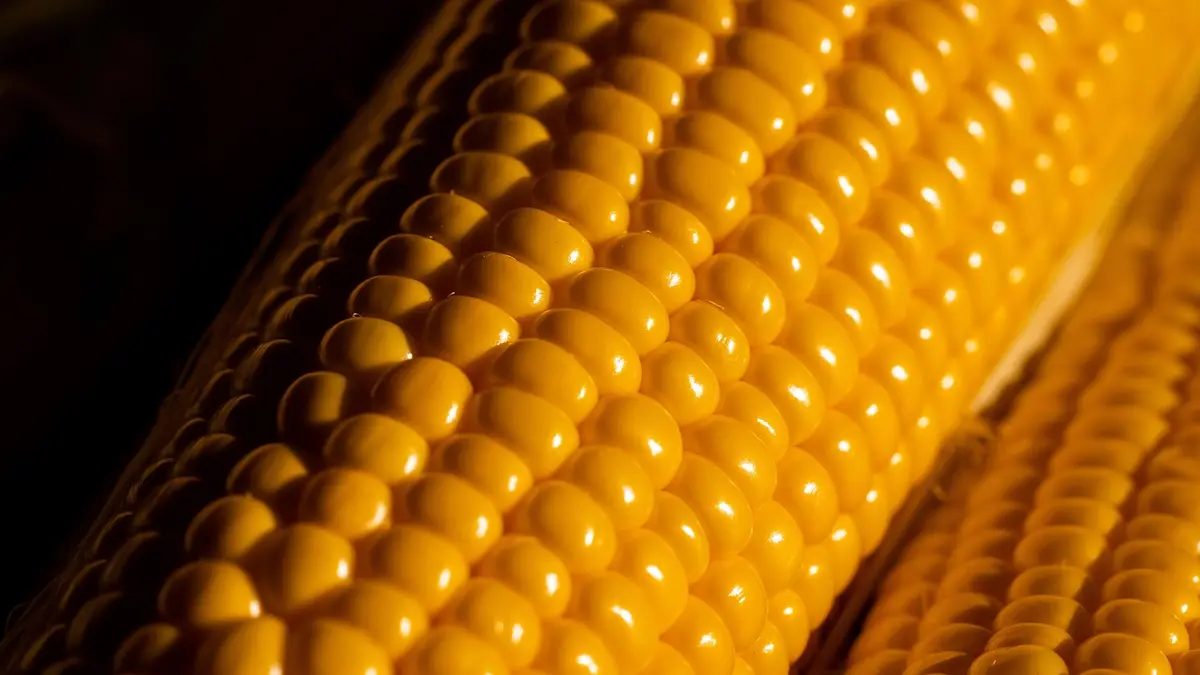
Start with the processing route, not the supplier's product name
Ask for the complete ingredient list and a process flow showing blanching, boiling, frying, coating, seasoning and freezing. Ask your customs adviser to distinguish vegetables frozen uncooked or after steaming or boiling in water from products with other preparation or preservation. A quotation saying only 'IQF sweetcorn' does not establish which applies. Use the plain frozen vegetables guide when the process stops at the simpler treatment.
For chips, distinguish par-fried potato strips from other potato preparations. For sweetcorn, distinguish kernels from cobs and sweet varieties from waxy or sweet-waxy varieties. Make these purchase specifications, alongside the intended use: frying, oven cooking, a hot side dish or a cooked-and-cooled salad ingredient.
Where to investigate Chinese production
For potato processing, investigate Ulanqab in Inner Mongolia and nearby supplier networks rather than starting with a general wholesale market. PotatoPro identifies a Lamb Weston production facility in Ulanqab, Inner Mongolia, China. Treat this as a starting point for processor research, not a promise that the plant will accept your order or export your chosen product to Britain.
For corn, Gongzhuling in Jilin is a documented fresh-eating corn processing centre. The Jilin agriculture department names Jilin Nong Sao Food and, in Chaoyangpo town, Jilin Dele Agricultural Development, whose products include corn cobs, sections and kernels. The same report discusses collaboration among quick-frozen corn businesses. Treat this as a starting point for processor research: fresh-eating corn includes product types other than the yellow sweetcorn kernels a UK caterer may expect.
Ask each shortlisted processor to identify the actual production and cold-storage sites, the variety used, and which line will make your product. Compare samples from that line before agreeing the product specification.
UK duty: two prepared frozen products
The table shows ordinary third-country duty for Chinese-origin goods entering Great Britain, read on 3 October 2026. The inspected tariff pages displayed no anti-dumping measure applying to China. Recheck the declaration date and classification before shipment.
The sweetcorn row applies to prepared or preserved frozen sweetcorn under heading 2004. Do not use it automatically for corn only steamed or boiled and then frozen. Give your customs adviser the recipe and process flow.
| Goods | Commodity code | Duty | Anti-dumping duty on China |
|---|---|---|---|
| Other frozen prepared potato products, including par-fried chips where classified here | 2004109900 | 16% | None shown |
| Prepared or preserved frozen sweetcorn | 2004901000 | 4% + £7.80 per 100 kg drained net weight | None shown |
Worked duty and import VAT comparison
Hypothetical calculation, not a supplier quote: assume each shipment has a customs value of £22,000, already including the relevant freight and insurance. For chips classified under 2004109900, duty is £22,000 × 16% = £3,520.
For a separate prepared sweetcorn shipment under 2004901000, assume the same £22,000 customs value and 24,000 kg drained net weight. The value-based duty is £880; the weight-based duty is 24,000 ÷ 100 × £7.80 = £1,872. Total duty is £2,752. Using only the headline 4% would underbudget this example by £1,872.
For these frozen foods supplied for subsequent cooking, import VAT is zero-rated, so import VAT is £0 in both examples. HMRC VAT Notice 701/14 states: 'Canned and frozen food other than ice cream and similar frozen products' — 'Zero rate'. This does not determine the VAT treatment of a caterer's later hot-food sale. See the UK duty and VAT calculation guide.
UK food rules that change the buying brief
For England and Wales, GOV.UK identifies assimilated Regulation (EU) 2017/2158 as the acrylamide legislation; it separately identifies the EU regulation for Northern Ireland. The UK version on legislation.gov.uk remains published as revised legislation, with no revocation shown. Its Annex IV benchmark for ready-to-eat French fries is 500 μg/kg. This is a benchmark for evaluating mitigation, not a universal statutory maximum for every uncooked frozen potato product.
Build the chip approval around cooked results. The regulation calls for reducing-sugar checks, removal of slivers, blanching and validated cooking instructions. Request the processor's relevant control records and agree a laboratory test on chips cooked using the intended instructions. A result for an uncooked frozen sample does not demonstrate the result after frying.
For quick-frozen products sold in England, the Quick-frozen Foodstuffs (England) Regulations 2007 remain published as revised legislation, with no revocation shown. They require −18°C or colder after thermal stabilisation and continued temperature control, subject to specified exceptions. Use −18°C or colder as the contractual loading and storage target and request temperature records; the English instrument applies only to England.
Sweetcorn needs a different safety brief. The FSA says frozen vegetables need thorough cooking before eating. For salad customers, specify cooking followed by cooling, rather than treating thawing as the preparation step.
Check pack information before printing: GOV.UK lists storage conditions and necessary cooking instructions among required information, together with the relevant food business name and address. Have the final artwork reviewed for the actual formulation and sales format.
Working out your own order? Send us the product on WhatsApp and we reply the same working day: WhatsApp us
Inspect what your kitchen will actually serve
Use this as a proposed acceptance plan, with tolerances agreed in the purchase order rather than invented as industry-wide limits.
Chips: record cut dimensions, length distribution, broken pieces, slivers and visible defects against the approved sample. Cook the production sample in the intended fryer or oven using the agreed instructions; compare colour, texture, cooked yield and performance over your own service holding period. Request the reducing-sugar, blanching and acrylamide evidence alongside the physical inspection.
Sweetcorn: verify the specified variety and kernel or cob format. Compare colour, tenderness, damaged kernels, cob fragments and foreign material against the approved sample. Carry out the cooking test before sensory approval. Agree microbiological testing with a food laboratory for the intended use; appearance and a loading inspection cannot establish microbiological safety.
Cold chain: inspect bag seals, carton condition and free-flowing condition, record product temperatures using an agreed measurement method, and retain the loading record and transport logger data. Investigate clumping or excess ice rather than declaring a batch safe from appearance alone. Define who holds the goods and decides acceptance when temperature evidence is missing.
Combine the quality inspection process with a review of cargo insurance cover for the planned refrigerated movement. For a coordinated processor, inspection and refrigerated-container brief, see container programmes.
Frequently asked questions
Does all frozen sweetcorn pay 4% plus a weight-based duty?
No. That rate is for prepared or preserved frozen sweetcorn under 2004901000. For corn only frozen uncooked or after steaming or boiling, ask your customs adviser to establish the exact code from the product and process.
Can frozen corn be thawed directly into a salad?
Do not assume so. Follow the pack instructions; the FSA says frozen vegetables need thorough cooking before eating. Specify a cooking-and-cooling process for salad use.
Is 500 μg/kg an acrylamide limit for a bag of frozen chips?
It is the benchmark for ready-to-eat French fries. Use the intended cooking method when evaluating the finished fries and the effectiveness of mitigation controls.
Sources
- UK Trade Tariff: frozen prepared potato products
- UK Trade Tariff: prepared frozen sweetcorn
- HMRC VAT Notice 701/14
- PotatoPro: Lamb Weston Ulanqab production facility
- Jilin agriculture department: Gongzhuling corn processing
- GOV.UK: acrylamide legislation and territorial application
- UK revised acrylamide regulation
- Quick-frozen Foodstuffs (England) Regulations 2007
- FSA: cooking frozen vegetables
- GOV.UK: required food label information