Sourcing flexible bending plywood from China
Flexible bending plywood from China has standard UK duty of 6% to 10%, with qualifying okoumé-faced and eucalyptus-faced lines suspended to 0%. Classification follows the veneers and construction. Confirm timber legality due diligence requirements with the relevant authority before first placing it on the Great Britain market. Cambridge China Bridge sources flexible bending plywood.
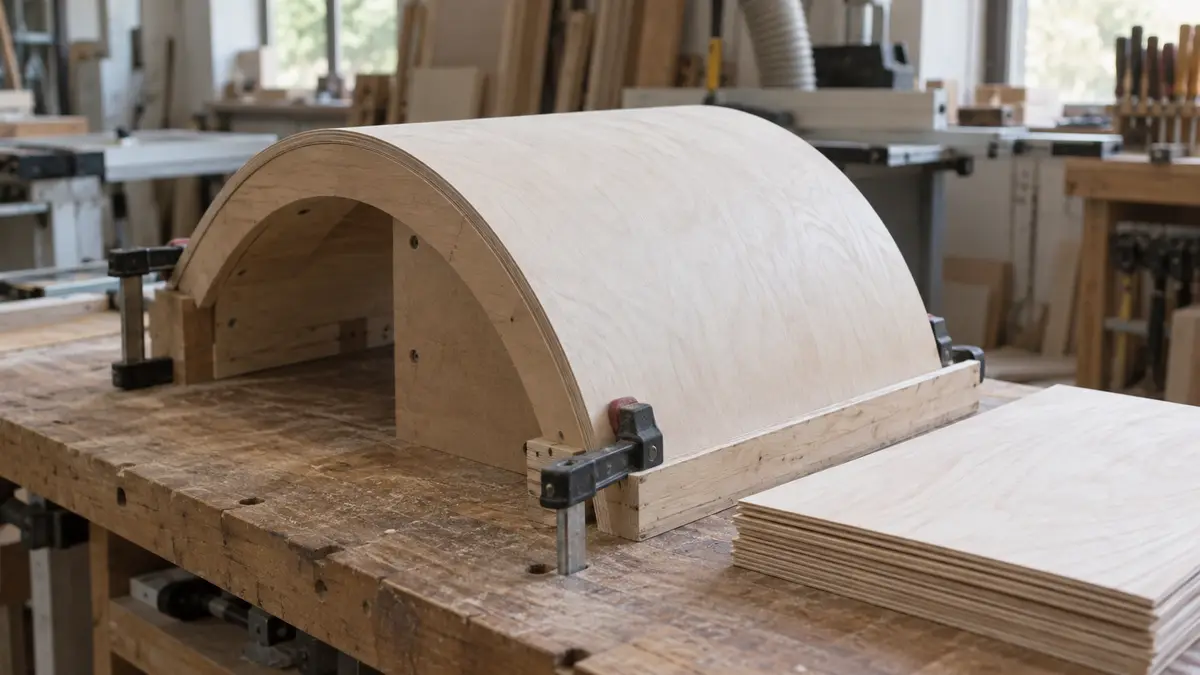
Duty depends on the veneers
Heading 4412 covers plywood, veneered panels and similar laminated wood. Flexible bending plywood is a product description, so record the outer-ply species and panel construction rather than choosing a code from the word flexible. The table lists possible classifications for bending panels, not a guarantee that every panel fits them. See the wider plywood guide for other constructions. For bamboo panels, see our bamboo plywood sourcing guide.
Read from the UK Trade Tariff on 30 September 2026, standard duty for the selected Chinese-origin lines was 6% or 10%. The listed okoumé-faced and eucalyptus-faced lines have conditional suspensions to 0%. The supplied tariff data records no anti-dumping or countervailing duty on these lines. It attaches CITES import controls to the okoumé and other non-coniferous lines shown; ask your customs broker to confirm the species-specific requirement.
Confirm suspension eligibility and the commodity code against the actual veneer specification before ordering. For wood covered by a CITES listing, confirm the applicable permits with the broker before shipment. Import VAT is normally 20%; see UK import duty and VAT for the calculation.
| Goods | Commodity code | Duty | Anti-dumping or countervailing duty on China |
|---|---|---|---|
| Poplar or aspen outer ply, no birch outer ply; wood other than okoumé | 4412 33 20 10 | 6% | None |
| Okoumé outer ply without a permanent film coating | 4412 31 10 10 | 10% | None |
| Other non-coniferous outer ply outside the listed species; wood other than okoumé | 4412 34 00 10 | 6% | None |
| Eucalyptus outer ply, no birch, poplar or aspen outer ply; wood other than okoumé | 4412 33 30 10 | 6% | None |
Specify the bend direction and finished curve
State whether the sheet must bend along its length or across its width, using a drawing that identifies the bending axis. Agree sheet dimensions, thickness tolerance, ply construction, face and core species, intended curve and the backing or frame that will hold it. Approve a sample bent on your actual former, with the intended adhesive and finish.
Specify whether the panel is for dry interior furniture, curved joinery or another application. Ask for bond-quality and formaldehyde test evidence appropriate to that use. A successful bending sample alone does not establish structural suitability.
Businesses trading in timber products in Great Britain must take steps to ensure legal sourcing. Confirm with the relevant authority what timber legality due diligence the importer should complete before first placing plywood on that market. Collect the species, harvest country and supporting legality documents for every veneer layer, including cores sourced outside China.
Worked duty example
Illustrative example, not a quote: Illustrative order: 50 cubic metres of poplar-faced flexible bending plywood under 4412 33 20 10, invoiced at £22,000 free on board, with £3,500 of freight and insurance to the UK. The customs value is £25,500. Duty at 6% is £1,530. Import VAT at 20% is charged on the customs value plus duty, £27,030, so it is £5,406. Import taxes total £6,936; a VAT-registered importer can usually reclaim the VAT, so the lasting cost is the £1,530 of duty. The import duty and VAT guide explains each step.
Inspection checklist
Bending: bend sampled sheets around the agreed former in the specified direction; check face cracking, creases, springback and ply separation.
Construction: cut sample edges to inspect veneer thickness, core voids and overlaps; compare the lay-up and species records with the approved sample.
Dimensions and condition: measure thickness across each sampled sheet, check dimensions and squareness, and inspect packs for moisture, mould and damaged edges on arrival.
Bond and finish: check the agreed bond-test evidence and trial the intended adhesive, veneer or coating. Include these checks in the inspection brief.
Working out your own order? Send us the product on WhatsApp and we reply the same working day: WhatsApp us
What goes wrong
A sheet supplied with the wrong bending direction may resist the intended curve or crack when forced. Changes in veneer thickness or lay-up can make bulk panels behave differently from the approved sample. Trial the complete curved assembly before accepting a substitute construction.
Core voids can show through a finished curve, while weak glue lines can separate during forming. Wet packs can develop mould or distortion in storage. Keep affected bundles separate, record batch marks and photograph defects before cutting or finishing the stock.
Cambridge China Bridge sources these products for UK businesses, checking the factory and the documents before shipment. See factory verification. For repeat volumes, see container programmes.
Frequently asked questions
What is the UK import duty on flexible bending plywood from China?
The selected lines have standard duty of 6% or 10%. Qualifying okoumé-faced and eucalyptus-faced lines have suspensions to 0%.
Does flexible bending plywood have its own commodity code?
Choose the code from the panel construction and veneer species. The description flexible bending plywood alone is insufficient; obtain the full lay-up and face-species specification.
How do I check which way bending plywood bends?
Mark the bending axis on the order drawing and bend the approved sample around your intended former. Repeat the trial on production samples before shipment.
Do I need timber legality documents for bending plywood?
Confirm with the relevant authority the timber legality due diligence required of the importer first placing plywood on the Great Britain market. Obtain species, harvest origin and supporting documents for the face and core veneers.