Sourcing durum wheat semolina from China
Durum wheat semolina from China has a listed duty of £223.00 per 1000kg, rather than a percentage range. Imported cereals must meet the same or equivalent food hygiene standards and procedures as food produced in Great Britain. Cambridge China Bridge sources durum wheat semolina.
Buying from China for a business? How our UK China sourcing agent service works · China sourcing agent for small orders and first imports
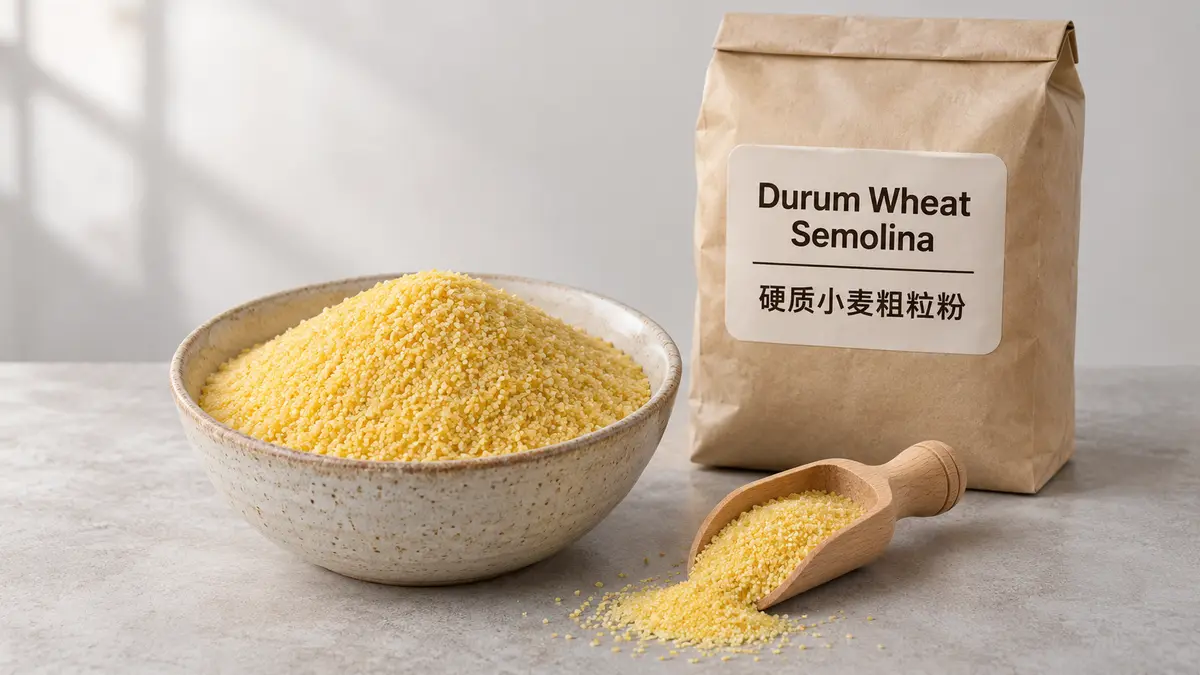
Durum wheat semolina: classification and duty
Read from the UK Trade Tariff on 29 September 2026, heading 1103 covers cereal groats, meal and pellets. Its durum wheat groats and meal line is 1103 11 10 00. The supplied facts contain only this relevant line. See the wider cereal groats and meal guide.
The supplied tariff record lists £223.00 per 1000kg for goods from China, with no anti-dumping or countervailing duty and no suspension recorded. It attaches an organic import control. Organic food from China entering Great Britain needs a certificate of inspection for each consignment. Businesses trading organic products must be certified by an approved UK organic control body.
Confirm the milling process, grain identity and finished product description using finding your commodity code. Ask your customs broker and organic control body to check the organic import arrangements before shipment. A percentage-duty worked example is unavailable because the relevant line charges duty by weight.
| Goods | Commodity code | Duty | Anti-dumping or countervailing duty on China |
|---|---|---|---|
| Durum wheat groats and meal, including semolina | 1103 11 10 00 | £223.00 per 1000 kg | None |
Specify the semolina for your production process
Specify durum wheat rather than common wheat semolina. Agree particle-size distribution, moisture, protein, colour, ash and acceptable bran specks with the mill. Define how each characteristic will be measured rather than relying on a grade name.
Approve a sample in your own pasta, couscous or other production process. Compare water absorption, mixing behaviour and finished texture. Agree bag construction, closure, storage conditions and the remaining shelf life you need on arrival.
Ask for batch-linked analysis and agree a testing plan for pesticide residues, mycotoxins and microbiological quality with your laboratory. Treat these as purchasing checks rather than relying on appearance alone.
Inspection checklist
Identity: match the durum wheat specification, mill details, bag markings and batch analysis to the delivered goods.
Granulation: compare representative samples with the approved sample for particle size, colour, bran specks and foreign material.
Condition: check for torn seams, damp bags, caking, insects and unusual odours; photograph affected stock and keep it separate pending investigation.
Labels and records: check batch identification and storage information against the agreed artwork. For prepacked retail semolina, emphasise wheat wherever it appears in the ingredients list. Match any organic shipment paperwork to the consignment.
What goes wrong
A supplier may substitute common wheat semolina or change the milling grade while keeping the same product name. The result can behave differently in your process. Put grain identity and measurable acceptance criteria in the order, retain the approved sample and compare the delivery before using it.
Moisture damage can cause caking, while incomplete batch records make investigation harder. Visual inspection cannot establish chemical or microbiological safety. Missing organic paperwork or overlooked wheat emphasis can also leave stock needing investigation or label correction before sale.
Cambridge China Bridge sources these products for UK businesses, checking the factory and the documents before shipment. See factory verification. For repeat volumes, see container programmes.
Frequently asked questions
What is the UK import duty on durum wheat semolina from China?
The supplied tariff record lists £223.00 per 1000kg under 1103 11 10 00. This is a weight-based duty, not a percentage of the invoice value.
Can I import organic durum wheat semolina from China?
For Great Britain, obtain a certificate of inspection for each consignment. Your business must have approved UK organic control-body certification. Check the shipment arrangements before ordering.
What should I specify when buying durum wheat semolina?
Specify durum wheat identity, particle-size distribution, moisture, protein, colour and ash. Approve a sample in your own process and agree batch-linked analysis and packaging.
What allergen check matters for retail semolina?
Check that wheat is emphasised each time it appears in the ingredients list on prepacked retail semolina. Do not approve artwork solely because it matches the supplier's domestic packaging.