Sourcing cereal groats and meal from China
UK duty on Chinese cereal groats, meal and pellets ranges from £82.00 to £223.00 per 1000kg, depending on the commodity code. Importers must ensure food is safe and legal before import. Organic goods and rice products need particular attention. Cambridge China Bridge sources cereal groats and meal.
Buying from China for a business? How our UK China sourcing agent service works · China sourcing agent for small orders and first imports
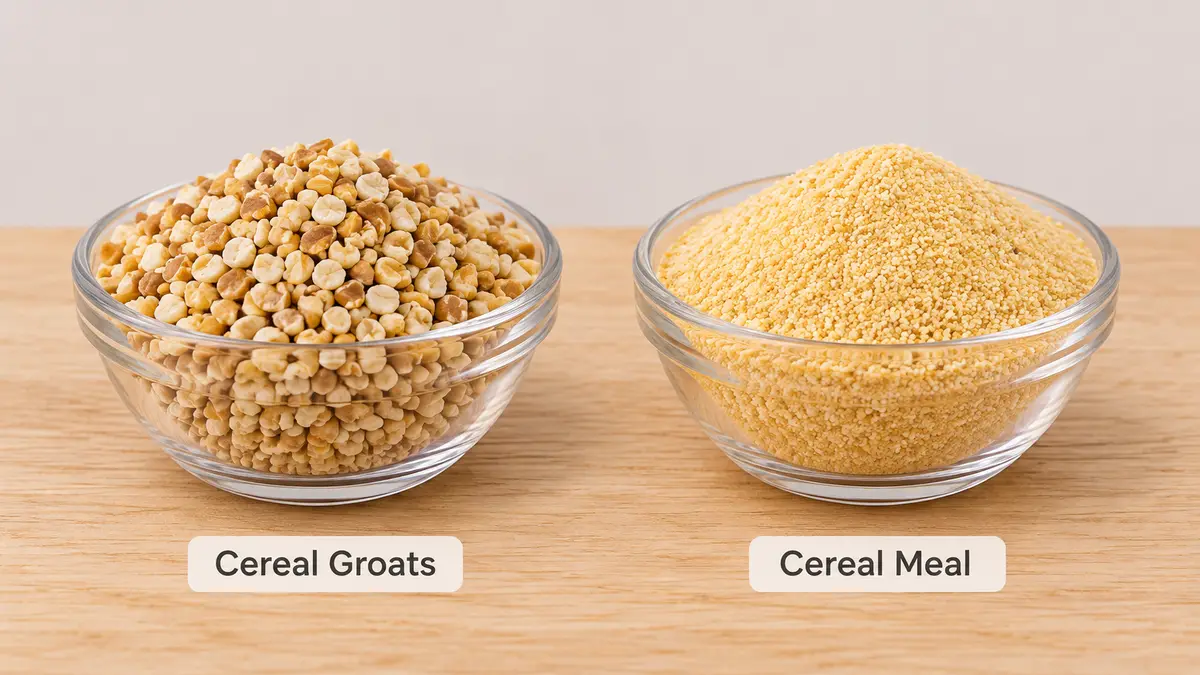
Heading 1103: duty and import controls
Read from the UK Trade Tariff on 17 November 2026, heading 1103 covers cereal groats, meal and pellets. The supplied China rates range from £82.00 to £223.00 per 1000kg. They are weight-based duties. The supplied lines show no anti-dumping or countervailing duties and no suspensions.
The tariff attaches organic import controls throughout this heading. Confirm the certification and inspection-certificate requirements with your organic control body before ordering. The exporter’s control body issues the inspection certificate. Rice groats, meal and pellets also carry a genetically modified organism import control; confirm the required clearance documents and border arrangements with your customs broker before shipping.
Confirm the cereal species, physical form and, for maize meal, fat content before choosing a code. Use finding your commodity code. No percentage-duty worked example is available because every supplied line has a weight-based rate.
| Goods | Commodity code | Duty | Anti-dumping or countervailing duty on China |
|---|---|---|---|
| Durum wheat groats and meal | 1103 11 10 00 | £223.00 per 1000 kg | None |
| Common wheat and spelt groats and meal | 1103 11 90 00 | £155.00 per 1000 kg | None |
| Maize groats and meal with fat content not exceeding 1.5% | 1103 13 10 00 | £144.00 per 1000 kg | None |
| Other maize groats and meal | 1103 13 90 00 | £82.00 per 1000 kg | None |
| Barley groats and meal | 1103 19 20 10 | £143.00 per 1000 kg | None |
| Oat groats and meal | 1103 19 40 00 | £137.00 per 1000 kg | None |
| Rice groats and meal | 1103 19 50 00 | £115.00 per 1000 kg | None |
| Other cereal groats and meal | 1103 19 90 00 | £82.00 per 1000 kg | None |
Specify the cereal and milling result
State the cereal species, intended food use, groats or meal, milling process and particle-size profile. For maize, request a batch fat-content result matching the tariff description. Agree moisture, foreign-material and sensory acceptance criteria with the supplier rather than accepting a description such as coarse grain powder.
Importers must ensure goods are safe and legal before importing them into Great Britain. Ask for batch-linked analysis appropriate to the cereal and intended use, including a discussion of contamination risks with your laboratory. For rice, genetically modified rice and rice products are not authorised in the UK.
Agree the bag material, closure, batch identification, storage instructions and remaining shelf life at delivery. Keep an approved sample for comparison and record how samples will be drawn during quality inspection.
Inspection checklist
Identity: compare the cereal, milling form and batch documents with the approved specification.
Texture: compare sieve results and the proportion of fines with the approved sample; investigate uneven milling and clumps.
Condition: check bags for moisture damage, insects, mould, unusual odours and broken seals.
Documents: match batch references on bags, analysis reports and shipping documents; resolve organic and rice-control questions before dispatch.
What goes wrong
A sample described as meal can conceal a different particle-size profile in the shipment. Excess fines can change cooking behaviour, while damp bags and damaged closures undermine storage. Record acceptance criteria and the sampling method in the purchase specification.
An organic claim on a supplier’s catalogue does not establish the import paperwork for your consignment. Likewise, a general rice analysis report should prompt questions about its suitability for the attached import control. Resolve those questions before booking transport.
Cambridge China Bridge sources these products for UK businesses, checking the factory and the documents before shipment. See factory verification. For repeat volumes, see container programmes.
Frequently asked questions
What is the UK import duty on cereal groats and meal from China?
The supplied heading 1103 rates range from £82.00 to £223.00 per 1000kg. Duty depends on the cereal and commodity code; it is weight-based.
Can I import rice meal from China?
The tariff attaches a genetically modified organism control to rice meal. Genetically modified rice is not authorised in the UK. Confirm the consignment documents and clearance arrangements with your customs broker.
What paperwork should I check for organic cereal meal?
Confirm the applicable certification and inspection-certificate requirements with your organic control body. The exporter’s control body issues the inspection certificate.
What should I put in a maize meal specification?
Specify the maize identity, fat content, particle-size profile, moisture acceptance criteria, intended use and packaging. Ask for batch-linked results and compare production samples with your approved sample.